How to Scale Professional Services Without Restructuring: The Visibility-First Model


•
•
Summarize blog with






Most service organizations don't struggle with 10 projects. They struggle at 100.
Scale doesn't just increase workload. It exposes every gap in visibility, every inconsistency in processes, and every assumption leaders made when the data wasn't there.
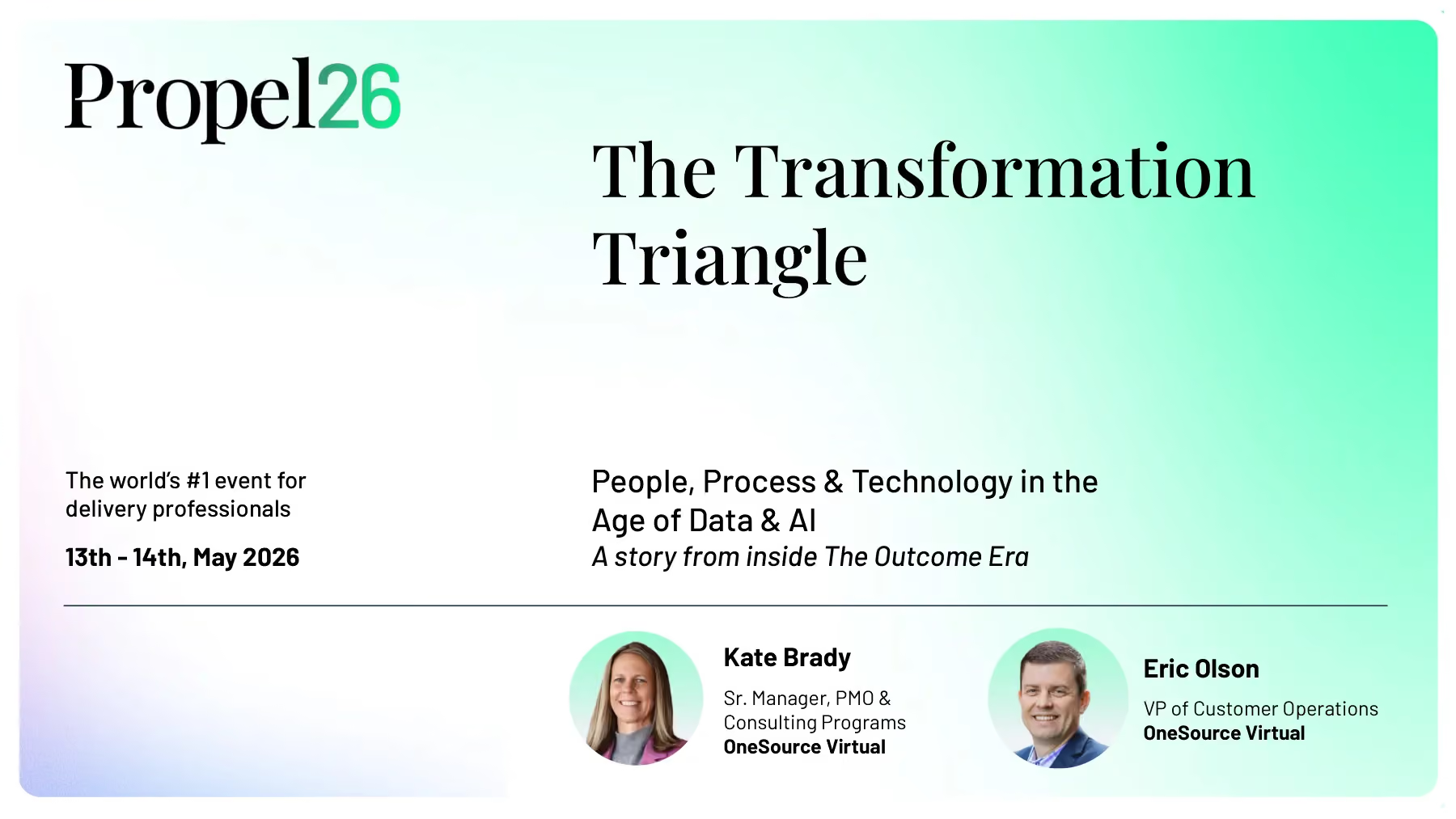
At Propel 26, Kate and Eric from OneSource Virtual (OSV) shared how rapid growth forced their team to rethink how they operated.
The challenge wasn't simply finding more people. It was creating enough visibility to scale delivery without sacrificing consistency, customer experience, or operational control.
Their biggest lesson: start with the signal, not the structure.
Before you redesign teams, redefine roles, or redraw reporting lines, make sure you can actually see how work is happening.
Why Scaling Professional Services Teams Breaks Without Shared Visibility
OSV wasn't facing a growth problem. It was facing a visibility problem.
The company had grown more than 20% year over year while maintaining strong customer retention and expanding rapidly. But as delivery volumes increased, leadership found itself operating with fragmented views of project performance, delivery health, and team capacity.
Different teams used different systems. Different groups followed different processes. Different leaders relied on different signals to understand performance. On a smaller scale, those inconsistencies were manageable. On a larger scale, they became a risk.
For OSV, the challenge was even more complex because delivery demand wasn't evenly distributed throughout the year. Payroll-related implementations led to major spikes, with January go-lives seeing dramatically higher volume than in a typical quarter.
Success wasn't simply about managing more projects. It was about managing concentrated waves of delivery without losing predictability.
The issue wasn't that teams weren't performing. The issue was that leaders couldn't see the complete picture. And when visibility is fragmented, organizations often optimize for the version of reality they can see rather than the reality that's actually happening.
Why OSV Started with Visibility Before Reorganization
Many organizations facing growth challenges immediately look at structure: new teams, new reporting lines, new management layers.
OSV chose a different path. Instead of starting with the org chart, they started with visibility.
The reasoning was straightforward: how do you redesign an organization when you don't yet understand where the bottlenecks actually are?
Rather than guessing what the future structure should look like, OSV first created a shared operational foundation. Six teams were brought onto a single platform, creating a single source of truth for delivery activities, project execution, and team performance.
Only after creating shared visibility did they begin making broader organizational decisions. This became one of the defining lessons from the session: structure should follow signal—not the other way around.
For professional services leaders, that's an important distinction. Transformations often fail because organizations redesign structures based on assumptions. Visibility creates evidence. Evidence creates better decisions.
Why Scaling Requires Builders, Not Just Users
Technology was only part of the transformation. The other investment was talent.
OSV deliberately looked for people who could operate in ambiguity, build new capabilities, and adapt as the organization evolved. Rather than hiring people to fit a predefined model, they hired people capable of helping create the model.
The team focused on four key capabilities:
- Technical curiosity
- PMO rigor
- Change leadership
- Process and automation thinking
That distinction mattered. Transformations rarely come with complete instructions. Leaders need people who can identify gaps, solve problems, and create new ways of working before all the answers are known.
As service organizations continue adopting AI and automation, this becomes even more important. The teams that move fastest are often those that hire for adaptability and problem-solving rather than expertise in a specific process or tool.
Why Technology Implementation Is Easier Than Behavior Change
The platform worked. The data was available. The processes were documented.
Yet months into the transformation, OSV discovered something uncomfortable: people were still making decisions the old way.
The challenge wasn't implementation. It was an adoption.
As Eric observed during the session, people are often the slowest part of the system to launch. Teams understood the new processes. Many embraced the new platform.
Others continued relying on habits built over years of experience—not because they were resistant, but because behavior changes more slowly than technology.
This became one of OSV's biggest learning moments. Leaders often assume new systems will automatically create new behaviors. In reality, visibility doesn't eliminate the need for coaching, reinforcement, and patience.
What the platform did provide was clarity. Misalignment that had previously been hidden became visible. And once you can see it, you can address it.
How OSV Turned Visibility into Action with Flight Path
Creating visibility was only the first step. The real goal was creating action.
Using Rocketlane as a shared system of record, OSV built a custom application called Flight Path to surface project and portfolio-level risks in real time.
Instead of waiting for status meetings or manually assembled reports, leaders could immediately identify:
- Projects drifting off track
- Delivery risks requiring intervention
- Project hygiene issues
- Resource bottlenecks
- Coaching opportunities for project managers
Most importantly, leaders could respond before those issues affected customer outcomes, delivery quality, or operational performance. The result wasn't better reporting. It was a faster intervention.
Before, identifying a problem might take weeks or even months. Now issues surfaced immediately, giving leaders the ability to coach, adjust, and respond while there was still time to change the outcome.
That's a meaningful difference. For services organizations, visibility isn't valuable because it creates cleaner dashboards. It's valuable because it reduces the time between identifying a problem and fixing it—thereby protecting delivery predictability, maintaining quality, and helping teams scale without adding unnecessary operational overhead.
How to Lead Through the Messy Middle of Transformation
Every transformation eventually reaches what OSV calls the "messy middle." The initial excitement fades, old habits resurface, teams start questioning the new process, and leaders begin to wonder whether the pace of change is sustainable.
This is where many transformations stall.
OSV shared four lessons that helped them navigate this phase:
Call out the gaps
Visible friction shouldn't become silent frustration. Name the problem and address it directly.
Normalize the struggle
Misalignment doesn't mean transformation is failing. It means people are learning.
Let data guide coaching
Use evidence rather than instinct to identify where support is needed.
Stay patient
Technology accelerates visibility, but people still need time to build trust, confidence, and new habits.
That final point may be the most important. Systems can change in weeks. Behavior often takes months. The leaders who recognize that reality are far more likely to guide their teams successfully through change.
4 Key Takeaways for Professional Services Leaders
- Scaling challenges are often visibility challenges in disguise. Before redesigning teams, make sure you can clearly see how work is happening today.
- Structure should follow signal. Shared visibility creates evidence, and evidence leads to better organizational decisions.
- Technology implementation is easier than behavior change. Expect adoption to take longer than rollout, and build coaching into your transformation plan.
- Visibility only matters when it enables action. The goal isn't better reporting—it's reducing the time between identifying a problem and fixing it.
Conclusion
OSV's story stands out because it isn't a polished before-and-after case study. It's a transformation still in progress. And that's exactly what makes it valuable.
The lesson isn't that growth requires more structure. It's that growth requires better signals.
When leaders can see delivery risks, capacity constraints, adoption gaps, and operational patterns earlier, they make better decisions. Teams receive coaching sooner. Problems get solved faster. Growth becomes easier to sustain.
In professional services, visibility isn't just a reporting capability.
It's a scaling strategy.
Table of Contents

Regsiter for the live webinar


Great consultants didn't join your team to spend Fridays writing documentation.
Table of contents
18 of Forbes Cloud 100 chose Rocketlane. The best PS teams aren't waiting around.
FAQs













Copyright © 2026 Rocketlane Corp. All rights reserved.
















.webp)