Tools and techniques to solve for professional services challenges

•
•
Summarize blog with






AI in professional services (PS) is often sold as a path to efficiency. But what’s missing in that conversation is the human cost.
At Propel 2025, Brian Hodges, President and Co-Founder of nCloud Integrators, made the case for a different approach, one that focuses on protecting the people doing the work and restoring trust with clients. Brian shared how services leaders can tackle persistent PS challenges with AI and automation, without burning out their teams or breaking trust with clients.
Here are the key takeaways from the session.
Rethinking AI and the responsibility to people, not just profit
Behind every services dashboard are real people, individuals trusting their leaders with their careers and well-being. AI and automation aren’t just tools to improve margins. They’re levers to relieve the pressure on teams who’ve been stretched thin for too long. Professional services, customer success, and support functions are all feeling the heat.
However, the opportunity is clear: eliminate repetitive work, reduce context-switching, and create space for judgment-driven tasks. Start by identifying where teams feel stuck. That’s where automation makes the most impact, on delivery and morale.
Too many organizations ignore employee experience during automation rollouts. That needs to shift. A future-ready PS function uses AI not just to optimize delivery, but to protect and empower its people.
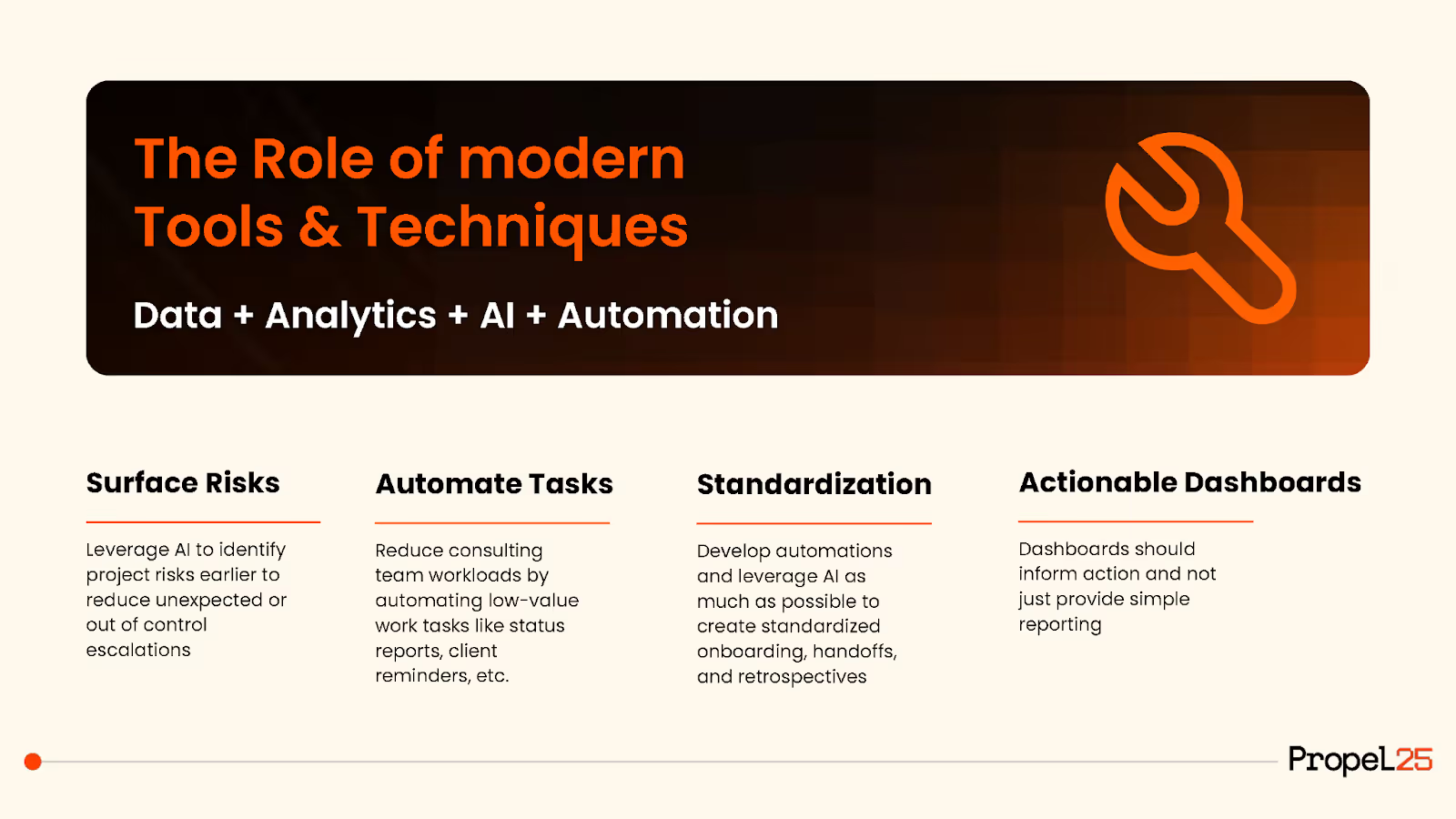
Today’s service organizations can pull in data from CRM, CS, support, and delivery systems to flag risks, standardize handoffs, and automate routine work. AI adds forecasting, nudges, and intelligent summaries, helping teams work smarter, not just harder.
But the success of these tools hinges on one thing: trust.
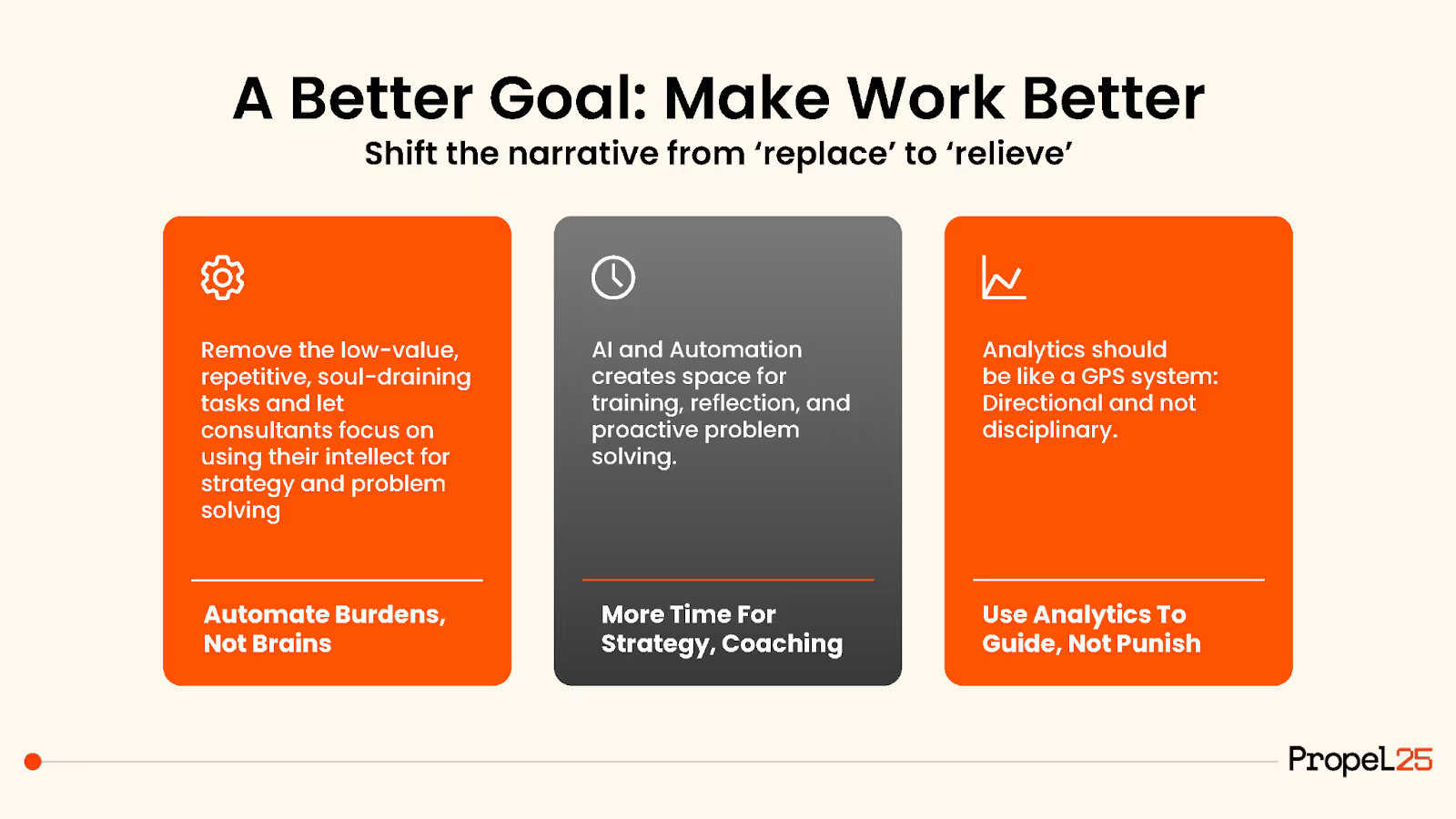
The key is to shift the message: AI isn’t about replacement. It’s about relief.
Teams that see sustained success will be the ones that automate the grunt work, strip away low-value clicks, and give teams time to coach, grow, and focus on outcomes. They build space for upskilling, product knowledge, and better customer conversations.
As leaders, you need to show, not tell, that the point of AI is better work, not just more of it.
Practical AI and automation applications from the field
The reality in most services organizations is this: sales hands off projects with incomplete or buried information, status reports are overly optimistic, sentiment is anecdotal, and client accountability is hit-or-miss.
The good news is that none of these are hard problems to solve if leaders start by applying AI and automation in the right places.
Here are a few use cases that reflect what nCloud and its customers are actively doing:
1. Fix the handoff: Automate knowledge transfer from sales
Sales data sits buried in tools like Salesforce, while business outcomes aren’t clearly defined. As a result, PS teams start engagements without context, wasting time revalidating assumptions.
A smarter approach helps PS teams:
- Use the right tools to auto-capture insights from calls
- Extract themes using AI to generate handoff summaries without manual effort
- Feed this directly into your onboarding or consulting kickoffs
This way, consultants start on Day 1 with context: key outcomes, stakeholder intent, and decision drivers so they can ramp up faster, reduce the chances of misalignment, and minimize rework.
2. Detect ‘watermelon’ projects
One of the trickiest PS challenges is the so-called watermelon project, green on the outside, red at the core. Everything looks fine in reports, but buried in Slack threads and sugar-coated updates are early signs of trouble. By the time the real risks surface, it’s often too late to course-correct.
With the right application of AI and automation, PS teams can:
- Mine unstructured data across Slack, email, and status reports.
- Set up automated sentiment and risk detection to flag early signs of issues.
- Use project intelligence engines to generate real-time, AI-curated status summaries.
- Set up passive sentiment monitors. Tools like Rocketlane let you pulse key stakeholders at project kickoff, and periodically throughout, for early visibility into red flags and fewer executive escalations.
3. Track real-time client accountability
Too often, clients miss deadlines simply because they lack clarity on what’s needed or when. Project managers and consultants scramble last minute.
To prevent this, make sure your PS team uses AI and automation to:
- Build automated nudges using Slack, email, or workflows to remind clients of upcoming tasks
- Monitor responsiveness. Data can help identify clients who are consistently late or unresponsive
- Expose task lists and deadlines through a customer portal. This holds clients accountable with shared visibility
The “EASE” framework: An empathetic approach to operationalizing automation and AI
nCloud Integrators applies a practical framework that helps leaders and teams fix what matters. It helps leaders and teams:
- Evaluate workflows to understand points of friction, delays, and communication breakdown
- Assess impact vs. effort to understand what’s creating the most pain and what’s solvable with existing tools
- Strategize with the full stack: including professional services automation (PSA) tools, copilots, CRM, and collaboration platforms
- Execute in sprints while documenting wins and misses and sharing learnings openly with the team
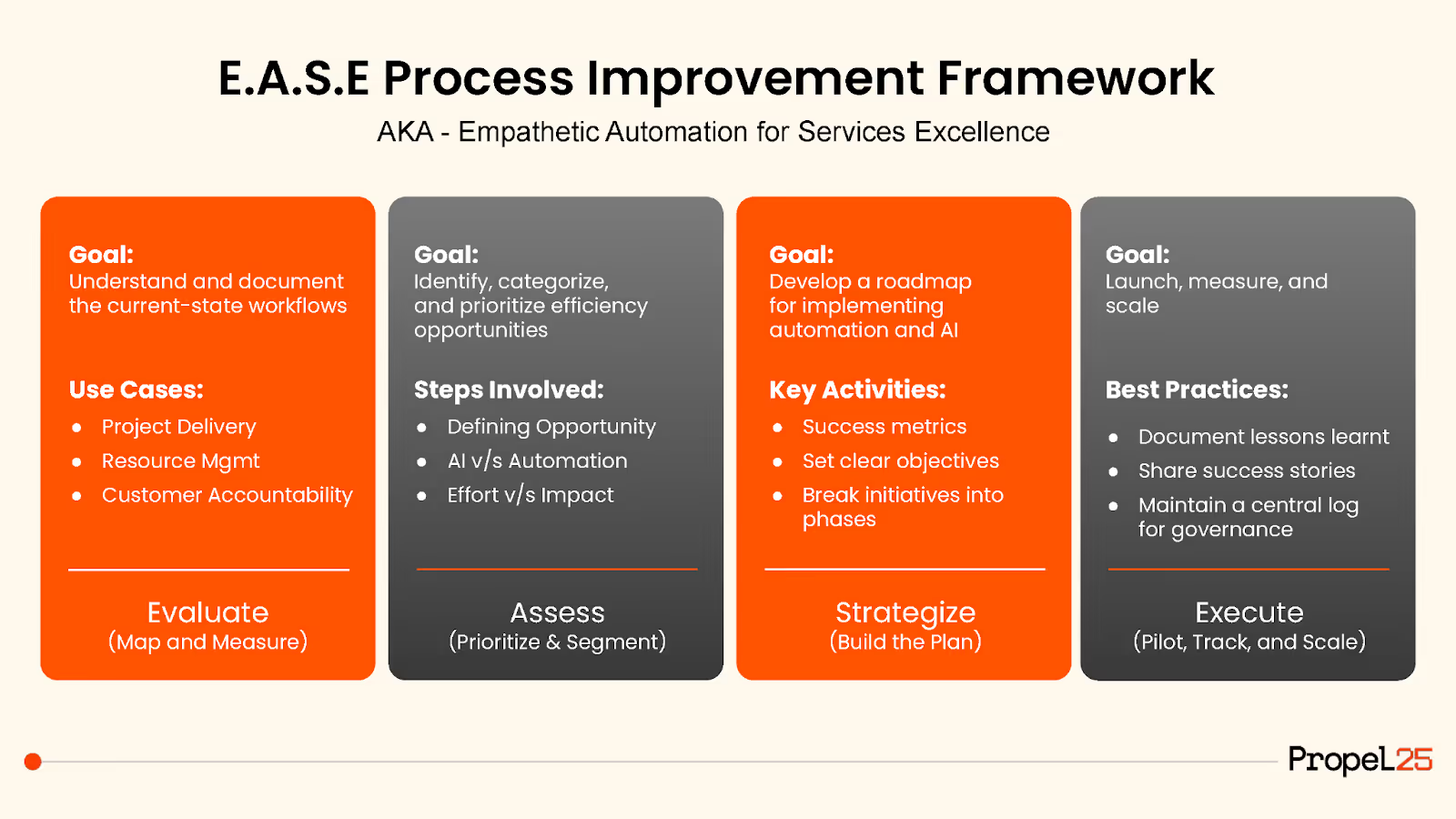
The EASE framework provides PS teams a repeatable, scalable, and empathetic approach to AI adoption across the organization.
Check out the rest of our Propel25 recaps here for more insights from the industry’s best.
Table of Contents

Regsiter for the live webinar


Great consultants didn't join your team to spend Fridays writing documentation.
Table of contents
18 of Forbes Cloud 100 chose Rocketlane. The best PS teams aren't waiting around.
FAQs












Copyright © 2026 Rocketlane Corp. All rights reserved.
















.webp)