The Outcome Era: How Professional Services Teams in AI Are Shifting from Delivery to Growth

•
•
Summarize blog with






The biggest shift in enterprise AI isn't happening inside product teams.
It's happening inside professional services.
For years, software companies have measured success through familiar milestones: implementation completed, customer live, project closed. But AI is changing how software gets adopted, how customers buy technology, and how companies prove value.
That means professional services teams are being asked a different question.
Not: Did the customer go live?
But: Did the customer achieve the outcome they paid for?
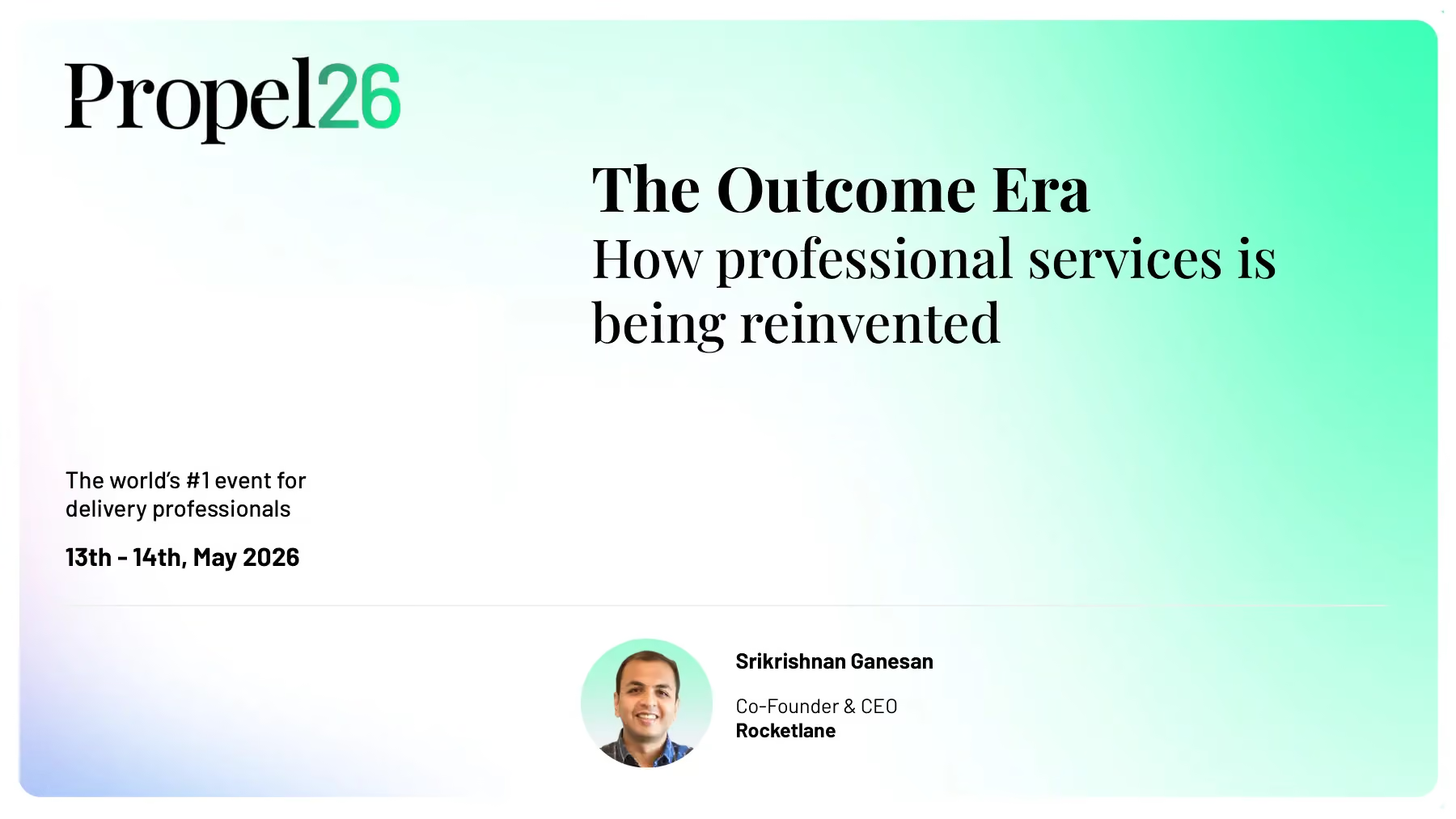
At Propel 26, Rocketlane CEO and Co-founder Srikrishnan Ganesan (Sri) argued that we're entering what he calls the Outcome Era—a shift in which professional services become one of the most important growth functions in the business.
For implementation leaders, customer success teams, and services organizations, it's a fundamental change in how success gets measured.
Why AI Is Elevating Professional Services
Historically, software companies treated professional services as a delivery function.
The role was straightforward:
- Deploy the software
- Configure the solution
- Train users
- Move customers to the next stage
But AI is changing the economics of software.
As products become easier to configure and deploy, implementation itself becomes less of a differentiator. Customers no longer judge vendors solely on whether software works. They judge them on whether the software creates measurable business value.
That changes the role of professional services.
Instead of acting as project managers, services teams increasingly become outcome architects.
Their responsibility isn't simply helping customers launch.
It's helping customers transform.
According to Sri, that's where many organizations are still lagging behind. Companies continue to measure delivery metrics while customers—and increasingly CFOs—care about business outcomes.
Go-live is still important.
But it is no longer the finish line.
The Outcome Era Requires New Success Metrics
One of the strongest ideas from Sri's keynote was that professional services organizations need a new scorecard.
The Outcome Era demands different measurements.
Instead of focusing exclusively on delivery milestones, teams need visibility into indicators that reflect long-term customer value.
These include:
- Product adoption
- Consumption growth
- Business impact
- Expansion potential
- Customer retention
These metrics matter because they connect service delivery directly to company growth.
A project completed on time is valuable.
A customer that expands, renews, and increases adoption is far more valuable.
This shift changes how service leaders think about implementation.
Success is no longer measured by whether work was completed.
It's measured by whether customer behavior changed.
That's a much bigger responsibility—and a much bigger opportunity.
Why AI Changes the Work Humans Do
AI was another major theme throughout the keynote.
But Sri's argument wasn't that AI will replace professional services.
It was that AI will reshape where humans create value.
Many implementation activities that traditionally consumed significant effort are becoming easier to automate.
- Documentation.
- Configuration support.
- Testing.
- Data migration.
- Administrative coordination.
As these activities require less human intervention, service professionals can focus on the work that AI struggles to do well:
- Understanding customer goals
- Designing outcomes
- Driving adoption
- Managing change
- Solving business problems
This creates an interesting shift.
Product expertise remains important.
But the ability to connect technology to business outcomes becomes even more valuable.
The best consultants won't simply know how the software works.
They'll know how customers work.
And they'll understand how technology can improve that reality.
The Future Belongs to Outcome Owners
One of the most practical takeaways from the session was Sri's challenge to service leaders.
Stop thinking about delivery as the end goal.
Start thinking about outcomes as the product.
That means becoming more intentional about:
- Defining success early
- Measuring value continuously
- Tracking adoption alongside delivery
- Connecting implementation work to business impact
It also requires stronger operational visibility.
Teams can't manage outcomes through spreadsheets, disconnected systems, or intuition alone.
To become true outcome owners, service organizations need visibility into project health, customer engagement, adoption signals, resource allocation, and delivery performance.
Only then can they consistently connect execution to customer value.
That's the foundation of the Outcome Era.
4 Key Takeaways from the Outcome Era Keynote
Sri's keynote offered a clear picture of where professional services are heading.
Here are four lessons for service leaders:
1. Go-live is a milestone, not an outcome.
Customers don't buy software to launch projects. They buy software to create business value.
2. Adoption matters more than activity.
The most important indicators of success happen after implementation, not during it.
3. AI changes the role of professional services.
As repetitive work becomes automated, human expertise shifts toward strategy, change management, and outcome design.
4. Professional services are becoming a growth function.
The teams that drive adoption, retention, and expansion will increasingly influence company growth.
Conclusion
The Outcome Era represents a significant shift for professional services organizations.
For years, implementation teams were measured by what they delivered. Going forward, they'll increasingly be measured by what customers achieve.
That's a very different mandate.
It requires new metrics, new skills, and new operating models. It also requires a stronger connection between project execution and customer outcomes. Teams need visibility into adoption, engagement, and business impact—not just milestones and timelines.
The professional services leaders who thrive over the next decade won't simply deliver projects faster.
They'll help customers achieve outcomes faster.
And as AI continues to reshape software delivery, that ability may become the most important competitive advantage a services organization can build.
Because in the Outcome Era, implementation isn't the end of the customer journey.
It's where value creation begins.

Authored by

Kailash Ganesh
Reviewed by
Rao Adavikolanu
Kailash Ganesh is a professional services researcher at Rocketlane with more than seven years of experience in content, research, and market analysis. He studies how enterprise PS teams are adopting agentic AI to transform delivery operations, has evaluated every major PSA platform in the category, and writes from the perspective of a practitioner who watches enterprise PS teams make these exact decisions daily.
Table of Contents

Regsiter for the live webinar


Great consultants didn't join your team to spend Fridays writing documentation.
Table of contents
18 of Forbes Cloud 100 chose Rocketlane. The best PS teams aren't waiting around.
FAQs













Copyright © 2026 Rocketlane Corp. All rights reserved.


















.webp)