Proactive Professional Services: Why the Best Teams Have Stopped Taking Orders


•
•
Summarize blog with






For years, professional services teams have been rewarded for being responsive.
A customer asks for something. The team delivers it. The project moves forward. Everyone wins.
At least, that's how it used to work.
Today, that model is starting to break down.
As AI makes implementation, configuration, documentation, and project administration easier, customers increasingly need something different from their service partners. They need guidance. They need expertise. And often, they need someone willing to challenge their assumptions.
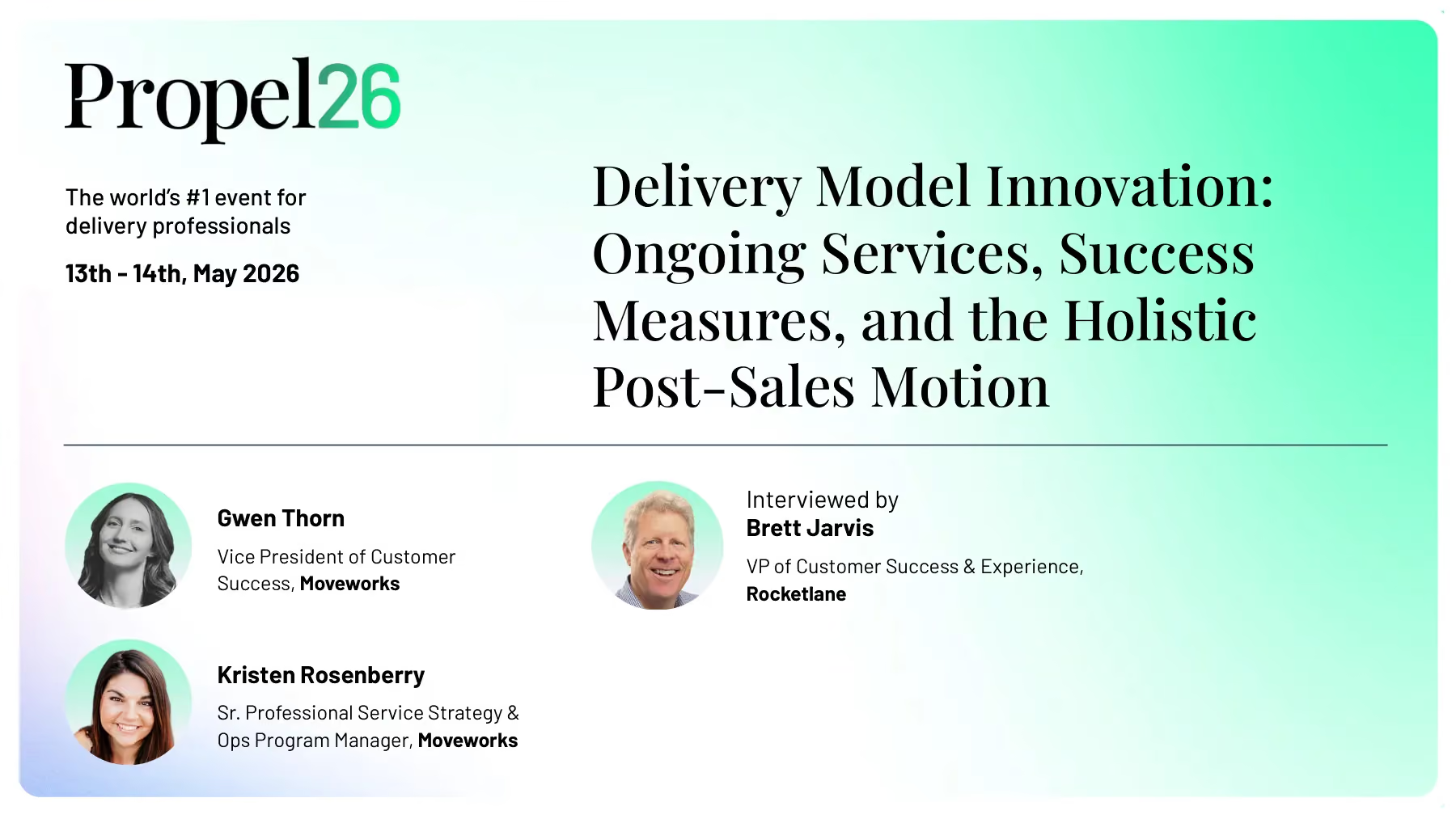
At Propel 26, Gwen Thorn, Kristen Rosenberry, and Brett Jarvis from MoveWorks made a compelling case for why the future of professional services belongs to teams that stop taking orders and start leading conversations.
Their message was simple: the highest-value services organizations don't just solve the problems customers describe. They uncover problems customers haven't yet discovered.
Why Taking Orders No Longer Works in Professional Services
For much of the software industry's history, implementation expertise was the primary source of value.
Customers needed help configuring products, integrating systems, building workflows, and training users. Professional services teams became experts in execution.
But AI is changing that equation.
Many of the tasks that once required significant manual effort are becoming faster and more automated. Configuration work, documentation, reporting, and implementation administration increasingly require less human intervention.
That doesn't make professional services less important. It makes strategic thinking more important.
When customers can access information faster and automate routine work more easily, they place a premium on something else: insight.
The ability to diagnose business problems. The ability to challenge assumptions. The ability to connect technology investments to measurable outcomes.
That's where modern professional services teams create value—not by saying yes to every request, but by helping customers solve the right problems.
Why Discovery Is Becoming the Most Important Skill in Professional Services
One of the strongest themes from the session was the growing importance of discovery.
More important than configuration. More important than project management. More important than documentation.
Because discovery determines whether teams are solving the right problem in the first place.
Customers often arrive with a feature request, workflow idea, or implementation plan already in mind. The temptation is to execute exactly what they've asked for.
The best consultants take a different approach.
They ask questions:
- Why is this important?
- What business challenge are we trying to solve?
- What outcome are we hoping to achieve?
- Is there a better way to get there?
These conversations frequently uncover opportunities that would have been missed if teams simply followed instructions.
That's the difference between implementation and consultation.
One executes requirements. The other creates value.
How Professional Services Teams Become Strategic Advisors
As AI automates more execution work, services professionals have an opportunity to move higher up the value chain.
But that shift doesn't happen automatically.
It requires new skills.
The session highlighted several capabilities becoming increasingly important:
- Business problem discovery
- Executive communication
- Change management
- Outcome design
- Process consulting
- Strategic questioning
These aren't traditionally viewed as implementation skills. They're advisory skills.
And they're becoming critical as customers look for partners who can help them navigate complexity rather than simply configure software.
This doesn't mean execution becomes less important. In fact, predictable execution becomes the foundation that enables advisory work.
Customers still expect projects to finish on time, stay within budget, and deliver what was promised.
The best professional services organizations do both. They execute reliably and advise strategically.
Why AI Creates More Opportunity for Human Expertise
Many organizations still view AI primarily through the lens of productivity.
How many hours can it save? How many tasks can it automate?
Those questions matter. But they're only part of the story.
AI doesn't just reduce effort. It changes where effort is spent.
As routine work becomes easier, services teams gain the capacity to focus on activities that create deeper customer impact:
- Identifying opportunities customers may not see
- Connecting projects to business goals
- Driving adoption
- Facilitating organizational change
- Designing long-term success strategies
The consultants who thrive in this environment won't simply know how to use technology.
They'll know how to use technology to solve business problems.
That's a very different skill set—and it's becoming increasingly valuable.
From Delivery Teams to Growth Teams
One of the most interesting implications from the discussion is what this shift means for the role of professional services inside software companies.
Historically, services teams were viewed as delivery organizations. Their responsibility was implementation.
Today, many of the highest-performing teams are becoming growth organizations.
Why?
Because they're often closest to the customer.
They understand customer challenges. They influence adoption. They identify expansion opportunities. And they help customers achieve measurable outcomes.
That makes professional services one of the most strategic functions in the customer lifecycle.
The teams creating the greatest impact aren't simply delivering projects. They're helping customers transform how they work.
How Rocketlane Helps Teams Operate Proactively
The shift from reactive delivery to proactive advisory work requires more than new skills. It requires visibility.
Professional services teams can't guide customers toward outcomes if they're spending most of their time chasing status updates, gathering project information, or manually identifying risks.
That's where Rocketlane helps.
By bringing project execution, customer collaboration, milestones, and delivery visibility into a single system of record, Rocketlane gives services teams the context they need to move beyond task management and into strategic guidance.
Teams can identify risks earlier, maintain alignment around outcomes, and spend more time helping customers achieve value rather than simply tracking project activity.
As AI takes on more administrative and operational work, that visibility becomes the foundation that allows consultants to focus on what customers increasingly need most: expertise.
4 Key Takeaways for Professional Services Leaders
1. Discovery is now the most important skill in professional services.
The ability to uncover customer challenges matters more than simply executing requests.
2. AI is automating execution, not expertise.
As routine work becomes easier, strategic thinking becomes more valuable.
3. Great consultants challenge assumptions.
The goal isn't to do what customers ask. It's to help them achieve what they need.
4. Professional services are becoming a growth function.
Teams that drive adoption, outcomes, and business value will increasingly influence retention and expansion.
Conclusion
The future of professional services won't be defined by who delivers projects the fastest.
It will be defined by who helps customers make the best decisions.
AI is rapidly reducing the amount of time teams spend on execution-heavy work. That creates an opportunity to focus on what matters most: understanding customer challenges, designing solutions, and driving meaningful business outcomes.
The organizations that succeed won't choose between execution and advisory work. They'll build operational systems that make delivery predictable while giving consultants the time and visibility to focus on strategy.
That's the shift happening across professional services today.
The best teams haven't stopped serving customers.
They've stopped taking orders.
And they've started leading.
Table of Contents

Regsiter for the live webinar


Great consultants didn't join your team to spend Fridays writing documentation.
Table of contents
18 of Forbes Cloud 100 chose Rocketlane. The best PS teams aren't waiting around.
FAQs













Copyright © 2026 Rocketlane Corp. All rights reserved.
















.webp)