How to use data storytelling to reduce churn and drive revenue

•
•
Summarize blog with






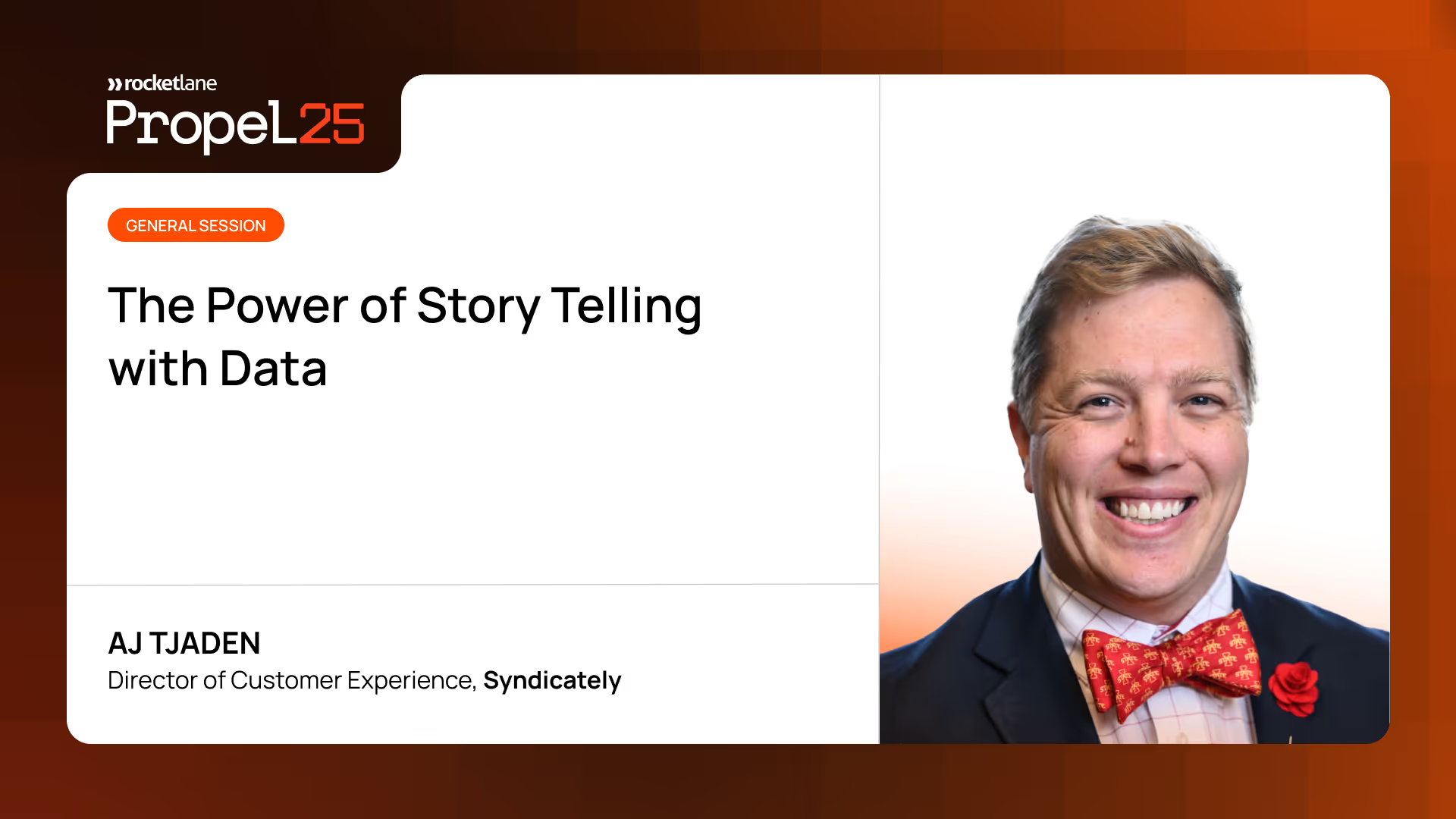
In this Propel25 session, AJ Tjaden, Director of Customer Experience at Syndicately, shared a simple but powerful message: solving churn problems requires understanding customers and using data effectively. Instead of relying on trends or buzzwords, his team focused on listening, analyzing, and taking action.
This approach helped reduce churn from 12.4% to 4.2% and increased revenue by $1.3M within six months.
AJ previously worked at ShareTrue, where he inherited a company with high churn, unclear accountability, and limited understanding of customer issues. He chose a back-to-basics approach, combining customer outreach, behavioral insights, and detailed data analysis using Excel.
The session was filled with practical tips and relatable examples—focused on real results rather than theory.
Three truths about customer insight
AJ emphasized the importance of distinguishing between:
- What the customer actually says: direct feedback from real conversations.
- What the team assumes the customer says: often based on internal narratives.
- What the data confirms: objective trends in behavior and usage.
Most companies rely on only one or two of these perspectives, but the true insight comes from combining all three.
One key quote summarized his stance: "You don’t need AI to find out what’s broken. You need curiosity and Excel."
The churn crisis: what was really happening
When AJ joined ShareTrue, churn was at 12.4%, and there was no unified understanding of why customers were leaving. To fix this, AJ started by comparing three sources of insight:
- Data showed high billing frequency, low feature use, and unclear patterns.
- Teams believed pricing and product stickiness were the problems.
- Customers reported lack of clarity and poor support.
This disconnect became clear after hundreds of churned customers were contacted directly. Their feedback didn't match internal assumptions. Strategy was then recalibrated based on real data.
Deep-diving the data: the Excel era
Beyond CRM and surveys, AJ requested in-depth data from engineering: feature usage, user quotas, login frequency, and time-to-value. Analysis revealed:
- 54% of churned customers were on monthly billing.
- The worst churn was in banking, professional services, and manufacturing.
- Smaller accounts with under 50 users and low disk usage were most at risk.
Executive leadership was surprised to learn that high-churn segments weren't even core focus areas. These insights soon became part of the sales qualification process.
Strategic shifts that changed the game
1. Stop selling to bad-fit customers
Analysis showed 77% of churned customers met two or more criteria: monthly billing, small user base, or from non-core industries. These prospects were disqualified moving forward. Sales teams initially resisted but changed their approach after seeing results.
2. Launch a customer advisory board (CAB)
A CAB was formed quarterly, with representatives from enterprise, mid-market, and small business segments. Key teams joined these calls. This created a strong engagement loop—some customers renewed just to stay involved.
3. Outreach to misaligned customers
Rather than waiting for churn, the team began reaching out to accounts that showed signs of disengagement. These customers were invited into CABs or asked to give feedback on underused features. This proactive outreach restored trust and extended customer lifespans.
The turnaround: metrics that mattered
Within six months:
- Churn fell to 4.2%.
- $1.3M in revenue was protected or added.
- Monthly customers dropped from 54% to 26%.
- A user quota sweet spot of 11–250 users was identified.
Revenue growth was now driven by alignment and proactive retention.
Tactics you can steal today
AJ suggested a three-part framework that any team can use:
1. What is the data telling you?
- Review adoption trends, billing models, and support history.
- Track “Time to Last Contact” (TLC)—is it over 30 days?
- Prioritize outcome-based metrics, not just logins.
2. What do you think is happening?
- Ask your team for their take on top struggling accounts.
- Compare this with actual data.
3. What are customers actually saying?
- Skip generic surveys. Make real calls.
- Document and compare patterns across customer segments.
Bonus tactics: sales and pilot reform
- Pilots: Avoid if they cost as much as full onboarding. Instead, use data to qualify likelihood of success.
- Sales alignment: Encourage cross-functional empathy by having Sales join onboarding or watch CS demos.
- Customer engagement: Make outreach more human—use SMS or personalized onboarding notes.
- Feedback loops: Link Sales compensation to long-term outcomes, not just closed deals.
Why this session mattered
AJ Tjaden delivered a masterclass in operational honesty. It showcased how curiosity, careful analysis, and company-wide accountability could outperform hype or automation.
As AJ put it, "Roll up your sleeves. The data is telling you a story. It’s your job to hear it."
Inspired by AJ's approach?
Dive into more Propel25 recaps to explore how the industry's sharpest minds are turning insight into impact.
Explore all sessions here.
Table of Contents

Regsiter for the live webinar


Great consultants didn't join your team to spend Fridays writing documentation.
Table of contents
18 of Forbes Cloud 100 chose Rocketlane. The best PS teams aren't waiting around.
FAQs













Copyright © 2026 Rocketlane Corp. All rights reserved.



















.webp)