Customer onboarding and why it's hard


•
•
Summarize blog with






Customer churn is a big problem! How big a problem, you ask?
US companies alone lose USD 136.8 billion annually due to avoidable customer switching. The strong correlation between retention and increase in profits is another reason we should obsess over churn. During the Preflight Huddle in Boston, Jeff Kushmerek, CEO and Founder of Infinite Renewals, spoke about why customer onboarding is hard. He talked about how retention starts at implementation and the role your customer onboarding journey plays in helping retain your customers. Here are reasons why onboarding can be hard:
- Improper sales handoffs
- The customer success team is not involved in the pre-sales phase
- A Joint Success Plan was not agreed upon or drawn up before commencing the onboarding
- There are product roadmap dependencies in the contract
- Customers do not have a sense of urgency
- Executives say: “just get it done.”
- Team members are onboarding customers differently.
- Teams are not staffed appropriately.
Why is Jeff the right person to talk about this?
Jeff Kushmerek is the CEO and Founder of Infinite Renewals. Jeff, along with Kate Mazzini and Kristine Vallila, the principal members of the firm, help SaaS B2B tech companies reduce churn and significantly increase recurring revenue and software adoption by launching customers efficiently and happily. Beginning as a developer in the 1990s, Jeff has participated in the success of Endeca, which Oracle acquired at one billion dollars. He served as the VP at Brightcove at IPO and VP of Professional Services at Virgin. Throughout his career, he has done it all! He has coded, managed projects and products, and developed and led strong teams. Fundamentally, Jeff is someone who you can rely on to roll up his sleeves and get things done.
Here are the top ten ways Jeff’s session at the in-person Huddle in Boston
Managing expectations in different scenarios
Start thinking about how you can move forward from any given scenario you will be put in. A great place to start for onboarding, implementation, and CS teams is to bring all the stakeholders, including everyone involved in pre-sales, to align their expectations. Let the customer know that they should adhere to the timeline to fulfill all dependencies from their end, including identifying a technical resource, and tell them when the implementation specialist rolls off.
Once everyone is on the same page, allocate the development team to work on the features. Hire a project manager to decouple CSM’s responsibilities from feature development. Once the conservative timelines are set, call for another stakeholder meeting. If your customer is moving away from a different vendor’s product, bring everyone to an agreement about the minimum viable product features required to launch your product and completely shut down the previous product or service. Agree on the timeline, and agree to no more talking about the past!
Why is customer onboarding important?
First impressions last, and a seamless customer onboarding process is your best chance at making these lasting impressions. When your customer has to replace existing vendors with time constraints, they’ll need your product to be launched soon. Your customer’s success with your solution largely depends on how well they have been onboarded for the following reasons they met during onboarding :
- First time to value
- The first ‘aha!’ moment
- Greater time to value
- Develops confidence in your product
- Happy customers early in the journey
It’s no surprise that happy customers do not churn easily. Make the best of your first impression and show your customers that they’ve made the right decision.
Solve your post-sales issues
Your sales team knows all the features and use cases. Still, when it comes to solutioning, your onboarding and implementation teams are in a better position to take the prescriptive approach in helping your customer realize the value of your solution.
Here are post-sales symptoms your onboarding and implementation team should watch out for and remedy:
- Delayed time to value
- The strategy to expand after onboarding is missing
- Fire fighting escalations from your customers
- Lack of a repeatable process for launching your customer
- No internalized process and tools
- Not charging for custom services
- High burnout rate amidst the CS team
- One generic CSM role for all post-sales activities
Poor handoffs and transactions after the initial sale can be damaging in the long run. By identifying these symptoms, you realize where your process needs deeper investigation and improvements. Identifying the symptoms will help you pick all the low-hanging fruit, identify quick fixes, get started on long-term solutions, and holistically positively impact post-sales.
Pick your battles wisely if you want to win the war.
If you are a leader or an emerging leader in your organization working in onboarding, implementation, or CS you need here are some things that will help you win the post-sales journey:
- Building a defined, repeatable process
- Separating onboarding, implementation, CS operations, and support
- Involving your customer success in the last leg of pre-sales
- Charging for implementation
- Segmenting your customers diligently
How to weave Customer Success into the company’s fabric
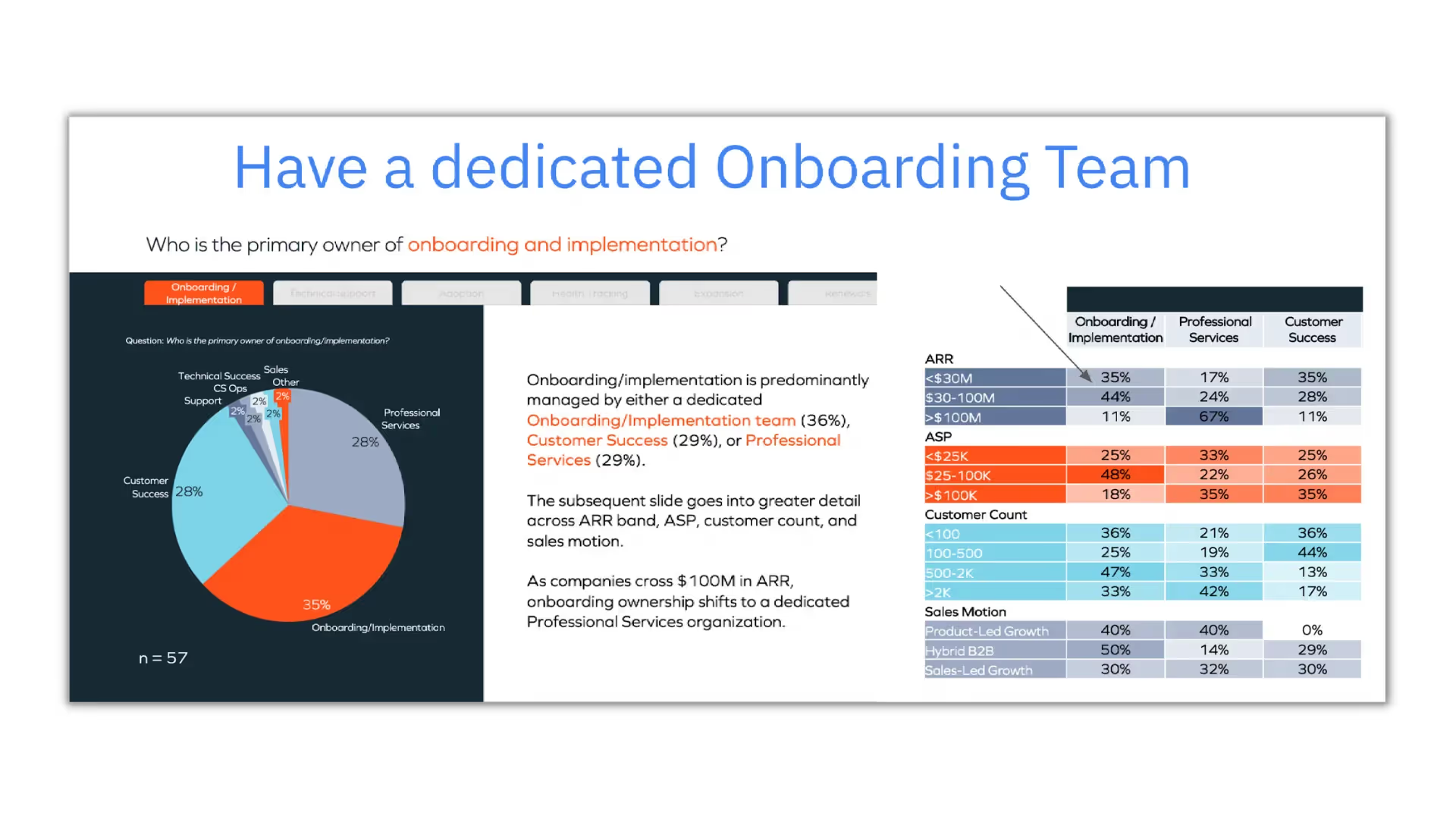
1. A dedicated customer onboarding team
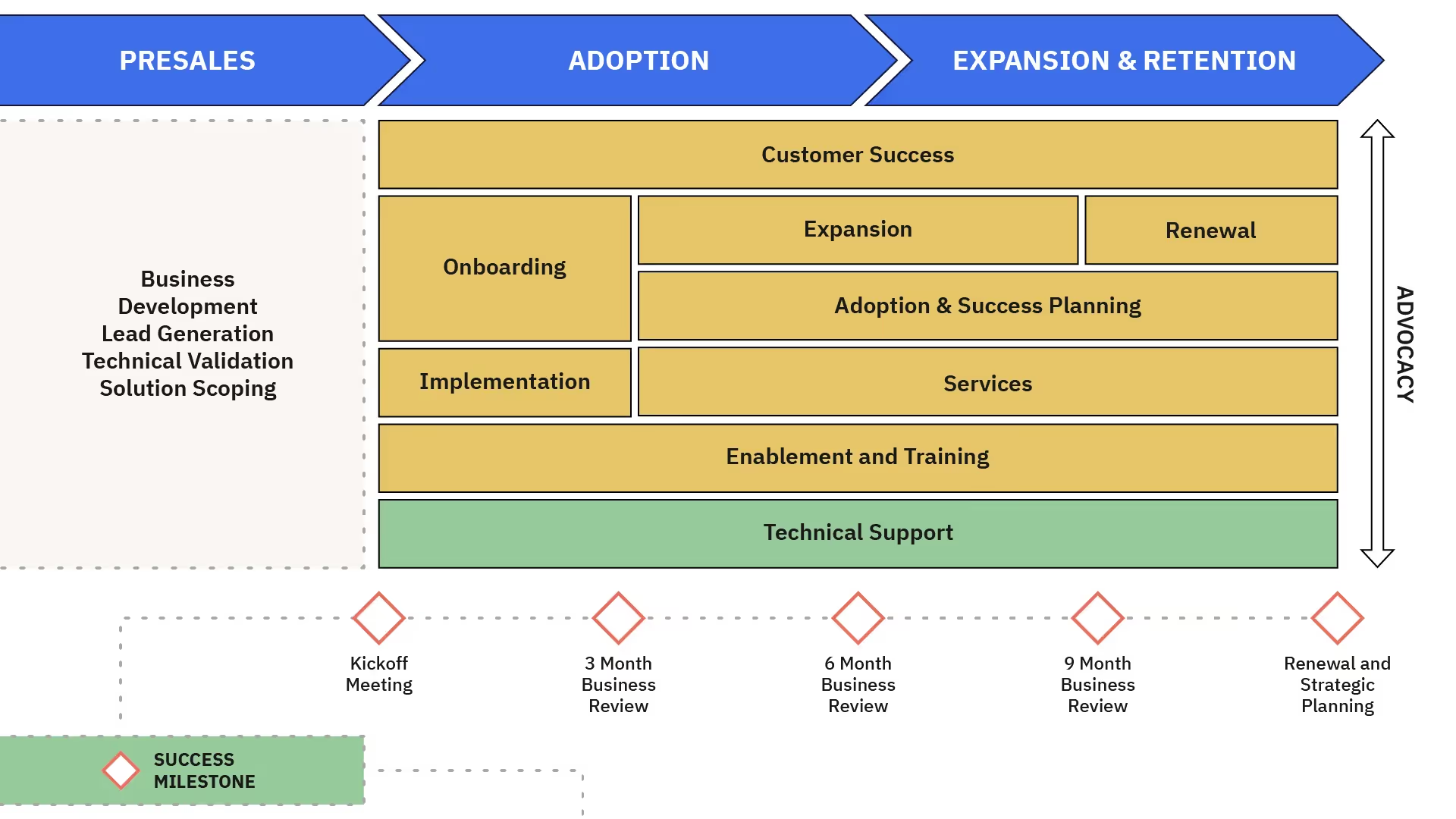
2. A well-defined customer engagement and customer success journey through onboarding, adoption, retention, expansion, and advocacy
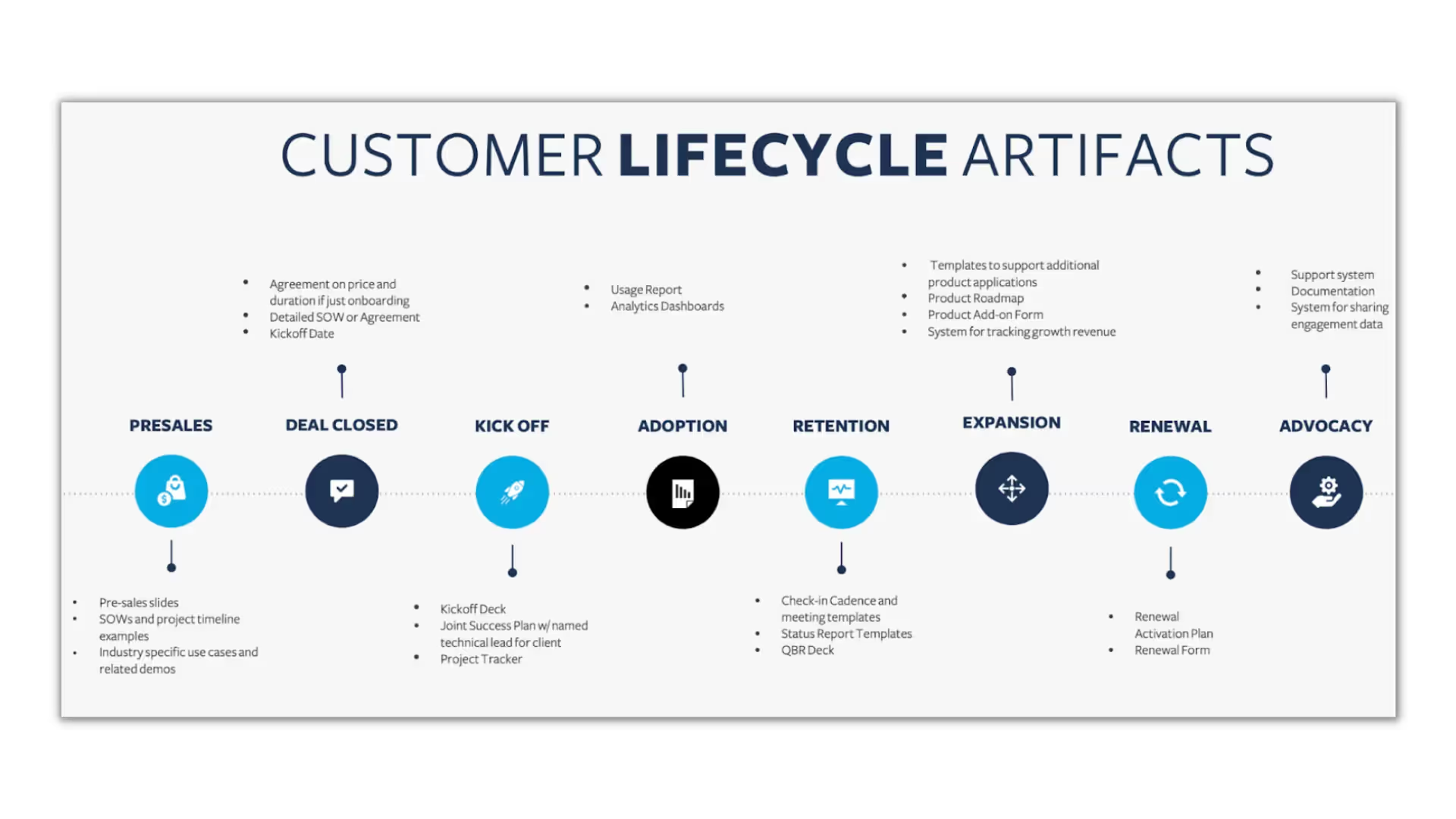
3. Using proper artifacts and tools for post-sales segments
Getting your customer onboarding right need not involve guesswork. Help your value delivery teams be proactive champions with all the recommendations Jeff shared during the Preflight Huddle in Boston. You will see that retaining customers isn’t grueling with the right onboarding processes in place. So, all we want to say is, happy renewals, folks!
Table of Contents

Regsiter for the live webinar


Great consultants didn't join your team to spend Fridays writing documentation.
Table of contents
18 of Forbes Cloud 100 chose Rocketlane. The best PS teams aren't waiting around.
FAQs













Copyright © 2026 Rocketlane Corp. All rights reserved.



















.webp)