Rocket fuel for onboarding: The Actabl playbook for customer excellence

•
•
Summarize blog with






In the dynamic world of hospitality SaaS, delivering a consistent and efficient customer onboarding experience is paramount.
Actabl, formed by uniting four distinct companies, Hotel Effectiveness, ProfitSword, ALICE, and Transcendent, faced the challenge of harmonizing their onboarding processes.
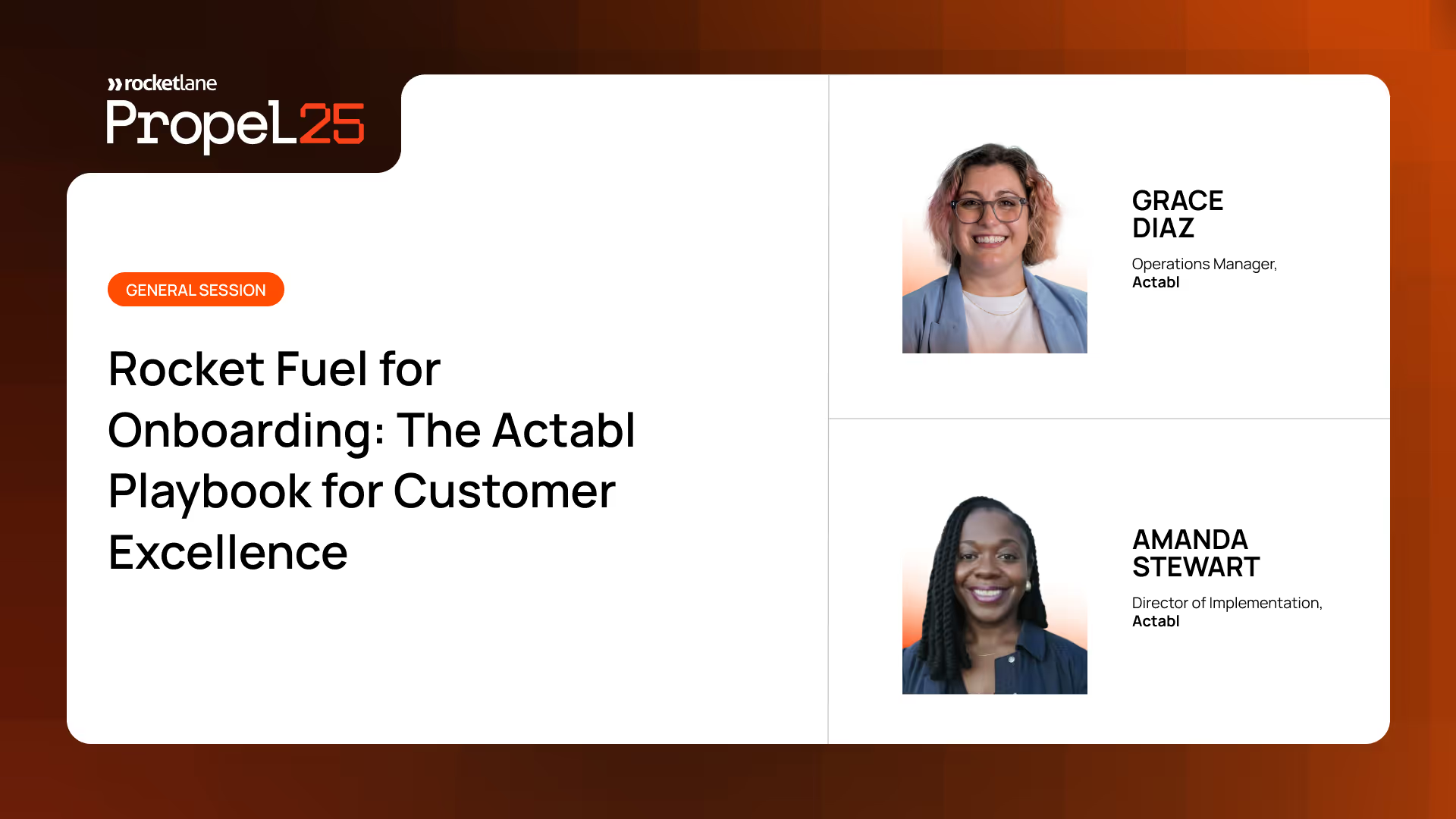
At Propel25, Grace Diaz, Operations Manager, and Amanda Stewart, Director of Implementation at Actabl, shared their journey of leveraging Rocketlane to unify their onboarding, resulting in significant improvements in efficiency and customer satisfaction.
In this article
- Unifying onboarding across diverse brands
- Leveraging Rocketlane for streamlined processes
- Measurable improvements and outcomes
- Fostering a unified team culture
- Key takeaways for onboarding and implementation teams
Unifying onboarding across diverse brands
Merging four companies into a single entity introduced complexities, including disparate onboarding processes, siloed teams, and inconsistent customer experiences. Actabl aimed to streamline its people, processes, and tools to deliver a unified onboarding experience.
Defining clear team structures and responsibilities helped Actabl establish a standardized onboarding process applicable across all brands.
This alignment enabled team members to speak a common language, share best practices, and execute consistently across different customer scenarios. Customers, in turn, gained confidence in a predictable and reliable onboarding journey regardless of which brand they were engaging with.
Leveraging Rocketlane for streamlined processes
Before Rocketlane, Actabl's teams grappled with a patchwork of tools that lacked integration, causing delays, miscommunication, and a fragmented onboarding experience. Rocketlane served as the unifying solution, providing a centralized platform that facilitated seamless collaboration among internal teams and with customers.
Key benefits included:
Standardized project plans
Actabl ensured that every project followed a proven structure by creating template-based project plans for each brand and bundle. These templates were not only brand-specific but also adapted to different levels of complexity, allowing implementation teams to tailor plans while maintaining consistency. This helped in scaling their processes across varying customer types, from single hotel implementations to large multi-property projects.
Enhanced visibility
With Rocketlane's dashboard and reporting features, project managers gained real-time insights into project status, bottlenecks, and task ownership. This clarity eliminated guesswork and enabled proactive problem-solving, allowing teams to identify delays early and hold both internal stakeholders and customers accountable.
Customer engagement through the portal
Rocketlane's customer portal allowed clients to track the status of their onboarding projects, see assigned tasks, and identify blockers. This transparency not only improved trust but also empowered customers to take timely actions, thereby accelerating project progress. The portal's user-friendly design and notification features ensured that clients stayed informed and engaged throughout the onboarding lifecycle.
Measurable improvements and outcomes
Implementing Rocketlane led to transformative improvements across Actabl's onboarding KPIs:
Reduced implementation time
Actabl slashed its implementation time from over 450 days to as low as 33 days for simpler projects. This was achieved through streamlined project planning, automation, and clear task dependencies. The visibility into project phases allowed for efficient scheduling and faster issue resolution.
Increased customer satisfaction
Actabl gathered timely feedback by embedding milestone-based CSAT surveys throughout the onboarding journey, and addressed issues before they escalated. The result was a 2024 average CSAT score of 4.5, indicating high levels of customer delight.
Accelerated project kickoffs
Actabl now kicks off projects within 10 days or less, providing immediate momentum post-sale. This speed was previously unattainable due to disjointed tools and unclear processes. With Rocketlane, kickoff readiness became a measurable and achievable metric.
Expanded project volume and impact
In 2024, Actabl launched 1,300 projects via Rocketlane, contributing to $16 million in ARR, double the previous year. This scalability was only possible due to standardized processes, centralized tools, and improved team alignment.
Fostering a unified team culture
Beyond tools and metrics, Actabl recognized that people and culture were central to successful transformation. To create a sense of unity across the formerly independent brands, they initiated multiple cultural and organizational initiatives:
Open communication
Actabl's leadership maintained transparency with regular feedback loops and open-door policies. Teams were encouraged to raise concerns, propose improvements, and own the evolution of their onboarding processes.
Regular engagement and cross-functional bonding
Virtual trivia nights, team mixers, and cross-brand projects helped employees build relationships across geographical and brand boundaries. These efforts turned remote colleagues into collaborators.
Empowerment through process ownership
Teams were not just asked to adopt Rocketlane but to shape how it was used. From building custom user guides to defining role-based responsibilities, implementation teams took charge of their workflows. This sense of agency significantly boosted adoption and continuous improvement.
Key takeaways for onboarding and implementation teams
Standardize processes across brands
A unified approach ensures consistency and builds customer trust. Define roles, responsibilities, and workflows that work across different product lines.
Utilize centralized tools
Adopting an end-to-end onboarding platform like Rocketlane allows for seamless collaboration, better project tracking, and fewer handoff issues.
Engage customers proactively
Transparent communication through customer portals keeps clients informed, involved, and accountable, leading to faster implementations and better outcomes.
Measure and act on feedback
Milestone-based CSAT surveys provide timely insights into customer experience. Acting on this data enables course correction and drives continuous improvement.
Cultivate a collaborative culture
Organizational alignment stems from open dialogue and shared goals. Invest in team building and foster ownership of tools and processes to sustain momentum.
Focusing on people, processes, and tools helped Actabl successfully transformed its customer onboarding experience, setting a benchmark for efficiency and customer satisfaction in the professional services industry.
Explore more insights from Propel25 and learn how industry leaders are redefining service delivery. Watch Propel25 sessions here.
Table of Contents

Regsiter for the live webinar


Great consultants didn't join your team to spend Fridays writing documentation.
Table of contents
18 of Forbes Cloud 100 chose Rocketlane. The best PS teams aren't waiting around.
FAQs













Copyright © 2026 Rocketlane Corp. All rights reserved.


















.webp)