Using data to drive intelligent professional services delivery


•
•
Summarize blog with






The pace of AI innovation in 2025 is reshaping professional services (PS) and pushing teams to rethink how they deliver value, optimize operations, and drive better outcomes. At Rocketlane, we’re deeply invested in supporting the PS community with the insights and strategies they need to navigate this shift and build truly “intelligent” delivery organizations.
As part of our Intelligent Delivery webinar series, Srikrishnan Ganesan, CEO and co-founder of Rocketlane, spoke to industry leaders Soham Basak, Delivery Head at Darwinbox, David Dixon, Global Head of Professional Services, ABBYY, and Walter Phillips, Senior Director, Professional Services, ExtraHop to dive deep into how data is shaping decision-making in PS teams.
Read on for a summary of the key takeaways from the session.
Want to be part of the conversation?
Sign up for future sessions in our Intelligent Delivery webinar series
Why data in 2025 is more important than ever
In 2025, every week brings new advancements in AI, transforming marketing, support, product development, and customer success. For professional services teams, this shift affects three key areas:
- What you deliver: AI-driven changes in software and SaaS products mean new service models and ongoing optimization.
- How you deliver: Implementation timelines, effort, and processes will evolve as AI reshapes deployment strategies.
- Who delivers: AI will take on tasks traditionally handled by people, changing team structures and roles.
As these shifts accelerate, measuring their impact is more critical than ever. Data is essential to assess the effectiveness of new service models, refine cost structures, and evolve pricing strategies.
The data that matters: Key metrics companies are tracking in 2025
Companies are moving beyond traditional success indicators, prioritizing data standardization, retention-driven KPIs, and operational efficiency. Rather than evaluating team performance in silos, they are aggregating data across pre-sales, professional services, and customer success to align execution with top-line goals with a focus on:
- Utilization rates: Tracking billable and effective utilization at individual, team, and regional levels to optimize resource allocation.
- Revenue measurement: Shifting from total revenue to profitability per project, region, and department for a clearer picture of sustainable growth.
- Retention-focused metrics: In SaaS and subscription businesses, net retention rate (NRR) and gross retention rate (GRR) have overtaken CSAT and NPS as primary indicators of long-term success. Companies are analyzing adoption trends, technical barriers, and expectation mismatches to proactively reduce churn.
- Backlog management: Monitoring active vs. backlog projects to balance service capacity and ensure high-priority projects receive adequate support.
- Project manager capacity: Assessing workload based on the complexity and scale of customer engagements to maintain service quality without overburdening teams.
- Delivered ARR per employee: A critical efficiency metric helping businesses scale without unnecessary headcount expansion.
Companies are increasingly taking a granular approach to pinpoint inefficiencies before expanding their focus to broader optimization.
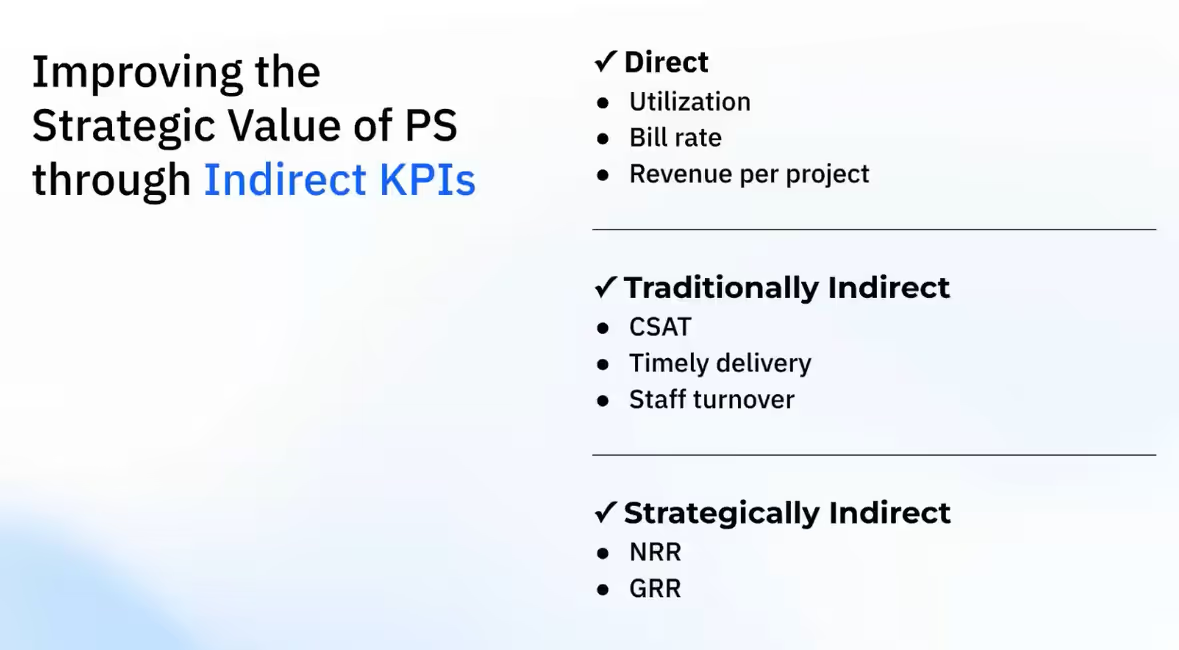
From insights to action: How data is driving efficiency in professional services
Efficiency is about much more than cutting costs—it’s about making smarter decisions, reducing friction, and accelerating value realization. Organizations are leveraging data to streamline operations and boost productivity by:
1. Tracking time to first value (TTFV) with precision
- Integrating CRM, professional services, and customer success data to track adoption milestones.
- Measuring engagement through successful insights extraction, key configuration, and workflow completion.
- Identifying bottlenecks and systematically reducing TTFV over time.
2. Eliminating meeting overload through standardization
- Analyzing meeting patterns to restructure project delivery.
- Implementing standardized templates and decision-making checkpoints.
- Ensuring the right people are involved at the right time to reduce redundant discussions.
3. Automating low-complexity onboarding tasks
- Using AI-driven voice bots to guide customers through initial setup steps.
- Providing automated configuration recommendations to accelerate onboarding.
- Reducing human effort and enabling scalable customer activation.
4. Redesigning migration workflows to reduce manual effort
- Analyzing migration efforts to identify inefficiencies and mismatches between planned and actual effort.
- Automating API-based migrations with structured migration engines.
- Improving execution predictability and reducing operational strain.
5. Rethinking manual effort with AI-driven recommendations
- Training AI models on historical problem statements and solutions.
- Generating first-draft recommendations for customer implementations.
- Streamlining consultant efforts by enabling them to refine rather than start from scratch.
Using data to shape executive narratives
Executives don’t need more data—they need the right data, framed to drive action. The key to crafting compelling, executive-level narratives is:
1. Shifting from data dumps to strategic storytelling
- Replacing long reports with focused narratives that connect data to business impact.
- Linking activity-based metrics to customer acquisition costs, retention, and lifetime value.
- Surfacing patterns in customer behavior to highlight early churn risks and upsell opportunities.
2. Framing efficiency metrics to defend resource allocation
- Using data to answer executive questions on staffing needs and productivity.
- Quantifying inefficiencies through detailed resource allocation tracking.
- Demonstrating efficiency improvements using aggregated timesheet and project data.
3. Proactively managing backlog to balance capacity and demand
- Monitoring backlog trends to identify understaffing or inefficiencies.
- Ensuring optimal workforce sizing to minimize customer wait times and maintain margins.
- Using backlog data to proactively adjust staffing levels before they impact retention.
4. Documenting impact to strengthen internal influence
- Tracking how service-led initiatives contribute to revenue retention.
- Quantifying the impact of implementation support and proactive engagement on renewals.
- Providing high-level, results-driven summaries that help executives focus on strategic priorities.
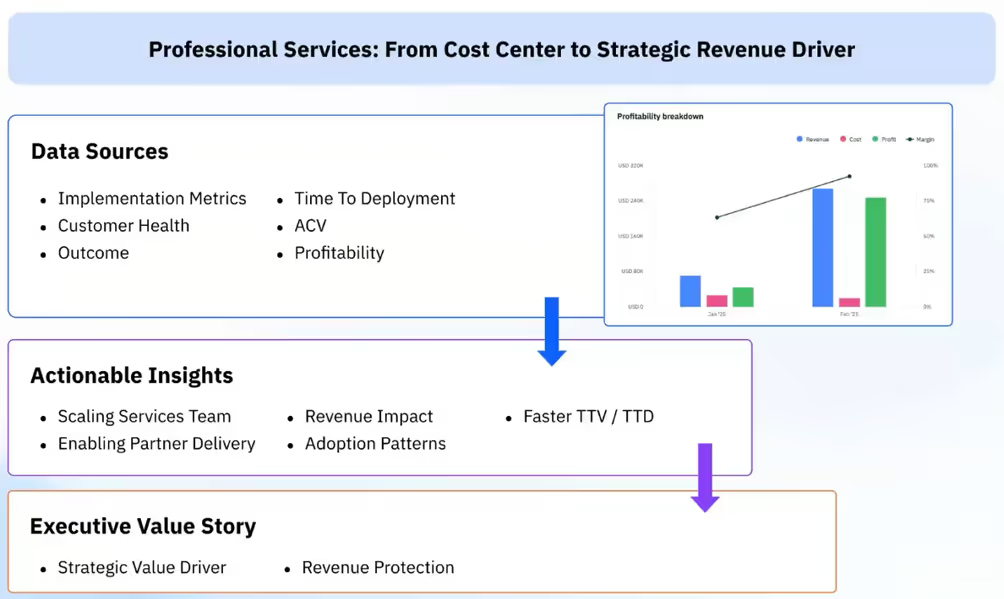
How professional services teams plan to leverage data differently in 2025
Professional services teams in 2025 are becoming strategic revenue drivers. Teams are optimizing costs, identifying new revenue opportunities, and aligning their efforts with business growth – all thanks to a focus on data. Here’s how they are making the shift:
1. Repositioning professional services as a revenue driver
- Demonstrating how implementation and support services accelerate product adoption, improve retention, and create expansion opportunities.
- Moving beyond the perception of professional services as a cost center by proving their direct impact on long-term customer value.
2. Tracking costs at a granular level
- Focusing on profitability by analyzing resource allocation, project timelines, and billable hours to ensure every engagement contributes to the bottom line.
- Identifying inefficiencies in service delivery and making data-driven adjustments to optimize margins.
3. Uncovering revenue leaks with data
- Detecting hidden inefficiencies, such as revenue leakage in shorter-duration projects.
- Adjusting pricing models—like increasing bill rates for high-risk projects—to ensure services remain profitable.
4. Leveraging AI to optimize free services
- Transitioning from manual service delivery to AI-driven self-service models to scale operations without increasing costs.
- Using AI-powered guidance to maintain service quality while reducing reliance on high-cost human resources.
5. Aligning data strategy with business stage
- Prioritizing efficiency in early-stage companies by automating administrative processes and reducing operational overhead.
- Maximizing strategic impact in more established organizations by ensuring every professional services initiative delivers measurable business value.
Join us at Propel25 to know more about building an intelligent delivery organization
The future of professional services is intelligent, automated, and data-driven—and Propel25 is where it all comes together. On May 14-15, 2025, in the Bay Area, San Francisco, we’re bringing together top leaders in professional services and implementation to explore how AI, automation, and strategic agility can transform service delivery.
With the theme "Intelligent Delivery Organization," this year’s event will provide practical strategies, expert insights, and hands-on learning to help teams elevate their delivery models.
Table of Contents

Regsiter for the live webinar


Great consultants didn't join your team to spend Fridays writing documentation.
Table of contents
18 of Forbes Cloud 100 chose Rocketlane. The best PS teams aren't waiting around.
FAQs













Copyright © 2026 Rocketlane Corp. All rights reserved.




















.webp)