The PS Outcome Alignment Audit: A Framework for the AI Era


•
•
Summarize blog with






Most professional services teams believe they're aligned—until you ask the negative question: if your team stopped working for three weeks, what breaks?
The answers get vague fast. That vagueness is the gap.
AI is widening it. Teams are using AI to draft faster, summarize faster, search faster, and ship more work. But speed does not create alignment. If daily work isn't clearly connected to business outcomes, AI simply helps teams move faster in different directions.
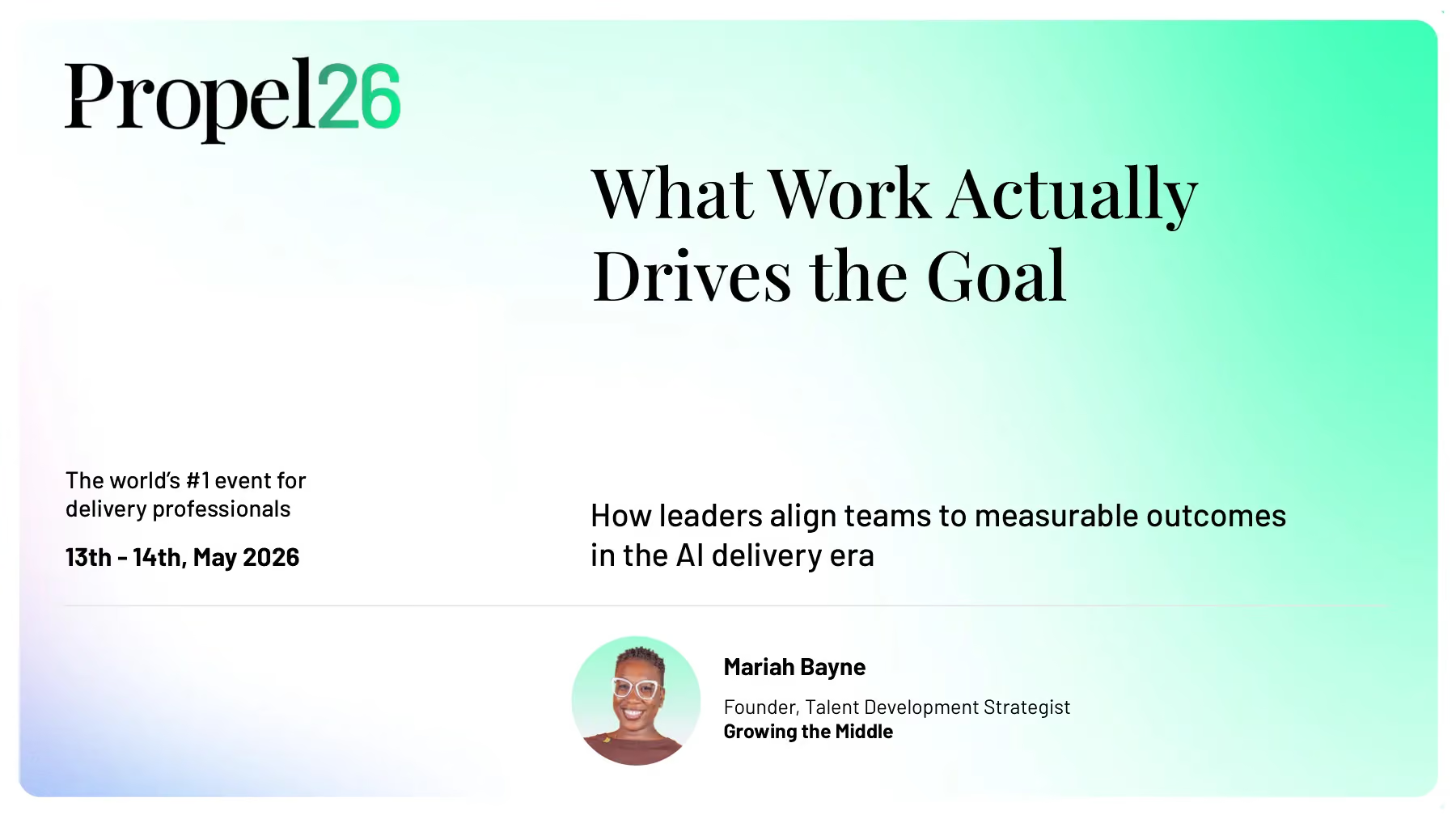
Mariah Bayne, CEO and founder of Zinger Consulting, led a hands-on workshop at Propel 26, Rocketlane's annual conference for PS leaders, built around a single premise: before you add another AI tool to your team's workflow, you need to know whether every person can explain what they're working on, why it matters, and how it connects to the outcome the business is trying to achieve.
That alignment is what separates teams that work faster from teams that deliver better.
Why AI Adoption Is Exposing a PS Team Alignment Problem
Most PS leaders assume their teams understand the goal. Most teams assume the same. But when asked to explain how their work affects the business, many people default to task language.
- We're building a knowledge base.
- We're improving handoffs.
- We're updating playbooks.
- We're automating documentation.
Those statements describe activity, not outcomes. The harder question is what should improve because that work exists.
Mariah's warning was direct: "People are using AI to go faster and not further."
That distinction matters. AI can accelerate individual output, but it does not create ownership. It does not automatically clarify priorities. It does not make disconnected work more strategic.
If anything, AI makes misalignment more expensive because it scales effort before teams have confirmed direction.
The foundation has to come first. People need a basic understanding of what they are doing, why it matters, who it serves, and how success will be measured before AI enters the workflow.
The 5-Question Alignment Audit Every PS Leader Should Run with Their Team
Mariah's alignment audit is designed to surface gaps before they become expensive. It is not something leaders run on their teams. It is something they run with them.
The five questions are:
- What is the work stream?
- What is the team actually doing?
- Who does this serve?
- Where is AI touching this workflow?
- What should be better because of this?
The goal is not performance evaluation. It is shared clarity.
1. What Is the Work Stream?
Name the initiative in one sentence, without jargon. If a new hire cannot understand it, the work is not clear enough yet.
This forces teams to strip away internal shorthand and define the initiative in language everyone can align around.
2. What Is the Team Actually Doing?
There is often a gap between the work a team is supposed to be doing and the work actually happening day to day.
Surfacing that gap early prevents a three-month surprise later.
3. Who Does This Serve?
Teams should identify every stakeholder affected by the work: customers, internal teams, end users, downstream functions, and leaders.
Ownership starts when people understand who their work impacts.
4. Where Is AI Touching This Workflow?
If AI is involved, the team should be able to explain its role in one sentence.
Is AI replacing a task, assisting a human, generating an output, or surfacing a signal?
If the answer is unclear, the team probably has not defined the human layer clearly enough either.
5. What Should Be Better Because of This?
This is the outcome question.
What result should change? What leading, lagging, or quality signals will prove the work is delivering value?
Without this answer, teams may be busy, but they are not aligned.
Mariah demonstrated the framework live with Yari Kenny, Manager of Professional Services at dbt Labs, who was working on a knowledge management initiative for resident architects. Yari could explain the project clearly, but the audit surfaced a specific gap: success metrics.
The conversation moved toward ramp time as a leading indicator. If people can find answers faster and rely less on senior colleagues, ramp time should decrease and the organization should recover hiring investment sooner.
That is the power of the audit. It turns a useful initiative into an outcome-linked initiative.
Why Ownership Breaks When Goals Aren't Connected to People
Mariah shared a story from her time as Director of CS at an insurtech company. Their quoting tool went down for two hours. Her team estimated that roughly 200 quotes had been missed, so she asked the head of product to pull the list for follow-up.
He refused. With a 20% conversion rate, he reasoned that most of those quotes probably would not close anyway.
Mariah reframed the issue: someone would have to explain to the CEO why the company did not want the chance to recover hundreds of thousands of dollars in potential business.
She got the list within an hour.
The point was not that the product leader was wrong or careless. He was calculating from a narrow lens. The conversion rate made sense in isolation, but it missed the broader relationship cost, revenue impact, and customer experience consequences.
"Our goals were not clear and not connected," Mariah said. "There's an ownership gap there."
Ownership does not mean blame. It means people understand how their work connects to something that matters. When that connection is clear, teams think beyond the task. When it is not, they complete the task and stop.
This is why outcome language matters. "We built the knowledge base" is task language. "We reduced ramp time by 20%" is outcome language.
The update that moves a room is the one that connects what was done to what changed.
How Rocketlane Keeps PS Team Alignment Continuous
The alignment audit does not require a consultant, a full offsite, or a massive transformation program. Five questions, one work stream, and an honest team conversation can surface the gaps.
But alignment cannot remain a workshop exercise.
It has to become part of how delivery runs.
In Rocketlane, that alignment becomes continuous. Project plans, resource allocations, financials, timelines, and time tracking stay connected to the original customer and business outcomes. When work drifts, teams can see it earlier. When effort increases without a corresponding outcome, leaders can intervene before margin or delivery quality takes a hit.
Rocketlane's Nitro platform extends this further by watching projects against their goals, surfacing risks, and flagging drift before it compounds.
That matters because alignment is not a quarterly conversation. It is an operating discipline.
The audit identifies where clarity is missing. A system of record helps ensure that clarity stays visible as work moves.
4 Key Takeaways from Mariah Bayne's Alignment Audit Workshop
Run the Audit with Your Team, Not on Them
The five-question framework works best as a shared exercise. The gaps it surfaces are more useful when the team discovers them together.
Alignment Is Not a Feeling
Every person should be able to complete this sentence: this is what I am working on, this is why it matters, and this is how it connects to the goal.
If they cannot, that is a leadership gap, not a performance gap.
Ask the Negative Question
The fastest alignment test is simple: if this work stopped for three weeks, what breaks?
If the answer is vague, the connection to business outcomes has not been made explicit.
Switch from Task Language to Outcome Language
Use frameworks like SOAR—Situation, Obstacle, Action, Result—to keep updates tight and connected to what is actually changing.
The goal is not to report activity. It is to show progress.
Conclusion
AI is making misaligned teams more productive at doing the wrong things faster.
The gap Mariah is pointing to is real and widening. Teams are adopting tools, shipping work, and filling standups with activity, often without a clear thread between what they are doing and the outcome the business is trying to reach.
The alignment audit is a practical first step. Five questions, one work stream, run with the team—not evaluated from above. It will not fix everything, but it will surface the gaps that usually stay invisible until they become expensive.
The goal is not efficiency. The goal is direction.
And when direction is clear, predictable delivery follows. That's what turns aligned PS teams into revenue engines that scale without burning out their best people.
Table of Contents

Regsiter for the live webinar


Great consultants didn't join your team to spend Fridays writing documentation.
Table of contents
18 of Forbes Cloud 100 chose Rocketlane. The best PS teams aren't waiting around.
FAQs











Copyright © 2026 Rocketlane Corp. All rights reserved.
















.webp)