Professional services contract: templates, examples, and how to structure for delivery and margin in 2026

•
•
Summarize blog with






The professional services contract doesn't fail in legal review.
It fails in delivery.
Weeks into execution, things start to break. Scope expands without visibility. Teams exceed budget before anyone notices.
Billing lags behind completed work. Customers begin to question invoices. Margins quietly erode.
Professional services contracts don't fail in legal review. They fail in delivery. Weeks into execution, the scope expands without visibility.
Teams exceed budget before anyone notices. Billing lags behind completed work. The contract is more than a legal artifact — it's the system that controls how work gets executed, tracked, and paid for.
When that system is not connected to delivery, things fall apart.
What is a professional services contract (definition and meaning)
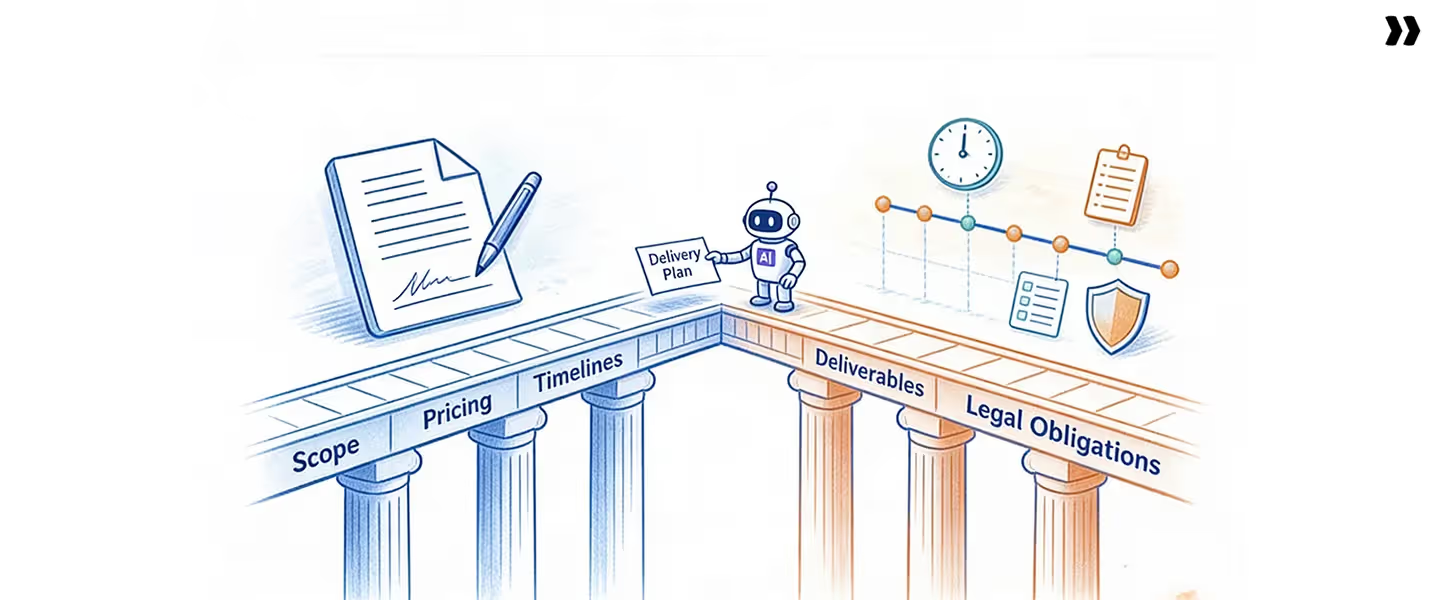
Most professional services contracts look solid when signed. The failure happens weeks later, when the scope expands without visibility and billing lags behind completed work. The contract didn't fail in legal review—it failed in delivery.
This is what most teams recognize as a professional services agreement.
But it does more than document what was agreed. It defines how consulting services, implementation, and ongoing services are delivered, measured, and paid for.
When treated as just a legal document, service contracts sit in isolation. Delivery teams rely on assumptions. Finance relies on delayed inputs. Customers rely on fragmented updates. This is where service agreements begin to break.
A service provider agrees to deliver onboarding and integration within a fixed timeline.
The contract outlines milestones and pricing, but those milestones are not tracked in execution. Teams continue work beyond the scope. Billing gets delayed. The contract still exists, but it no longer controls outcomes.
A strong professional services agreement connects what is sold to how it is executed. It ensures that scope, deliverables, and intellectual property terms are not just documented but actively enforced throughout delivery.
When to use a professional services contract
You use a professional services contract whenever a service provider delivers specialized work with a defined scope, timelines, and outcomes.
- Customer onboarding and implementation: Used when a professional service provider sets up, configures, or deploys a product. This includes onboarding workflows, integrations, and initial delivery milestones.
- Consulting engagements: Applied to consulting services where technical expertise or strategic input is delivered over a defined period, with clear deliverables and pricing.
- IT, data, or software services: Used for services agreements involving development, data migration, system integration, or ongoing technical support.
- Agency or outsourced work: Common in professional services firms delivering marketing, design, or operational services, where scope, timelines, and deliverables must be clearly defined.
In all these cases, the contract ensures that scope, pricing, and responsibilities are clearly structured before work begins.
Key components of a professional services agreement
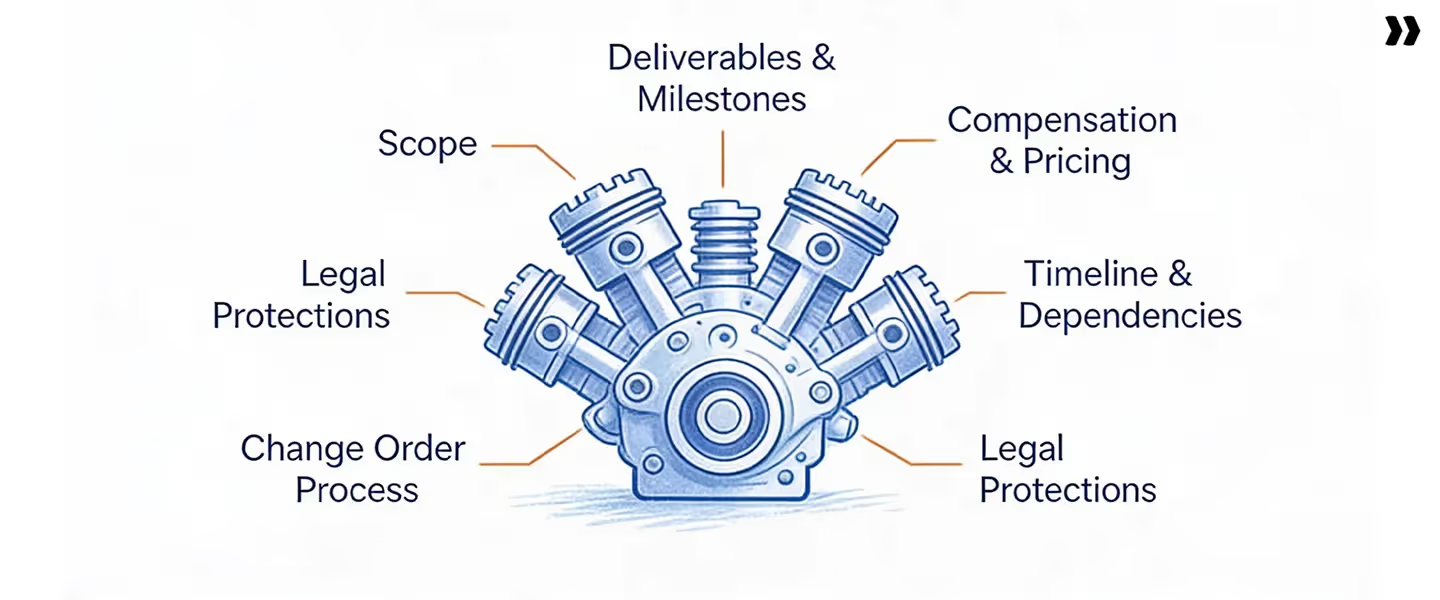
The core components of a professional services agreement define how services are delivered, tracked, and billed. If any of these are unclear, service contracts begin to break down during execution rather than at signing.
Scope of services
This defines what the service provider will deliver. It includes activities, boundaries, and exclusions. A clear scope prevents overlap, confusion, and uncontrolled expansion. When the scope is vague, teams end up delivering work outside agreed services agreements without realizing it.
Deliverables and milestones
Deliverables define outputs. Milestones define when those outputs are expected. Strong professional services contracts link milestones to measurable progress. This ensures that both the client and the professional service provider stay aligned on what completion looks like at each stage.
Compensation and pricing model
This defines how the service provider agrees to get paid. It could be a fixed fee, time-and-materials, or a retainer. Pricing must reflect effort and risk. If pricing is not aligned with actual delivery effort, margin erosion becomes inevitable in ongoing services.
Timeline and dependencies
Timelines define when work should be completed. Dependencies define what must happen before work can proceed. This includes client responsibilities, approvals, and inputs. Without clearly defined dependencies, delays occur, and responsibility becomes unclear between the client and the independent contractor.
Change order process
No service agreement remains static. Changes happen as projects evolve. A strong change order process defines when scope changes trigger updates in pricing, timelines, or deliverables. Without this, scope creep grows silently, and revenue leakage follows.
Legal protections
This includes intellectual property rights, confidentiality, liability, and independent contractor clauses. These protect both the service provider and the client. While these are critical from a legal standpoint, they must also align with how services are actually delivered to avoid disputes later.
Each of these components must not only exist in the contract but also connect directly to execution.
Where contract components break in execution
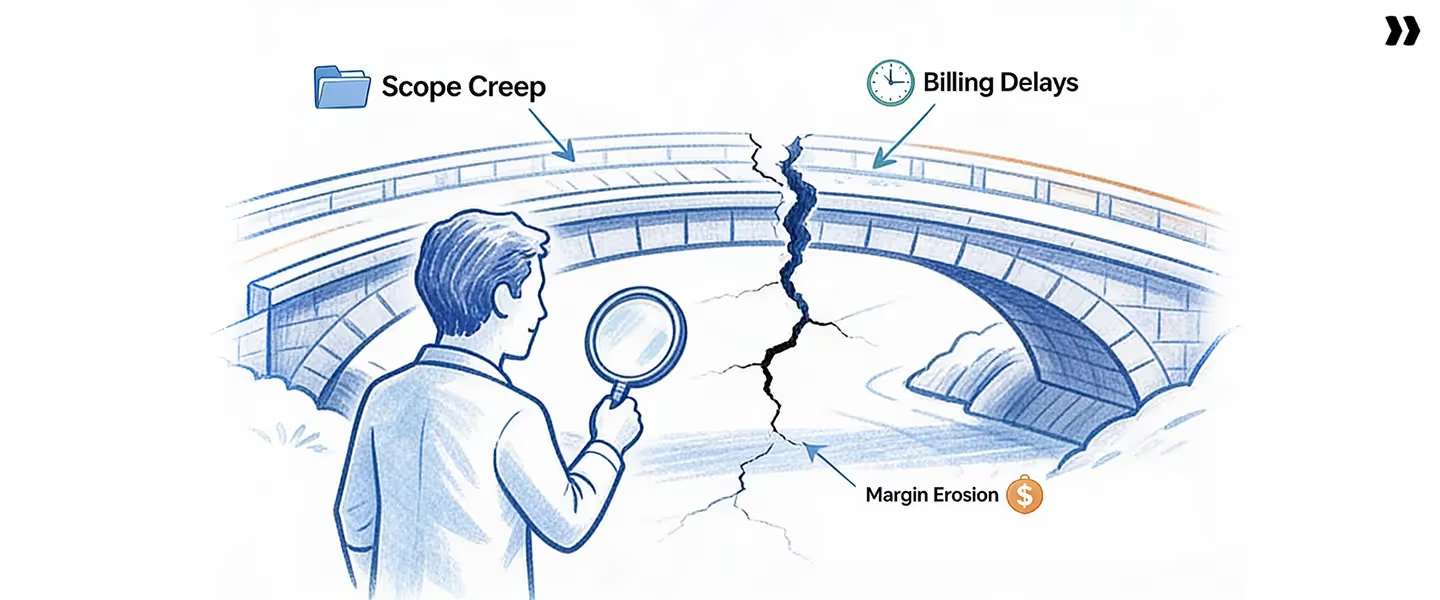
Most professional services contracts look solid on paper. The failure occurs when contract terms are misaligned with how the work is executed.
Scope not tied to tasks leads to scope creep
The scope of services is defined in the agreement, but not translated into actual project tasks. Delivery teams work off assumptions instead of defined boundaries. Over time, extra work gets absorbed into ongoing services without formal approval. Scope creep starts here. Service contracts lose control.
Milestones not tracked lead to delayed billing
Milestones exist in the contract, but they are not tracked in delivery workflows. Teams complete work, but there is no clear trigger for invoicing. Billing gets delayed because milestone completion is not visible or formally approved. This creates a gap between services delivered and revenue recognized.
Pricing not linked to effort leads to margin erosion
Compensation is defined upfront, but effort is not tracked against it in real time. Teams continue delivering work without visibility into budget consumption. When pricing is not tied to actual execution, margins begin to erode silently. By the time it is noticed, the contract has already lost its financial control.
PSA vs MSA vs SOW: what’s the difference
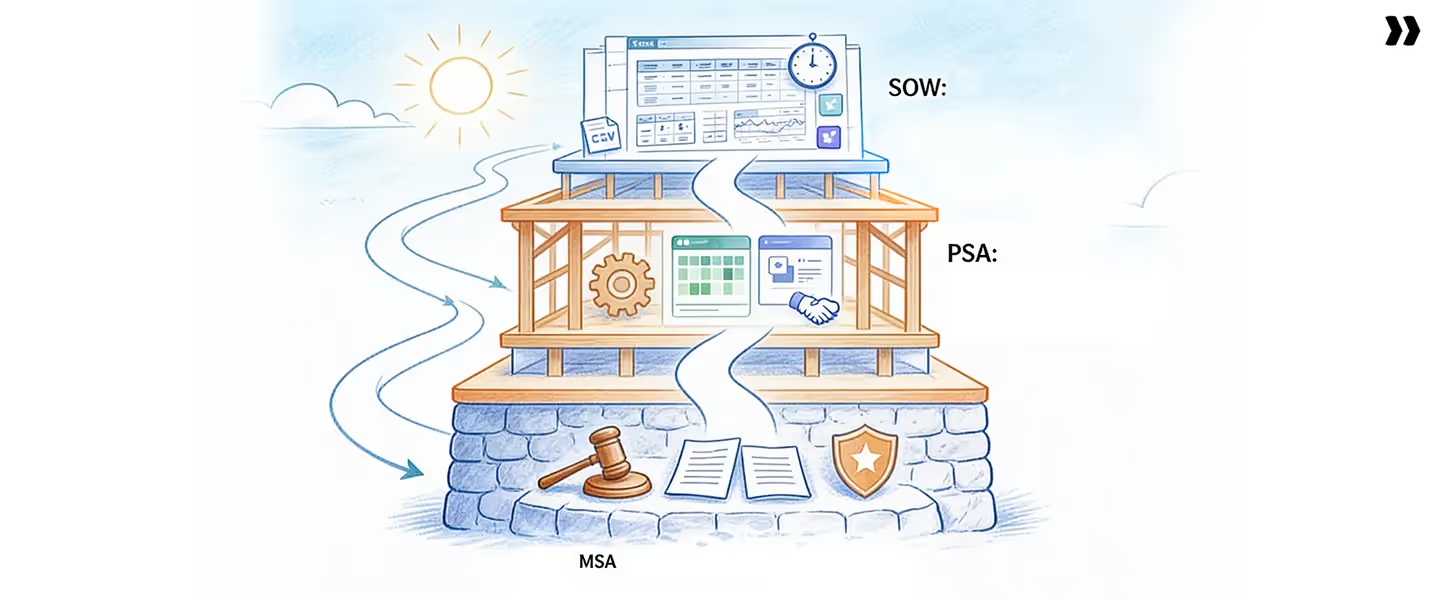
A professional services agreement, master services agreement, and statement of work serve different roles. They work together, but each controls a different layer of the delivery process.
Master services agreement (MSA)
A master services agreement defines the legal professional relationship between a client and a service provider. It covers terms that apply across all service contracts, such as confidentiality, intellectual property, liability, dispute resolution, and independent contractor status.
The MSA does not define specific work. Instead, it creates a consistent legal framework so teams do not renegotiate core terms for every engagement.
This is critical for professional services firms handling ongoing services or multiple projects with the same client.
For example, a SaaS company that works with an implementation partner signs an MSA only once. All future consulting services, onboarding, or integration projects are subject to this agreement. This ensures that legal protections remain consistent while execution can vary across projects.
Without an MSA, teams repeatedly renegotiate legal terms. With it, they can focus on delivery instead of legal overhead.
Professional services agreement (PSA)
A professional services agreement defines how services are delivered, measured, and paid for. It translates the legal foundation from the MSA into an operational structure for a specific engagement or service type.
This includes the scope of services, pricing model, timelines, milestones, and change order processes. The PSA is where service contracts begin to influence execution. It connects what is sold to how work should be performed.
For example, a company offering consulting services for system implementation creates a PSA that outlines phases such as discovery, configuration, and deployment. Each phase has defined deliverables, pricing, and timelines.
A strong PSA ensures that both the client and the professional service provider understand expectations before work begins. When structured well, it reduces scope creep, aligns pricing with effort, and improves delivery predictability.
Statement of work (SOW)
A statement of work defines the exact details of a specific project. It sits at the execution layer and breaks down what will be delivered, when, and how.
The SOW includes tasks, milestones, timelines, dependencies, and acceptance criteria. It is the most detailed document in the services agreements stack and directly drives day-to-day execution.
For example, within a broader professional services agreement, an SOW might define a data migration project. It specifies data sources, transformation rules, validation steps, timelines, and approval checkpoints.
The SOW is where contracts become actionable. If the SOW is not clear, delivery teams operate on assumptions. This leads to delays, rework, and disputes.
A well-structured SOW ensures that the scope is executable, milestones are trackable, and billing is aligned with actual delivery progress.
Types of professional services contracts
The main types of professional services contracts are fixed-fee, time-and-materials, retainer, and hybrid models. Each suits a different level of clarity in scope and risk tolerance.
Fixed fee contracts
Fixed fee service contracts work best when the scope is clearly defined. The service provider agrees to deliver a set of services for a fixed price.
This model offers predictable revenue for the provider and predictable cost for the client. However, if effort is underestimated or the scope expands, margins drop quickly. Fixed-fee contracts require strong scope control and a clear change-order process.
Time and materials (T&M) contracts
Time-and-materials contracts are used when the scope is uncertain or evolving. The client pays based on actual hours worked and resources used.
This gives flexibility to both sides. The service provider gets paid for effort, and the client can adjust the scope as needed. The trade-off is lower predictability. Without clear tracking, costs can grow beyond expectations.
Retainer agreements
Retainer agreements are used for ongoing services where work is continuous rather than project-based. The client pays a recurring fee for access to services over a period.
This model works well for support, advisory, or long-term consulting services. The main risk is underutilization. If the client does not fully use the allocated capacity, the perceived value drops.
Hybrid contracts
Hybrid contracts combine elements of fixed-fee, time-and-materials, and retainer models. They are common in complex professional services engagements.
For example, a project might have a fixed implementation fee, time-and-materials for custom work, and a retainer for ongoing support.
While flexible, hybrid models increase operational complexity. Tracking scope, effort, and billing across multiple structures requires strong systems and coordination.
Professional services contract template (with real example)
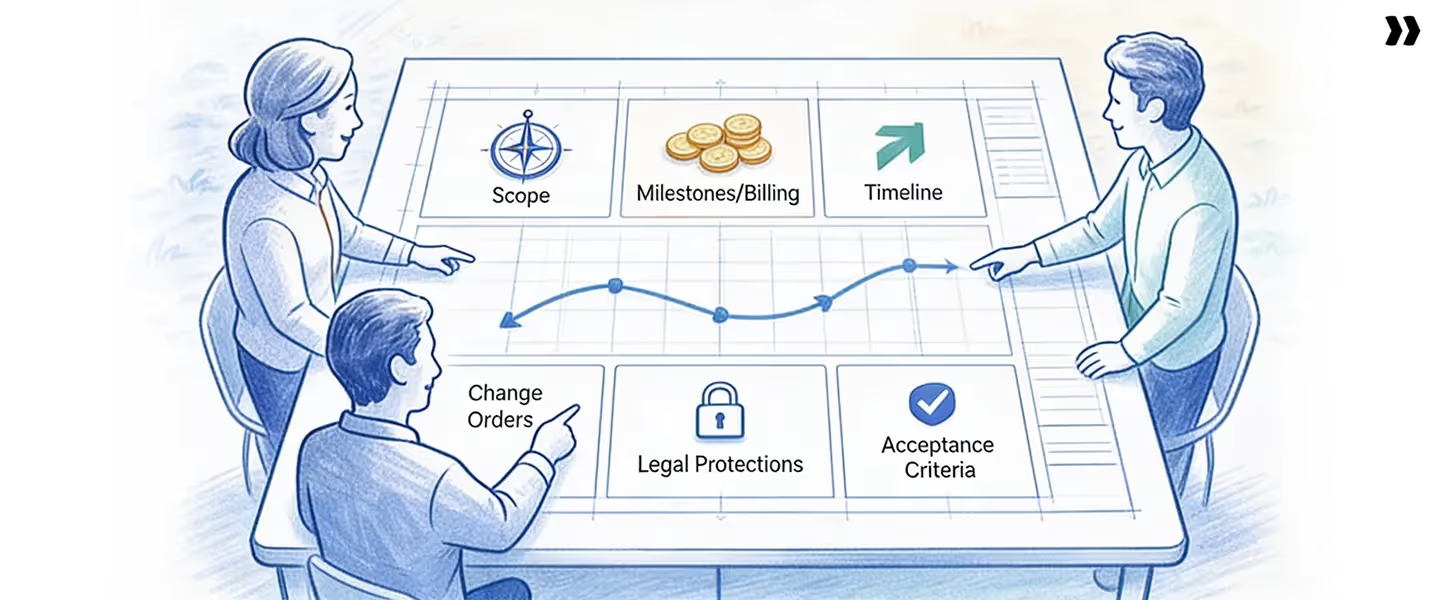
A strong professional services contract template is structured for execution, not just documentation.
Each section must translate directly into how delivery, tracking, and billing happen.
Template structure
Scope
Define exactly what the service provider will deliver.
- Services included
- Services excluded
- Assumptions
- Dependencies on the client
A good scope is specific and bounded. It avoids vague language like “support as needed” or “ongoing assistance.”
Milestones
Break delivery into measurable checkpoints.
- Phase-based milestones
- Deliverable-based milestones
- Approval points
Each milestone should answer one question: what does “done” look like here?
Pricing
Define how the service provider agrees to get paid.
- Fixed fee, time and materials, or hybrid
- Payment schedule
- Billing triggers
Pricing must align with effort and risk. If not, margin erosion begins early.
Timeline
Define when work happens.
- Start and end dates
- Phase timelines
- Delivery windows
Timelines must account for dependencies. Without this, delays become untraceable.
Change orders
Define how scope changes are handled.
- What triggers a change request
- Approval process
- Impact on pricing and timelines
This is the control layer for scope creep.
Acceptance
Define how deliverables are approved.
- Acceptance criteria
- Approval timelines
- What happens if rejected
Without clear acceptance, billing gets delayed, and disputes increase.
Example clause (real-world style)
Scope clause
“The service provider will deliver onboarding, configuration, and integration services as outlined in Appendix A. Any work outside this scope will require a mutually approved change order.”
Operator breakdown:
- Clear boundary → prevents scope creep
- Explicit exclusions → reduces ambiguity
- Change order requirement → protects margin
Milestone clause
“Milestone 2 (Configuration Complete) triggers 30 percent billing upon client approval.”
Operator breakdown:
- Links delivery to billing → no manual invoicing decisions
- Requires approval → aligns both parties
- Creates billing trigger → reduces delays
What a good template actually does
A well-structured professional services agreement ensures:
- Scope is enforceable, not just documented
- Milestones are tied to real execution
- Pricing reflects actual effort
- Billing is triggered by delivery events
- Changes are controlled, not absorbed
This is what turns a service contract into an operational system.
How to structure a professional services contract (step by step)
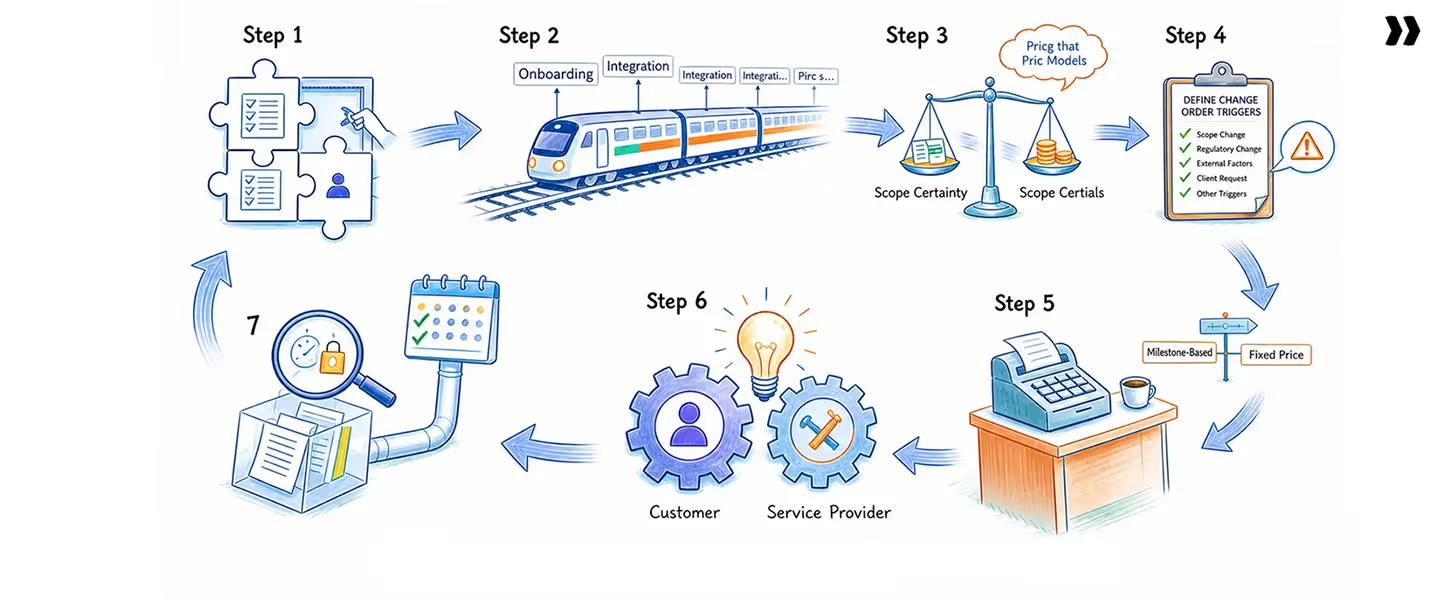
Structure your contract to make execution clear, billing timely, and scope controllable. The goal is not length. Its execution.
1. Break scope into executable tasks
Start with the scope of services, then translate it into actual work. Do not stop at broad statements like implementation, consulting, or support. Break the work into phases, tasks, and outputs that delivery teams can follow.
For example, instead of saying “integration support,” define discovery, mapping, testing, and go-live support as separate workstreams. This makes the professional services agreement usable in execution, not just in review.
2. Align milestones to delivery phases
Milestones should reflect real progress points in the project. They should sit at the end of meaningful delivery phases, not arbitrary calendar dates.
Examples include discovery complete, configuration complete, user acceptance testing sign-off, and go-live. This helps services agreements connect delivery progress to approvals and billing.
3. Select pricing based on scope certainty
Choose the pricing model only after you understand how stable the scope is.
- Use a fixed fee when the scope is predictable
- Use time and materials when the scope is still evolving
- Use retainer agreement models for ongoing services
- Use hybrid structures for complex service contracts
This protects both the service provider and the client from mismatched expectations.
4. Define change order triggers
Do not wait for disputes to define what counts as out of scope. Set clear triggers upfront.
Examples include:
- New deliverables
- Increased volume
- Additional integrations
- Timeline extensions caused by new requests
This is how a professional service provider prevents silent scope expansion.
5. Link billing to delivery events
Billing should not depend on manual follow-ups. It should be triggered by execution events such as milestone completion, signoff, or time approval.
This reduces delays and strengthens the connection between completed work and recognized revenue.
6. Define customer dependencies
Many delays happen because the contract defines provider obligations but not client responsibilities. Add approval timelines, data submission deadlines, and access requirements.
This makes accountability shared, not one-sided.
7. Ensure auditability
A strong professional services contract creates a clear trail of scope, changes, approvals, and billing events. That matters for revenue accuracy, dispute resolution, and internal control.
Checklist
Decision tree: choosing the right contract model
Choosing the right professional services contract depends on how clearly you understand the scope and how the work will evolve over time.
- If the scope is fixed → use a fixed fee
- If the scope is evolving → use time and materials
- If ongoing → use retainer agreement
- If mixed → use a hybrid contract
How to think about it in practice
Start with one question: how predictable is the work?
If you can clearly define deliverables, timelines, and effort, a fixed fee model works best.
It gives cost clarity to the client and predictable revenue for the service provider. The risk is in execution. Any deviation must be controlled through change orders.
If requirements are still evolving or discovery is ongoing, time and materials is safer. It allows flexibility while ensuring the service provider gets paid for actual effort. The trade-off is lower cost predictability for the client.
If the work is continuous, such as support, advisory, or ongoing services, a retainer agreement is more suitable. It creates a steady structure for both sides, but requires careful capacity planning to avoid underutilization.
If the engagement includes a mix of predictable and uncertain work, a hybrid model works best. For example: a fixed onboarding fee, time-and-materials for custom work, and a retainer for long-term support.
The model you choose directly impacts margin, utilization, and delivery control.
Are your professional services contract costing you revenue

Most teams do not lose money because of bad deals. They lose it because their professional services contract is not working in execution.
Self diagnosis
You likely have a contract execution problem if:
- Projects exceed budget without warning: This means pricing is not linked to real-time effort. Work is happening, but no one is tracking it against contract limits.
- Billing is delayed after work is done: This shows milestones are not tied to execution. Work gets completed, but invoicing depends on manual follow-ups.
- Scope changes are not tracked: This is the biggest source of revenue leakage. Extra work is delivered without formal change orders in service contracts.
- Resource planning feels reactive: This happens when contract commitments are not visible in delivery. Teams allocate resources based on assumptions, not actual scope.
- Finance questions margin accuracy: This is the final signal. When finance cannot trust the margin numbers, it means the contract, delivery, and billing are misaligned.
If even one of these is true, your service agreements are not controlling outcomes.
The contract delivery gap
- Contracts live in CRM.
- Execution happens elsewhere.
- Billing happens later.
That split is where most professional services contracts break.
The contract defines scope, pricing, and timelines, but delivery teams work in separate systems. Project plans, tasks, and time tracking rarely reflect what was agreed in the professional services agreement.
This creates a disconnect between what the service provider agreed to deliver and what actually gets executed.
In practice, teams start projects without full visibility into the scope of services or contractual limits. Work expands, timelines shift, and effort increases, but none of it is tracked against the original service contracts. By the time billing happens, the link between delivery and agreement is already lost.
This gap leads to three outcomes:
- Scope grows without control
- Billing falls behind the completed work
- Margins erode without early signals
- Operator insight
If your professional services contract is not embedded into your delivery workflow, it cannot control execution.
Why most teams fail at contract execution
Most teams do not fail because they lack contracts. They fail because their professional services contract is not connected to execution.
Contracts remain static
Service contracts are created, signed, and stored. After that, they are rarely referenced in day-to-day delivery. Teams rely on memory or assumptions instead of structured service agreements.
Scope is not operationalized
The scope of services is defined at a high level, but not broken into executable tasks. Delivery teams interpret scope differently, which leads to scope creep and inconsistent outcomes across projects.
Milestones are not tracked in real time
Milestones exist in the contract, but not in delivery systems. Without real-time tracking and approvals, billing is delayed, and revenue recognition becomes inconsistent.
Pricing is disconnected from effort
Compensation models are defined upfront, but effort is not continuously tracked against them. This causes margin erosion, especially in fixed fee and hybrid contracts.
Change orders are reactive
Most teams define a change order process, but use it too late. Scope changes are identified after the work has already been delivered, making recovery difficult.
Tools are fragmented
Contracts sit in CRM. Projects sit in project tools. Time tracking sits elsewhere. Billing sits in the finance systems. This fragmentation breaks the link between service agreements and execution.
No governance during delivery
There is no system enforcing contract rules during execution. Teams move forward without checks on scope, budget, or milestones. Issues are discovered only after they become critical.
The result is predictable. Scope expands, billing lags, and margins drop.
How Rocketlane operationalizes contracts
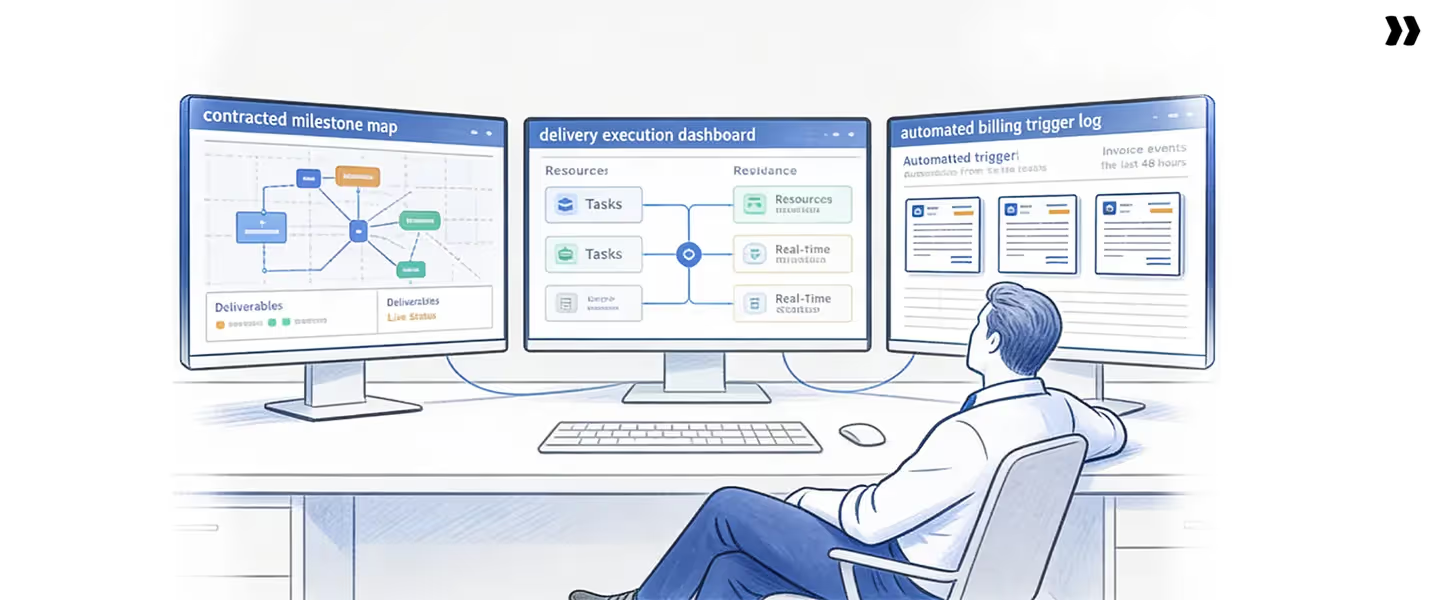
Most tools store contracts. They do not make them work in delivery. The difference is turning a professional services agreement into something that drives execution.
Contract to project automation
Contracts are converted into live project plans. The scope of services becomes tasks. Milestones become phases. Timelines and dependencies are mapped at the start.
This removes the gap between what was agreed and what teams execute.
Multiple budgets
Different parts of the contract can be tracked separately.
- Phase level budgets
- Workstream budgets
- Resource level allocation
This gives real visibility into effort versus pricing across service contracts, not just at a total level.
Milestone billing
Billing is tied to delivery events.
When a milestone is completed and approved, invoicing is triggered. This ensures that revenue follows execution without delays or manual intervention.
Scope monitoring
Scope is tracked continuously during delivery.
As work progresses, any deviation from the original service agreements is flagged early. This allows teams to act before scope creep turns into margin loss.
Customer collaboration
Clients are part of the delivery workflow.
Approvals, feedback, and dependencies are handled within the same system. This reduces delays caused by email chains and unclear ownership.
This is how a professional services contract evolves from a static document into a system that governs delivery, billing, and outcomes.
The contract for the delivery execution model
The Contract to Delivery Execution Model is a five-layer framework that shows how a professional services contract turns into revenue. Each layer builds on the previous one. If one layer breaks, margins, billing, or delivery outcomes break with it.
1. Contract definition
This is where the professional services agreement is created. It defines the scope of services, pricing, timelines, milestones, and legal protections.
At this stage, clarity matters more than completeness. If scope, services agreements, or pricing are vague here, every downstream layer inherits that ambiguity.
2. Project translation
This is where the contract is converted into a project plan.
Scope becomes a task. Milestones become phases. Pricing becomes budget allocation. Dependencies are mapped to timelines.
Most teams fail here. The contract stays in CRM, while delivery starts in another system with partial context.
3. Task execution
This is where actual work happens.
Teams deliver consulting services, implementation, or ongoing services based on the translated plan. If the scope is not clearly tied to tasks, execution drifts. This is where scope creep starts.
Execution must reflect what the service provider agreed to deliver. Otherwise, service agreements lose control.
4. Time tracking
This layer connects effort to the contract.
Time and resources must be tracked against defined scope and budgets. This is critical for time-and-materials contracts, hybrid models, and even fixed-fee projects for margin visibility.
Without this layer, there is no real understanding of the relationship between effort and contract value.
5. Billing
This is where revenue is realized.
Billing should be triggered by delivery events such as milestone completion, approvals, or validated time entries. When billing is disconnected from execution, delays and disputes increase.
What breaks when a layer fails
- If the contract definition is weak → scope confusion
- If project translation is missing → execution misalignment
- If task execution drifts → scope creep
- If time tracking is weak → margin loss
- If billing is delayed → cash flow impact
This is the reality most professional services firms face. Contracts do not fail at signing. They fail across these layers.
Metrics: business impact of contract design
A well-structured professional services contract directly impacts core business metrics across delivery, finance, and customer experience.
What this actually means
- Higher utilization: When scope, tasks, and timelines are clearly defined, teams spend more time on billable work and less time on rework or admin.
- Improved margins: Linking pricing to effort and controlling scope through services agreements prevents margin erosion.
- Faster time to value: Clear milestones and structured delivery accelerate onboarding, consulting services, and implementation timelines.
- Lower DSO: When billing is tied to delivery events, invoices are issued on time, reducing cash flow delays.
- Fewer escalations: Clear expectations and real-time tracking reduce surprises for both the client and the service provider.
These improvements do not come from better contracts alone. They come from contracts that are built to work in execution.
What best-in-class teams do differently
The difference between average and high-performing professional services teams is not the contract itself. It is how they operate around it.
What this looks like in practice
Reactive vs proactive
Weak teams respond after problems show up. Scope creep, delays, and billing issues are identified late.
Strong teams monitor delivery in real time. They catch scope changes early, track milestones continuously, and act before issues escalate.
Manual vs automated
Weak teams rely on spreadsheets, emails, and manual follow-ups to manage service contracts. Billing and approvals depend on people remembering to act.
Strong teams automate key workflows. Milestones trigger approvals, time tracking feeds billing, and change orders are initiated through structured systems.
Fragmented vs unified
Weak teams operate across disconnected tools. Contracts sit in CRM, delivery in project tools, and billing in finance systems.
Strong teams use unified systems in which professional services agreements, execution, and revenue tracking are integrated.
Best-in-class teams do not just create better contracts. They build systems that ensure those contracts actually work in delivery.
Why you should fix this now
The cost of a weak professional services contract grows as you scale. What feels manageable today quickly becomes operational risk.
Scaling complexity increases exponentially
As projects, customers, and service agreements increase, manual tracking breaks. More contracts mean more scope variations, more milestones, and more dependencies. Without structure, delivery becomes inconsistent and hard to control.
CFO scrutiny increases
As revenue grows, finance expects accuracy in margins, billing, and forecasting. If service contracts are not tied to execution, numbers become unreliable. This leads to pressure on teams to justify performance without clear data.
Customer expectations increase
Clients expect visibility, faster delivery, and accurate billing. They do not tolerate delays, unclear scope, or invoice disputes. A poorly structured professional services agreement directly impacts trust and long-term relationships.
What works at a small scale fails at a larger one. Fixing the contract-to-delivery gap early prevents operational breakdowns later.
What this means
Contracts must move from static documents to operational systems.
A professional services contract should not sit in storage after signing. It should drive how work is planned, executed, and billed. Scope must translate into tasks. Milestones must trigger actions. Pricing must reflect real effort in delivery.
When contracts operate as systems, service providers gain control over scope, timelines, and revenue. When they remain static, teams rely on assumptions and react after problems appear.
How Nitro transforms contract execution
Nitro moves professional services contracts from passive documents to active systems that run during delivery.
SOW to auto project creation
Statements of work are automatically converted into structured project plans.
Scope becomes a task. Milestones become phases. Dependencies are mapped without manual effort. This removes the gap between service agreements and execution from day one.
Scope continuously monitored
Scope is not just defined once. It is tracked throughout delivery.
As work progresses, deviations from the original contract are identified early. Teams can act on changes before they impact timelines or margins. This prevents silent scope creep across ongoing services.
Documentation automated
Documentation is generated and updated as delivery happens.
Project notes, requirements, and changes are captured from actual work rather than created manually later. This ensures that service agreements, scope updates, and delivery context stay aligned without extra effort from the service provider.
Insights in real time
Delivery, effort, and financial data are continuously analyzed.
Teams get visibility into progress, risks, and performance without waiting for reports. This helps identify delays, margin risks, and billing gaps early, before they escalate.
This is what changes contract execution. Contracts stop being reference documents and start becoming systems that guide delivery, track scope, and protect revenue.
Future of professional services contracts
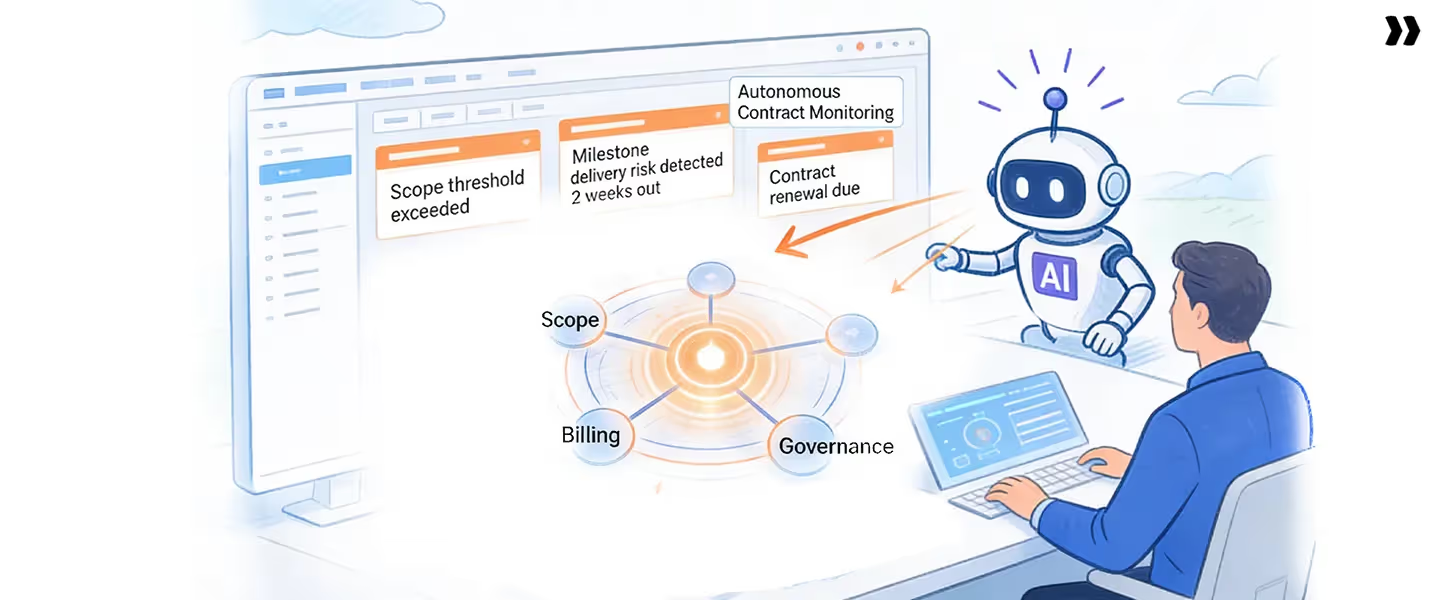
Professional services contracts are moving away from static documents toward systems that actively run during delivery.
AI governed
AI will enforce contract rules continuously rather than rely on manual oversight. Rules around scope, milestones, and billing will be enforced continuously.
If work goes beyond the defined scope, it will be flagged immediately. If milestones are delayed, the system will surface risks early. This reduces dependency on manual reviews and reactive fixes.
Real time
Contracts will operate in real time alongside execution. Scope changes, effort tracking, approvals, and billing events will be visible as they happen. This gives both the service provider and the client a shared view of progress, risks, and financial impact.
Embedded in execution
Contracts will not sit in isolation. They will be embedded directly into delivery workflows.
Scope will drive tasks. Milestones will trigger actions. Pricing will reflect live effort. Every part of the professional services agreement will be connected to execution systems.
This shift completely changes the role of contracts. They stop being reference documents and start becoming control systems for delivery, revenue, and outcomes.
Conclusion
A professional services contract is not just a legal agreement. It is the foundation of how delivery, billing, and margins are controlled.
Most teams already have contracts in place. The problem is that these service contracts are not connected to execution. Scope is defined but not tracked. Milestones exist but do not trigger billing. Pricing is set but not tied to effort. This is where revenue leakage begins.
The shift is clear. Contracts need to move from static documents to operational systems that drive real-time delivery. When scope, tasks, milestones, and billing are connected, teams gain control over outcomes. Margins improve, billing becomes predictable, and customer trust increases.
This is where platforms like Rocketlane come in. Instead of storing professional services agreements, Rocketlane operationalizes them. It connects contracts to projects, continuously tracks scope, and links delivery directly to billing events.
The result is simple. Less chaos. More control. And a system where your contract actually works in delivery.

Authored by

Kailash Ganesh
Kailash Ganesh is a professional services researcher at Rocketlane with more than seven years of experience in content, research, and market analysis. He studies how enterprise PS teams are adopting agentic AI to transform delivery operations, has evaluated every major PSA platform in the category, and writes from the perspective of a practitioner who watches enterprise PS teams make these exact decisions daily.
Table of Contents

Regsiter for the live webinar


Great consultants didn't join your team to spend Fridays writing documentation.
Table of contents
18 of Forbes Cloud 100 chose Rocketlane. The best PS teams aren't waiting around.
FAQs
What is a professional services contract?
A professional services contract is a legally binding agreement between a service provider and a client that defines scope, pricing, timelines, deliverables, and obligations for service delivery. It sets the structure for how services are executed, tracked, and billed. When used effectively, it connects what is agreed in the contract to how work is actually delivered, ensuring clarity for both parties.
What should a PSA include?
A professional services agreement should include the scope of services, deliverables, milestones, pricing, timelines, dependencies, change order processes, and legal protections such as intellectual property and confidentiality. These elements ensure that services are clearly defined and measurable. A well-structured PSA also connects these components to execution, so delivery, billing, and expectations remain aligned.
How do you prevent scope creep?
Scope creep is prevented by tracking delivery against the defined scope of services in real time. This means translating the contract scope into tasks, continuously monitoring progress, and enforcing change order processes when new work is introduced. Without this connection between contract and execution, additional work is often delivered without approval, leading to revenue leakage and misaligned expectations.
What is the difference between PSA and SOW?
A professional services agreement defines the overall engagement, including scope, pricing, timelines, and legal terms. A statement of work defines the specific details of a project, such as tasks, milestones, deliverables, and timelines. The PSA sets the structure, while the SOW drives execution. Together, they ensure that services are both agreed upon and carried out effectively.













Copyright © 2026 Rocketlane Corp. All rights reserved.

















.webp)