Introducing Documentation Agents
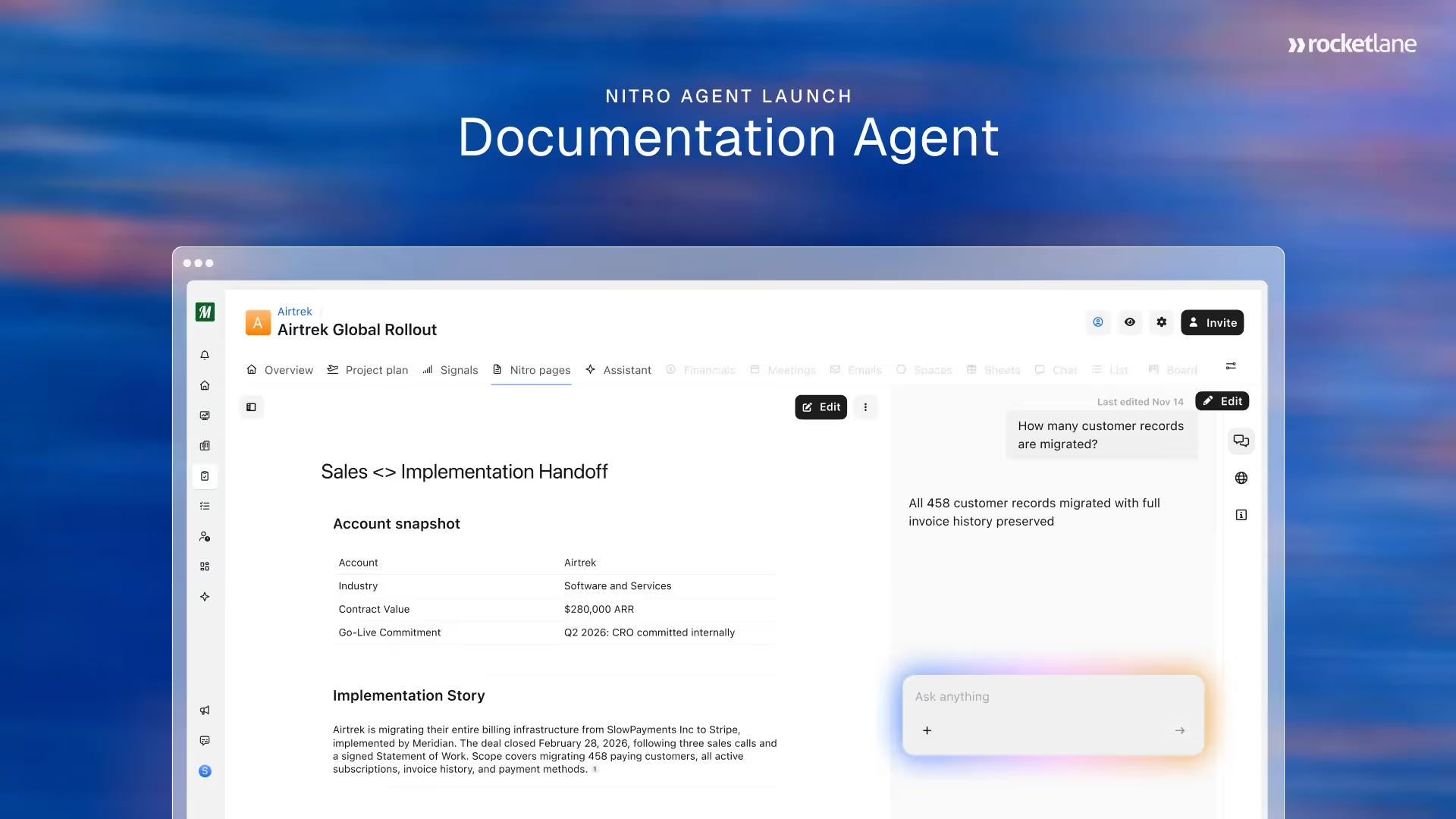

Your consultants shouldn't spend 40 hours writing what Documentation Agents can generate automatically.
Author
Jeffrey
April 15, 2026
Blog illustrator
Atteq Ur Rahman

Your team member has just finished 7 solutioning workshop calls and 100+ email exchanges with the customer.

Now the consultant has to convert that into a solution design document and send it for client approval, without which the project can’t move forward.

For the next two hours, they are scrubbing transcripts, piecing together notes, and trying to reconstruct why the team made that configuration call in week one. This is not a bad day. It is every project.

Those two hours are just the start. Assembling the full document takes 40 hours or more, spread across every session, every email, every base doc your team pulls from.

When the project ends and the architect moves on, the handover is a document and a Q&A session. Whatever did not make it in is gone.

Introducing Documentation Agents

Documentation Agents handles the writing that follows every customer call, email and other knowledge base company documentation. Connect it to your existing sources and templates once, and it generates structured, traceable, review-ready documents from everything your team captures, on every project, automatically.

Your consultants stop spending their time reconstructing what happened. They use that time to move the project forward.

A document that keeps working after it's created
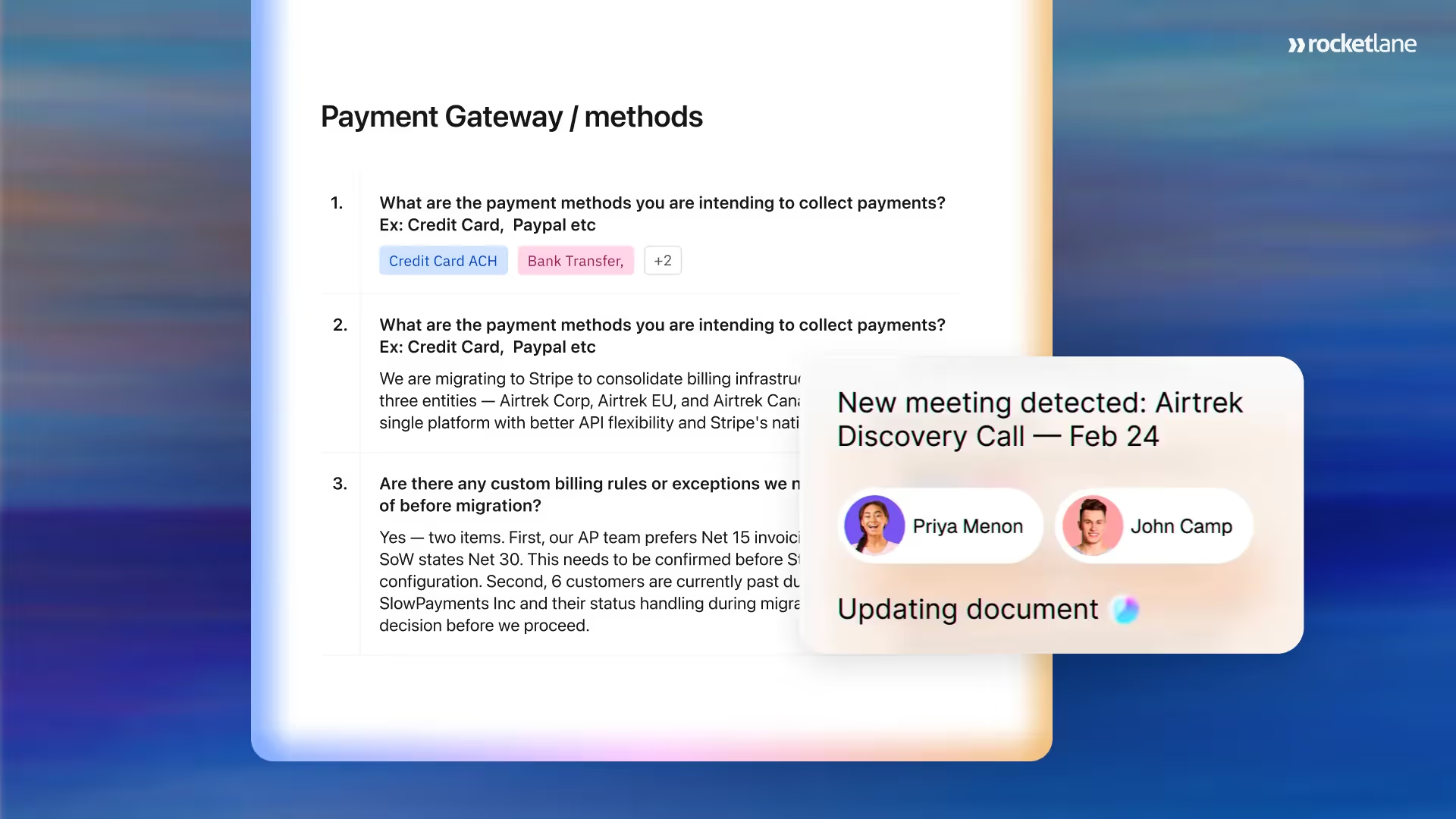
It stays current: The document is not a snapshot of what your team knew on day one. Every call that adds new information, every email that changes a scope decision, gets folded in automatically. If the customer committed to 3 apps in week two and revised to 6 in week five, the document reflects week five. No manual updates. No reconciling versions.
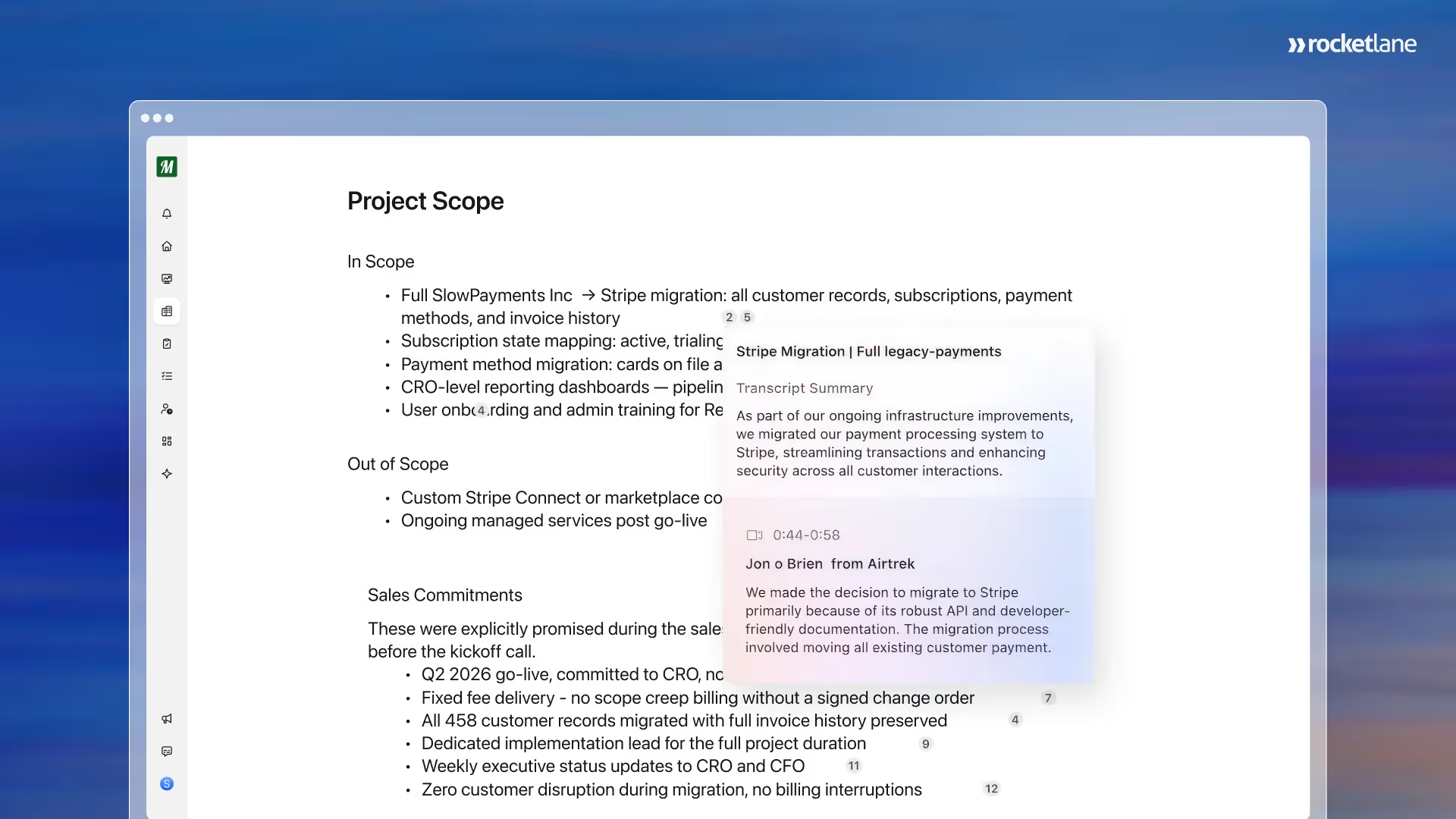
Every line is traceable: Nothing in the document was invented. Every statement links back to the exact call segment or email it came from. If something was not discussed, it will not appear. Your team can share it with the customer knowing every line has a source.
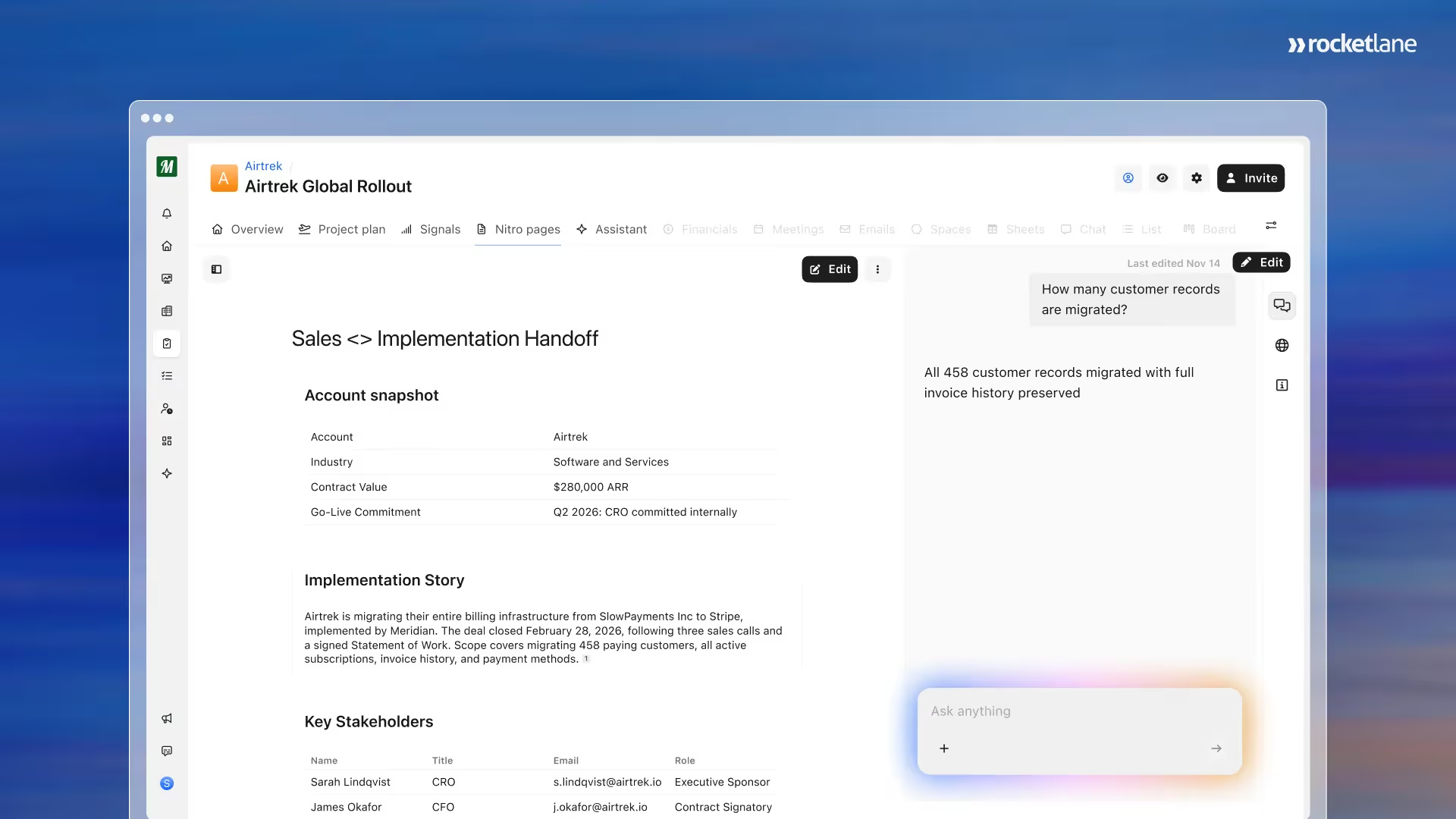
Your team can chat with it: A 79-page solution design document is not something anyone reads end-to-end when they need one answer. Your team asks directly inside the platform, without copying the document into a separate tool.

Get Started with Documentation Agents

Documentation Agents is available now as part of the Rocketlane Nitro platform.

If your team is spending hours per project on documentation that should take minutes, or if you are looking to standardize and scale your delivery practice, we would like to show you what this looks like in practice.

Book a demo to see Documentation Agents in action, or talk to your Rocketlane account team about getting started.

Subcribe to Our
Newsletter

FAQs

What I appreciated most about Rocketlane is its seamless approach to onboarding and project management. The ability to collaborate in real-time, set clear timelines, and track progress across multiple teams makes it incredibly efficient. The built-in document-sharing and communication tools reduce the need to switch between platforms. It’s especially useful for client-facing projects, where transparency and accountability are key

Sebastian
Intercom

AI that executes your delivery work (Add to any plan)

Most popular

Standard

Ideal for expanding organizations needing more in-depth capabilities and integration for scaling.

$49

per team member/
month billed annually

*minimum of 5 team members

  • Full partner ecosystem support
  • Dynamic templates for any project
  • Milestone CSAT for customer pulse
  • Docs, forms, projects in one place
  • Docs, forms, projects in one place
  • Approval-governed time tracking
  • 200 Automations/user/month
  • Native HubSpot, Jira, Slack Integration

Most popular

Premium

Great for teams desiring tailored workflows with comprehensive reporting capabilities.

$69

per team member/month billed annually

*minimum of 5 team members

  • Real-time project profitability
  • AI resourcing and capacity planning
  • All revenue recognition models
  • Centralized rate cards and budgets
  • Portfolio reporting for leaders
  • Bill faster & improve cash flow
  • Native Salesforce integration

Most popular

Enterprise

Tailored for large enterprises requiring a fully customizable, comprehensive delivery engine.

$99

per team member/month billed annually

*minimum of 5 team members

  • SAML SSO and role-based access
  • Unlimited, hands-off automations
  • Soft-allocate pipeline deals early
  • Skills matrix for smarter staffing
  • Staff global teams ahead of demand
  • Multi-currency global delivery
  • Snowflake data + custom reports

Full reviews for all 11 tools below

<TL;DR>

A Forward Deployed Engineer (FDE) embeds in the customer environment to implement, customize, and operationalize complex products. They unblock integrations, fix data issues, adapt workflows, and bridge engineering gaps — accelerating onboarding, adoption, and customer value far beyond traditional post-sales roles.

<TL;DR>

A Forward Deployed Engineer (FDE) embeds in the customer environment to implement, customize, and operationalize complex products. They unblock integrations, fix data issues, adapt workflows, and bridge engineering gaps — accelerating onboarding, adoption, and customer value far beyond traditional post-sales roles.

Trusted by top companies

One platform does what the entire table above tries
to split across tools.

Myth

Enterprise implementations fail because customers don’t follow the process or provide clean data on time. Most delays are purely “customer-side” issues.

Fact

Implementations fail because complex environments need real-time technical problem-solving. FDEs unblock workflows, integrations, and unknown constraints that traditional onboarding teams can’t resolve on their own.

Get a better all-in-one PSA

Did you Know?

Companies that embed engineers directly with customers see significantly higher enterprise retention compared to traditional post-sales models — because embedded engineers uncover “unknowns” that never surface in ticket queues.

Sebastian mathew

VP Sales, Intercom

A Forward Deployed Engineer (FDE) embeds in the customer environment to implement, customize, and operationalize complex products. They unblock integrations, fix data issues, adapt workflows, and bridge engineering gaps — accelerating onboarding, adoption, and customer value far beyond traditional post-sales roles.