Top 10 Consulting Resource Management Software & Tools in 2026 (Compared & Reviewed)


•
•
Summarize blog with






Introduction
The best consulting leaders always seem to know who’s available, what’s at risk, and which project needs a steadier hand. They’re not guessing. They have a picture of their bench, their utilization, and their delivery health that most people in the firm simply don’t have.
That picture is what consulting resource management software gives your entire organization.
Because at some point, the team gets too big to hold in one person’s head. Projects multiply.
Clients expect faster onboarding. And the cost of not knowing — wrong consultant on the wrong engagement, burnout you didn’t see coming, a deal you said yes to without checking capacity — starts showing up directly in your margins.
Poor resource allocation can negatively impact project outcomes, leading to missed deadlines, increased costs, and reduced overall firm performance.
Most consulting firms try to manage this with a mix of spreadsheets, project management tools, project management software, and collaboration tools. However, these solutions may not provide the efficient project management and project planning needed for consulting firms.
That approach breaks down fast as teams scale. Leaders lose visibility, consultants get overbooked, and “busy” teams still miss margin targets. Without a live picture of resource allocation and project health across the portfolio, it’s easy to confuse activity for profitability.
The next step — evaluating consulting resource management software — is rarely easier. Search results blur together: generic resource planning tools, standalone scheduling apps, staffing platforms, and PSA systems that promise everything but reflect little of how consulting actually works.
This guide is designed to cut through that. In 2026, fixed-fee and outcome-based pricing have become the dominant models, meaning every staffing decision is now a financial decision. Clients expect shorter time-to-value.
AI is a purchasing criterion, not a differentiator. The gap between firms running on live resource data and firms running on last week’s export is no longer a marginal operational difference — it’s showing up in margins, retention, and delivery predictability.
Efficient project management and detailed project planning, supported by real-time data, are essential for achieving successful project outcomes in consulting.
This guide is for:
- Consulting leaders, PS directors, and resource managers
- Firms with 20–500 billable staff managing concurrent client engagements
- Teams are evaluating purpose-built tools for the first time or replacing a legacy system
Every tool here is assessed on utilization impact, AI depth, and fit for consulting delivery — not feature checklists or vendor relationships.
Each entry includes key features, honest pros and cons, pricing, G2 ratings sourced April 2026, and a clear ‘best for’ verdict so you can route your decision without reading every word.
Quick Picks: Best Consulting Resource Management Software by use case
Quick glance: Top 10 consulting resource management tools compared
What is consulting resource management software?
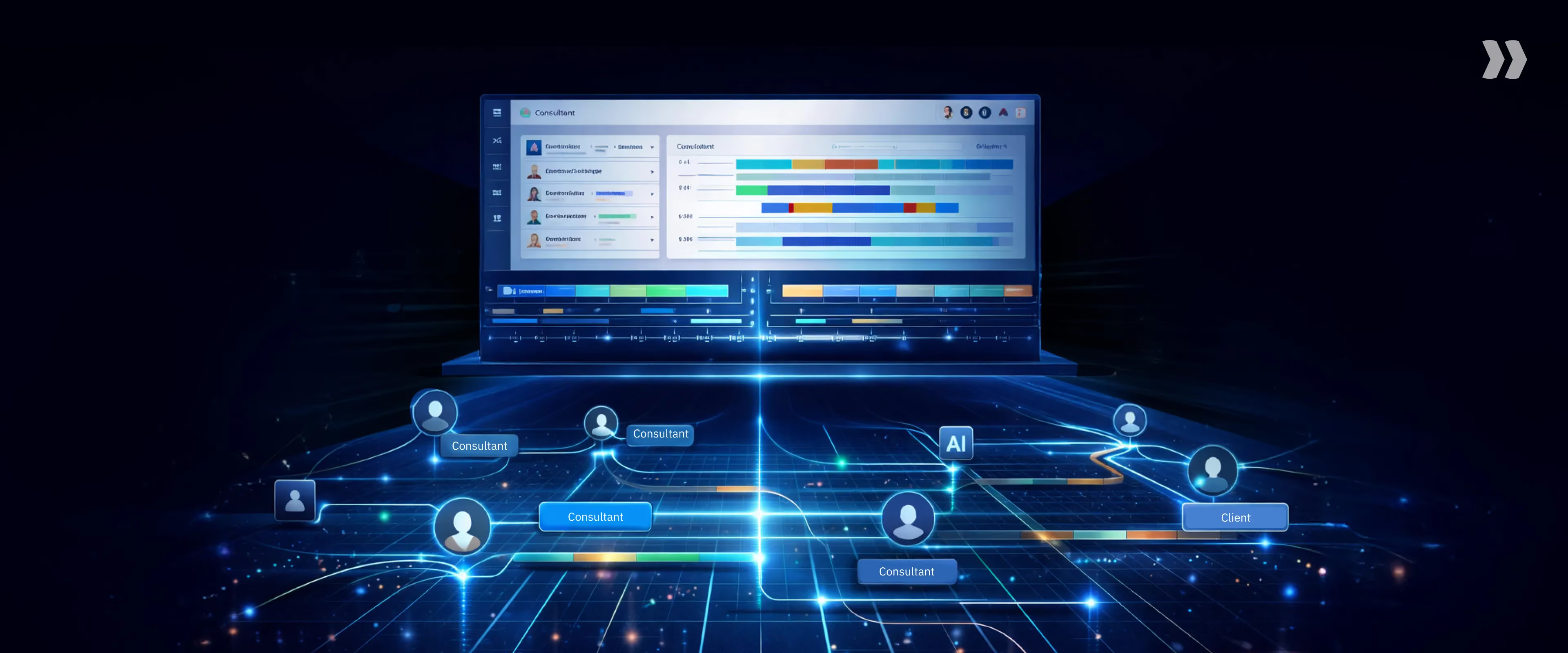
Consulting resource management software is a platform that gives professional services teams real-time visibility into who is available, at what capacity, and at what cost — across projects, clients, and time zones.
Unlike generic project management tools, it combines resource allocation, utilization tracking, capacity forecasting, and profitability reporting in one place, purpose-built for the way consulting delivery actually works.
Resource forecasting and project oversight are critical for project managers and project teams to ensure project performance and meet resource demand throughout the project lifecycle.
At its core, this software answers four critical questions consulting leaders face daily:
- Who is available, when, and with what skills?
- How should resources be allocated across current and upcoming projects?
- Where are utilization risks, bench risks, or burnout emerging?
- How do staffing decisions impact delivery timelines and profitability?
Modern consulting resource management tools go beyond static schedules. They provide real-time visibility into capacity, integrate tightly with project delivery workflows, and increasingly use AI-driven insights to forecast demand, flag allocation risks, and recommend better staffing decisions.
Resource availability and project tracking are enhanced by advanced resource tools, which also offer robust security features to control access to sensitive resource data.
In 2026, the scope of consulting resource management software often extends into professional services automation (PSA) — connecting resource planning with time tracking, financials, and delivery execution. This ensures firms don't just staff projects efficiently, but deliver predictably and profitably at scale.
In short, consulting resource management software transforms staffing from a reactive, spreadsheet-driven exercise into a strategic, data-informed capability that supports growth, client satisfaction, and sustainable margins.
What consulting resource management software typically includes
- Resource allocation and staffing — match the right consultant to the right project based on skills, grade, and availability, with software that helps assign resources and allocate resources based on real-time availability, skills, and project needs.
- Utilization tracking and forecasting — live view of billable vs. non-billable hours with rolling 30, 60, and 90-day forecasts, helping teams efficiently allocate resources and optimize resource allocation for better project outcomes.
- Capacity planning across skills and grades — connect current staffing to pipeline demand before projects are understaffed, track resource availability, and optimize resource utilization to effectively manage the entire project lifecycle.
- Project delivery timelines and milestones — keep resource plans tethered to actual delivery reality as scope shifts
- Profitability and billing integration — ensure utilization data connects to margin outcomes, not just activity
- AI-assisted resourcing and workflow automation — move from surfacing insights to executing staffing decisions automatically
- Skills matrix and intelligent consultant matching — searchable skills inventory tied to proficiency levels and past project history
- Soft and hard allocation for pipeline planning — staff tentatively before deals close so resourcing conversations happen before signature
- Client-facing visibility and delivery portals — shared milestone views that reduce misalignment and friction
- Global team support — multi-currency, multi-timezone, and data residency for distributed consulting teams
Key features of resource management tools include capacity planning, workload management, time tracking, and performance examination to ensure efficient resource utilization.
Top 10 consulting resource management software tools to look out for in 2026
Below are the leading consulting resource management platforms evaluated for PS and consulting-led organizations in 2026.
What to expect in this section: For each tool, you'll find key features, pricing, G2 rating, pros and cons, a best for verdict, and what customers say.
1. Rocketlane
Rocketlane is the only agentic AI-powered PSA platform purpose-built for customer-facing professional services teams. Where most platforms solve one part of the equation — scheduling, or utilization tracking, or financial reporting — Rocketlane unifies resource management, project delivery, client collaboration, and financial visibility in a single system.
What sets it apart in 2026 is Nitro, its agentic AI layer. Nitro doesn't just surface insights — it acts on them.
It assembles the right team from day one, flags resourcing issues before they become problems, automates routine resource operations at scale, and gets you to the root of any resourcing bottleneck in seconds.
For consulting firms where a single mis-staffed project can meaningfully move margin, that's the difference between reactive firefighting and proactive delivery management.
Key features
Here's a breakdown of what Rocketlane's resource management capabilities cover — from AI-assisted staffing to forward-looking capacity planning and financial integration.
- Nitro Resource Manager — assembles the ideal team by understanding project requirements, scanning availability, skills, and utilization, then putting the best staffing option in front of you. You make the call. Staffing shifts from days to minutes
- Capacity planning — align your pipeline with available capacity before projects are confirmed. See what upcoming work means for team coverage next month or next quarter, and make staffing decisions with confidence before gaps appear
- Utilization visibility — analyze utilization across roles and projects, see where billable time is slipping, and make steady adjustments that improve utilization quarter after quarter. Capacity updates automatically as PTO is approved, timelines shift, or scope evolves
- Resource plans that stay current — define resource requirements once and carry them forward into future projects. Plans auto-adjust as scope or timelines shift, keeping allocations clean as work evolves
- Hiring pipeline forecasting — get a real-time snapshot of demand versus supply, including holidays and time-offs, to plan hiring needs accurately. Zoom in on utilization rates to pinpoint exactly where you need more capacity
- Profitability module — budget vs. actuals, revenue recognition, invoice workflows, and margin tracking at the project and portfolio level
- Client-facing portal — shared milestone views, real-time delivery updates, and collaborative workspaces that reduce misalignment and change friction
- Integrations — Rocketlane has an extensive suite of integrations from Salesforce and HubSpot for pipeline-based resourcing; BambooHR, Rippling, and HiBob for time-off sync; NetSuite and QuickBooks for financial management
Nitro AI in consulting resource management
Nitro is the AI engine embedded in Rocketlane, enabling agentic capabilities across the full resource management lifecycle. Here's how it operates across the four modes that matter most to consulting resource managers.
Plans — understands project requirements, scans who is available, who is stretched, and who fits the brief, then puts the ideal team in front of you. Staffing shifts from days to minutes.
Governs — scans across projects for over-allocation, missing roles, or plans that don't add up. Brings issues up while there's still time to fix them, so you step in before margin takes a hit or teams burn out.
Adjusts — handles the changes that happen every week. Someone goes on leave. A project runs longer than planned. Allocations need extending. It keeps the plan up to date as those changes roll in, without you having to chase every adjustment.
Analyzes — gives instant clarity on the questions you ask every day. Where do we have capacity? Who's actually available next month? Do we need to hire to support pipeline demand? Drill down until it makes sense.
Example prompts the Nitro Resource Manager handles today: "Staff this project for the highest margin." "John is going on leave next week, rebalance the team." "What are our hiring gaps for Q2?" "Who is available with Skill X next month?"
With Rocketlane vs. without
Most consulting teams know their resourcing process is broken — they just don't always see the full cost until they have something to compare it against. Here's what changes when Rocketlane replaces the spreadsheet-and-email workflow.
Key takeaways
Pros and cons
No platform is a perfect fit for every team. Here's an honest look at where Rocketlane excels and where to factor in realistic expectations.
Best for
Rocketlane is not a one-size-fits-all tool — it's built for a specific kind of consulting delivery complexity. Here's where it fits best.
- Mid-market to enterprise consulting and PS teams managing 50–1,000+ billable resources across concurrent engagements
- Firms where a single mis-staffed project can meaningfully move margin — and where knowing that before confirming an allocation matters
- Global consulting teams needing multi-currency, multi-timezone, and data residency support
- Revenue leaders who need AI that executes resourcing decisions, not just surfaces them
- Organizations moving off spreadsheet-based resource tracking that need fast time-to-value without enterprise-level implementation overhead
- Consulting practices with frequent scope changes, pipeline-driven staffing, and client-facing delivery accountability
What customers say
2. Resource Guru
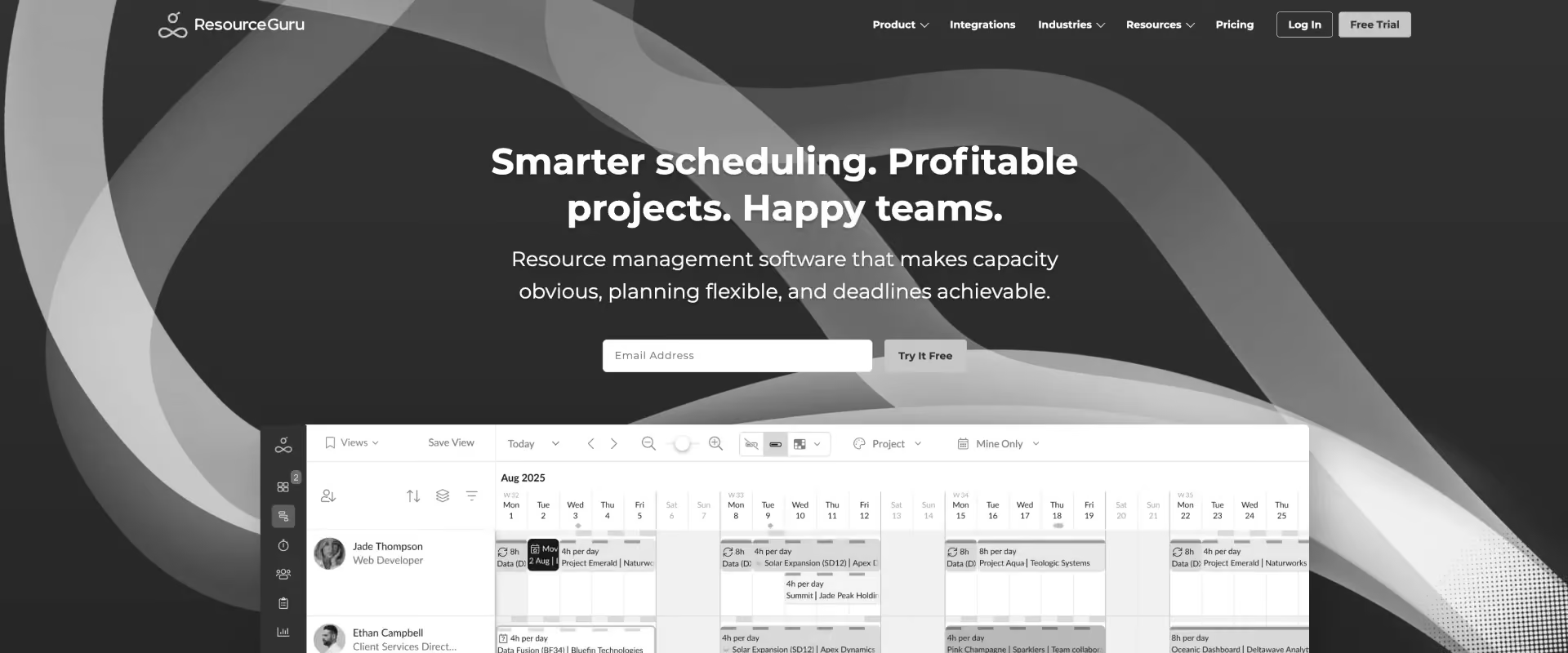
Resource Guru is a resource scheduling and capacity planning tool that helps teams visualize availability, prevent overbooking, and manage workloads across people, equipment, and projects.
It’s commonly used by agencies, consulting teams, and operations managers who want a simple, visual way to plan resources without the complexity of a full professional services automation (PSA) platform.
Rather than acting as an end-to-end consulting resource management system, Resource Guru focuses on who is available, when, and for how long—making it useful for short-term scheduling and basic capacity visibility.
Key features of Resource Guru’s resource management solution
- Visual resource scheduling
Drag-and-drop scheduling provides a clear view of who’s working on what and when, helping teams avoid overbooking. - Availability & time-off management
Centralized tracking of vacations, holidays, and leave ensures plans reflect real availability. - Capacity planning at a glance
Quickly identify underutilized or overloaded resources across teams and time periods. - Multi-resource support
Schedule not just people, but also rooms, equipment, and shared assets. - Basic reporting & exports
Utilization and availability reports can be exported for offline analysis or leadership updates.
Key takeaways
Pros and cons: Resource Guru
Best for
- Small consulting teams needing simple resource scheduling
- Agencies managing short-term, project-based staffing
- Teams upgrading from spreadsheets for availability planning
- Organizations prioritizing ease of use over depth
- Resource managers focused on near-term capacity visibility
- Firms that already use separate PSA or financial systems
What customers say
3. Float
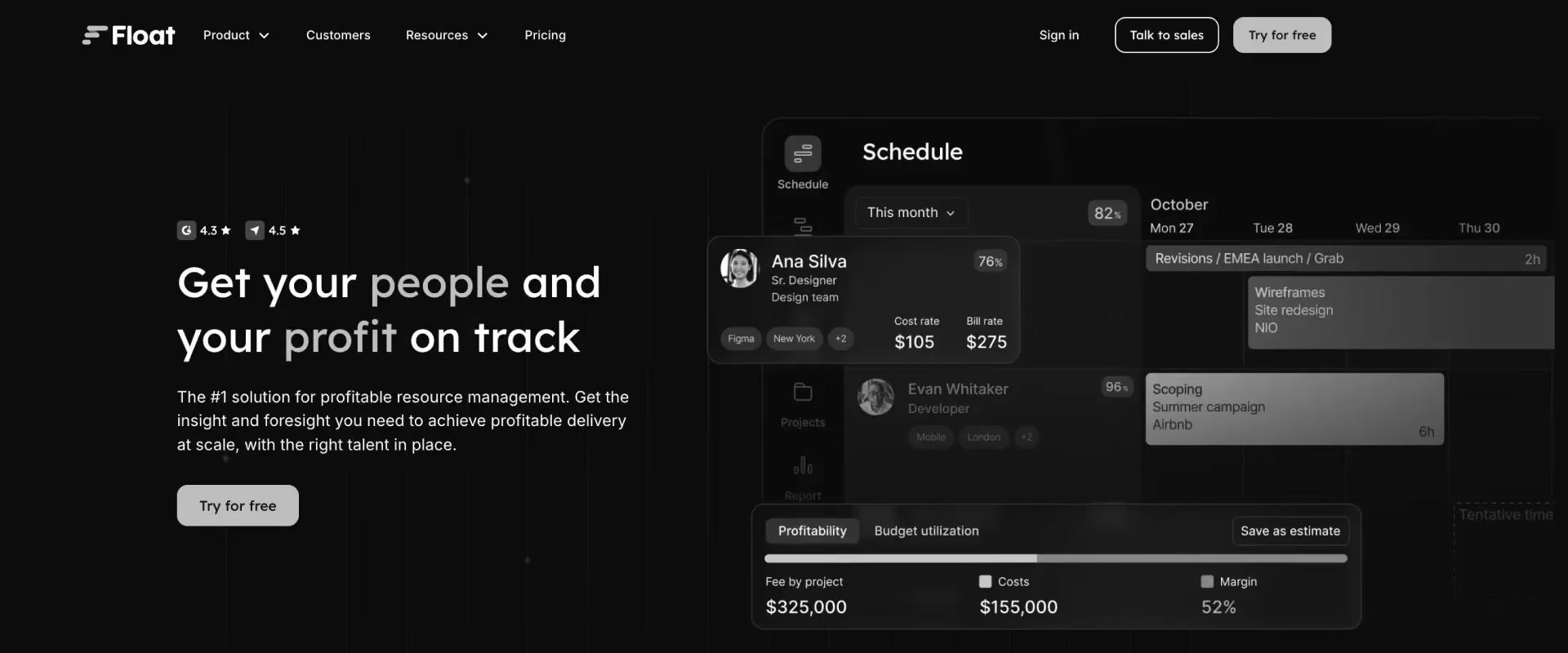
Float is a visual resource-scheduling and capacity-planning tool designed to help teams plan work, manage availability, and avoid overbooking across multiple projects.
It’s widely adopted by agencies and consulting teams that want a simple, intuitive way to schedule people without the overhead of a full professional services automation (PSA) platform.
Float focuses primarily on short-term resource allocation and workload visibility, making it useful for teams that need clarity on “who’s working on what” rather than deep delivery, financial, or profitability intelligence.
Key features of Float’s resource management solution
- Visual drag-and-drop scheduling
Plan and adjust assignments quickly using a clean, timeline-based interface that’s easy for teams to understand. - Real-time availability tracking
View capacity, time off, and workload changes in real time to prevent overbooking. - Basic workload balancing
Helps managers evenly distribute work across team members. - Project-based resource views
See how resources are allocated across active projects at a glance. - Integrations with PM tools
Connects with tools like Asana, Jira, and Trello for task context.
Key takeaways
Pros and cons: Float
Best for
- Agencies and consulting teams managing short-term staffing
- Teams that value visual scheduling simplicity
- Small to mid-sized organizations
- Project managers coordinating multiple active projects
- Firms already using separate PSA or finance systems
- Teams moving off spreadsheets for basic planning
What customers say
4. Kantata (formerly Mavenlink + Kimble)
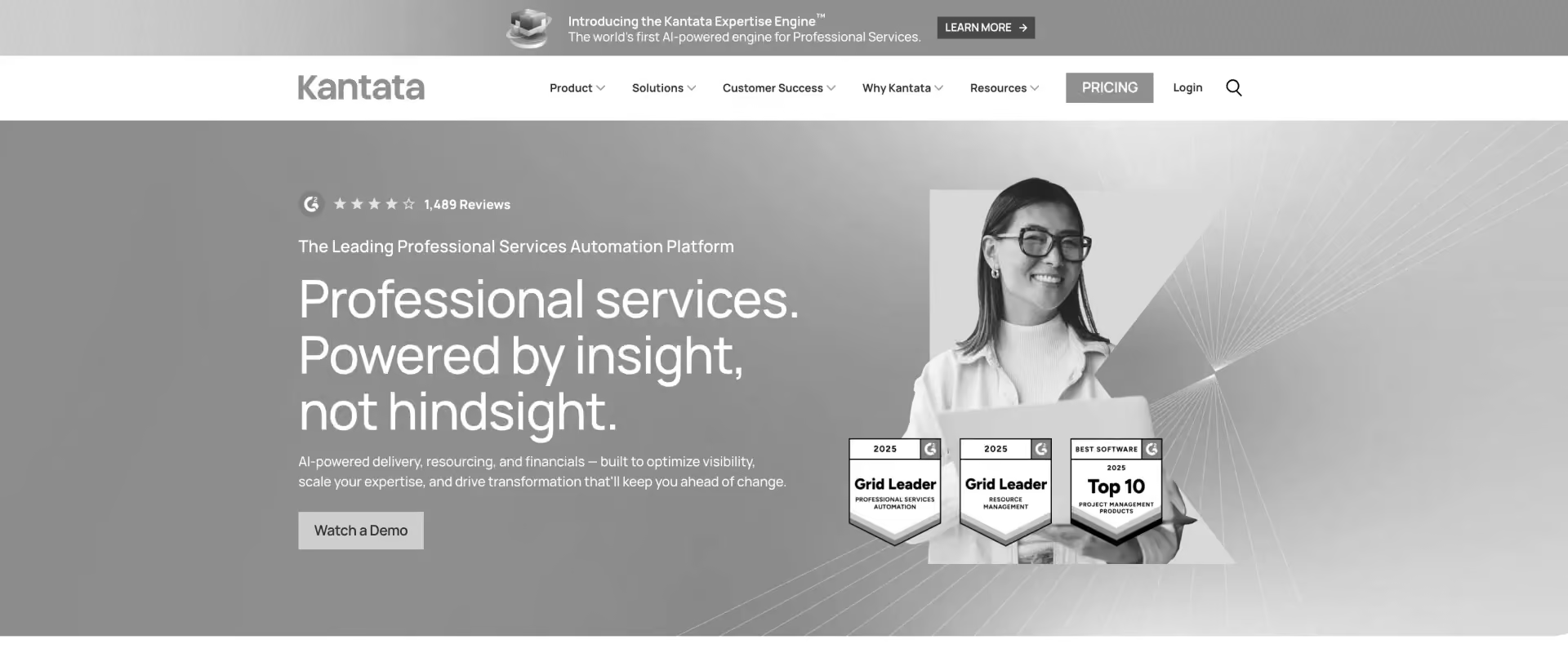
Kantata is a professional services automation (PSA) platform designed primarily for mid-market and enterprise consulting organizations that need structured resource planning, financial oversight, and portfolio-level reporting.
Kantata’s core strength lies in forecasting, utilization tracking, and financial governance across large teams and long-running engagements. It is often adopted by organizations with mature PMOs and finance-led service operations, where predictability and reporting depth matter more than execution speed.
Rather than acting as a lightweight consulting resource management tool, Kantata functions as a robust operational system that connects projects, resources, and financials—often alongside other delivery tools.
Key features of Kantata’s resource management capabilities
- Advanced resource planning and utilization tracking
Plan capacity, assign resources, and monitor utilization across portfolios and geographies. - Financial management and forecasting
Budgeting, revenue recognition, and margin tracking for consulting engagements. - Scenario planning and forecasting
Model different staffing and demand scenarios to support long-term planning. - Portfolio reporting and analytics
Prebuilt and customizable reports for utilization, costs, and project performance. - Integrations and APIs
Commonly integrated with Salesforce and enterprise finance systems.
Key takeaways
Pros and cons: Kantata
Best for
- Mid-market and enterprise consulting firms
- Organizations with finance-led service operations
- Consulting teams managing large portfolios of work
- Firms that value forecasting and reporting depth
- PMO-driven delivery environments
- Companies are comfortable with structured processes
What customers say
5. Certinia
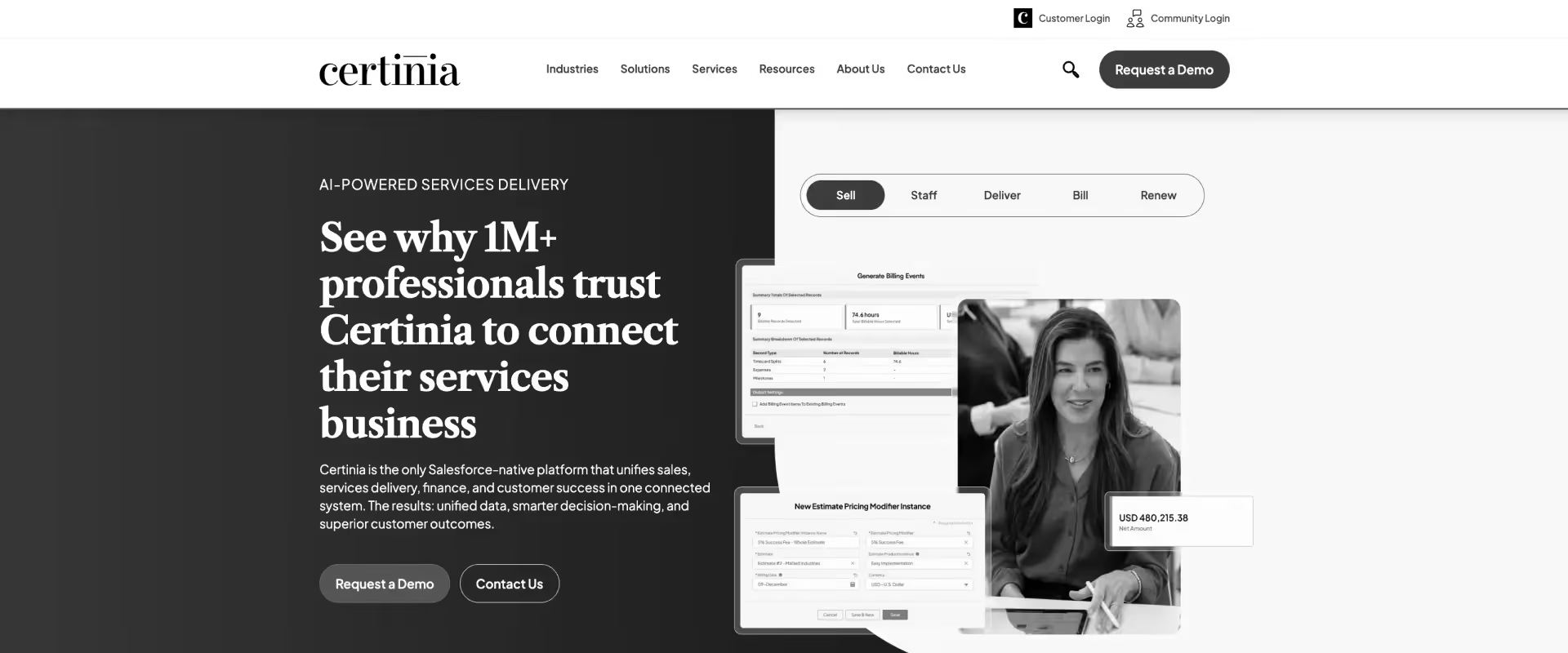
Certinia is a Salesforce-native PSA platform built for enterprise consulting organizations that are already operating within the Salesforce ecosystem.
Because it runs natively on Salesforce, every resource decision, project update, and financial outcome lives in the same data environment as your CRM — eliminating the sync issues and data gaps that plague non-native integrations.
What to expect in this section: Key features, pricing, G2 rating, pros and cons, and a best for verdict.
Key features
- Salesforce-native architecture — built directly on the Salesforce platform, not integrated with it. Resource data, project data, and CRM data share a single environment with no middleware required
- Resource management and scheduling — skills-based allocation, availability tracking, and capacity planning across the consulting portfolio
- Project and financial management — budget tracking, revenue recognition, margin visibility, and billing workflows connected to Salesforce Financial Services
- Services CPQ — configure, price, and quote services engagements directly from within Salesforce, converting won deals into staffed projects without manual handoff
- Analytics and reporting — pre-built and customizable dashboards leveraging Salesforce Einstein for utilization, margin, and delivery performance reporting
- Global team support — multi-currency, multi-entity, and compliance-ready for enterprise consulting organizations operating across regions
Key takeaways
Pros and cons
Best for
- Enterprise consulting organizations (200+ staff) already running on Salesforce who want CRM-to-delivery visibility without a non-native integration
- Firms where revenue recognition, multi-entity billing, and compliance are primary operational requirements
- Organizations that need Services CPQ to eliminate the manual handoff between sales and delivery
- Global consulting teams requiring multi-currency and data residency within a Salesforce-governed environment
What customers say
6. Smartsheet
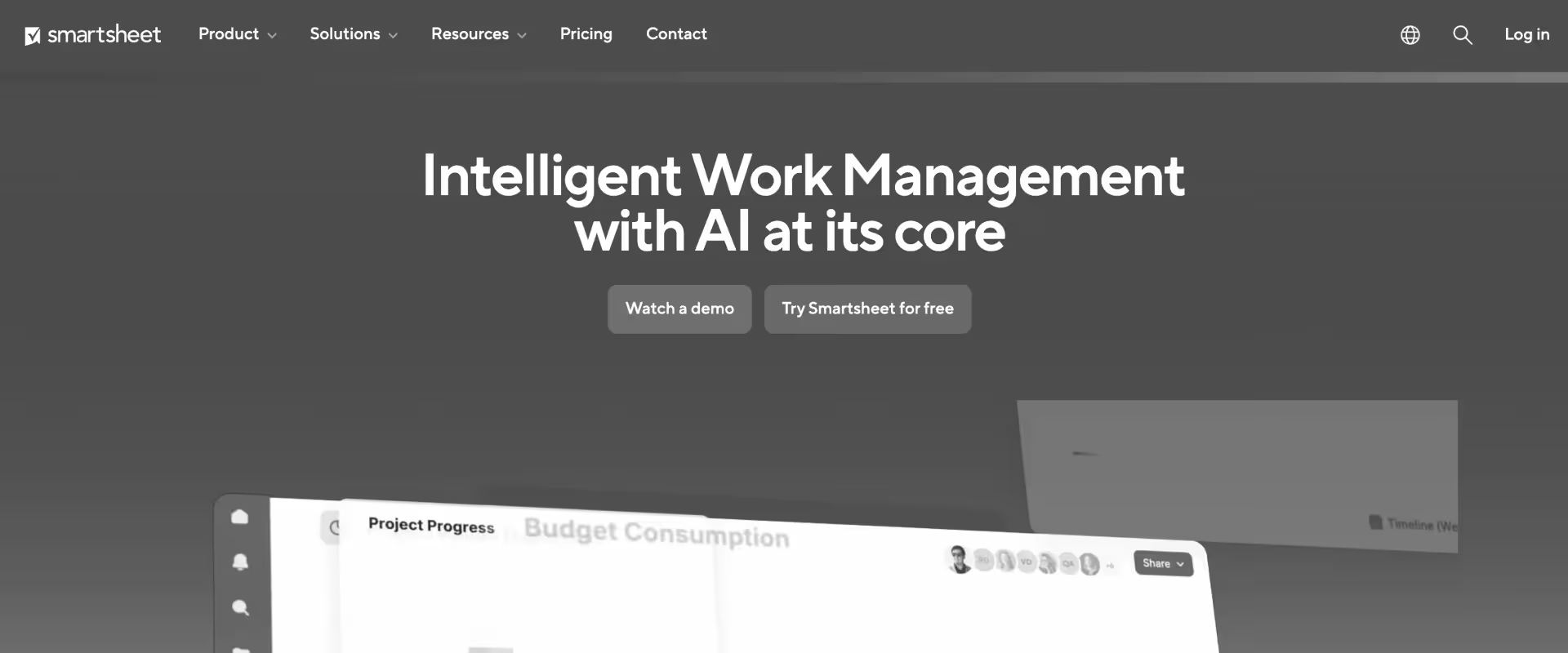
Smartsheet is a flexible work management platform that can be configured for resource tracking, capacity planning, and project delivery across consulting teams.
It is not a purpose-built consulting resource management tool — but for firms that already use it widely and want to avoid a new platform, it can be extended into resource management workflows with the right setup.
What to expect in this section: Key features, pricing, G2 rating, pros and cons, and a best for verdict.
Key features
- Resource Management add-on — dedicated capacity planning and allocation views available as a paid add-on, covering availability, utilization, and workload distribution across teams
- Flexible grid, card, Gantt, and calendar views — multiple ways to visualize project work and resource assignments depending on team preference
- Automated workflows — no-code automation for approvals, alerts, and status updates that reduce manual coordination overhead
- Dashboards and reporting — customizable real-time dashboards pulling data across sheets for leadership and delivery visibility
- Integrations — connects to Salesforce, Jira, Microsoft Teams, Google Workspace, and 100+ other tools via native connectors and API
- Enterprise security — SSO, role-based access controls, audit trails, and compliance certifications for enterprise environments
Key takeaways
Pros and cons
Best for
- Consulting teams already embedded in Smartsheet that need basic resource visibility without adopting a new platform
- Organizations where work management flexibility matters more than PSA-grade utilization depth
- Firms with a dedicated ops or admin resource willing to invest in configuration to build resource workflows
- Teams with straightforward scheduling needs that don't require skills-based matching or financial integration
What customers say
7. Runn
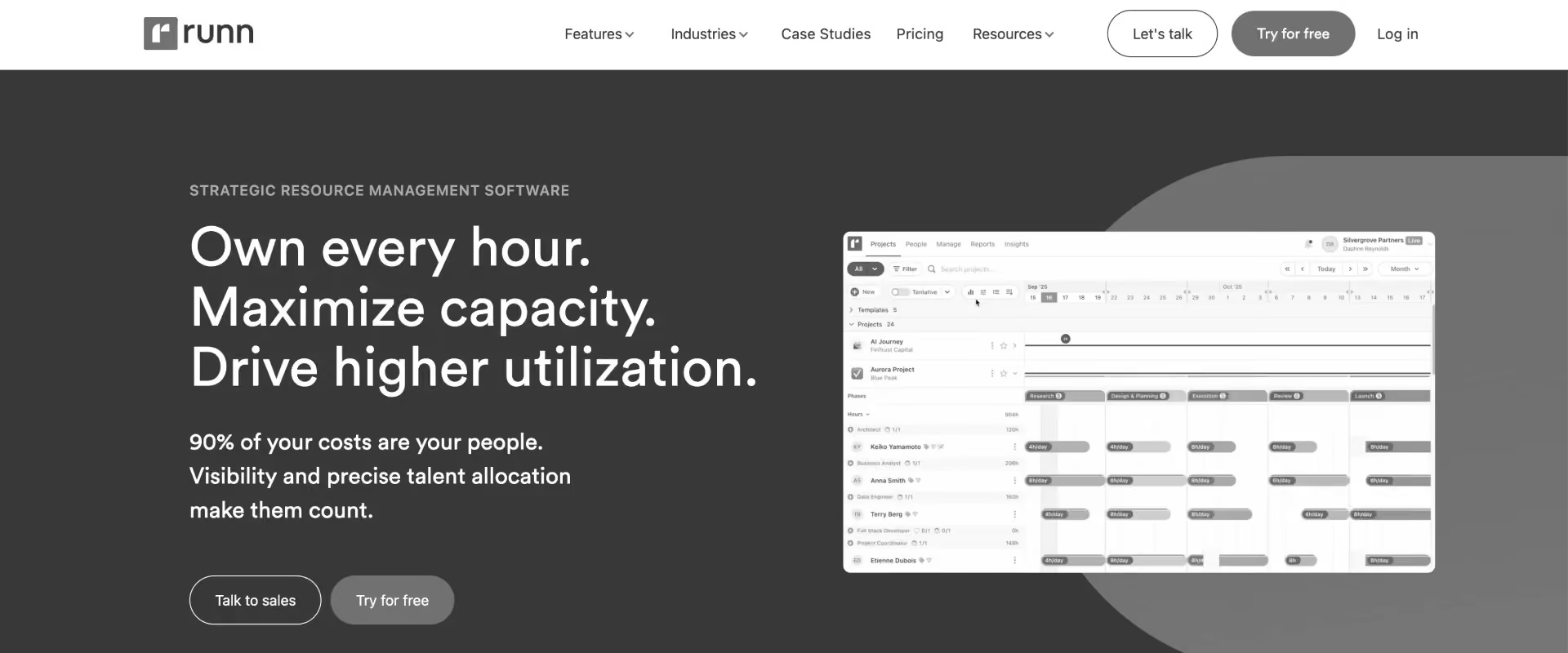
Runn is a resource management and forecasting tool designed for consulting firms, agencies, and professional services teams that want clearer visibility into capacity, utilization, and future demand.
Runn focuses primarily on resource planning, forecasting, and utilization modeling, rather than acting as a full professional services automation (PSA) platform. It is often used by consulting teams that already have project management or financial systems in place and need a dedicated resource planning layer on top.
Its strength lies in helping teams answer practical questions like “Who is available?”, “When will capacity run out?”, and “What happens if pipeline changes?”—without heavy implementation overhead.
Key features of Runn’s resource management capabilities
- Capacity planning and forecasting
Plan resource availability across weeks and months, including confirmed and tentative work. - Soft allocations and pipeline modeling
Model future demand using placeholders and probability-based pipeline inputs. - Utilization and availability tracking
Visual views of who is overallocated, underutilized, or approaching capacity limits. - Scenario planning
Test “what-if” staffing scenarios before committing to hiring or reallocations. - Integrations
Connects with common project management and CRM tools to align plans with delivery data.
Key takeaways
Pros and cons: Runn
Best for
- Consulting firms focused on capacity planning and forecasting
- Teams needing a dedicated resource planning tool
- PMOs managing pipeline-driven staffing decisions
- Organizations supplementing an existing PSA or PM stack
- Services teams transitioning away from spreadsheets
- SMB to mid-market professional services firms
What customers say
8. Productive.io
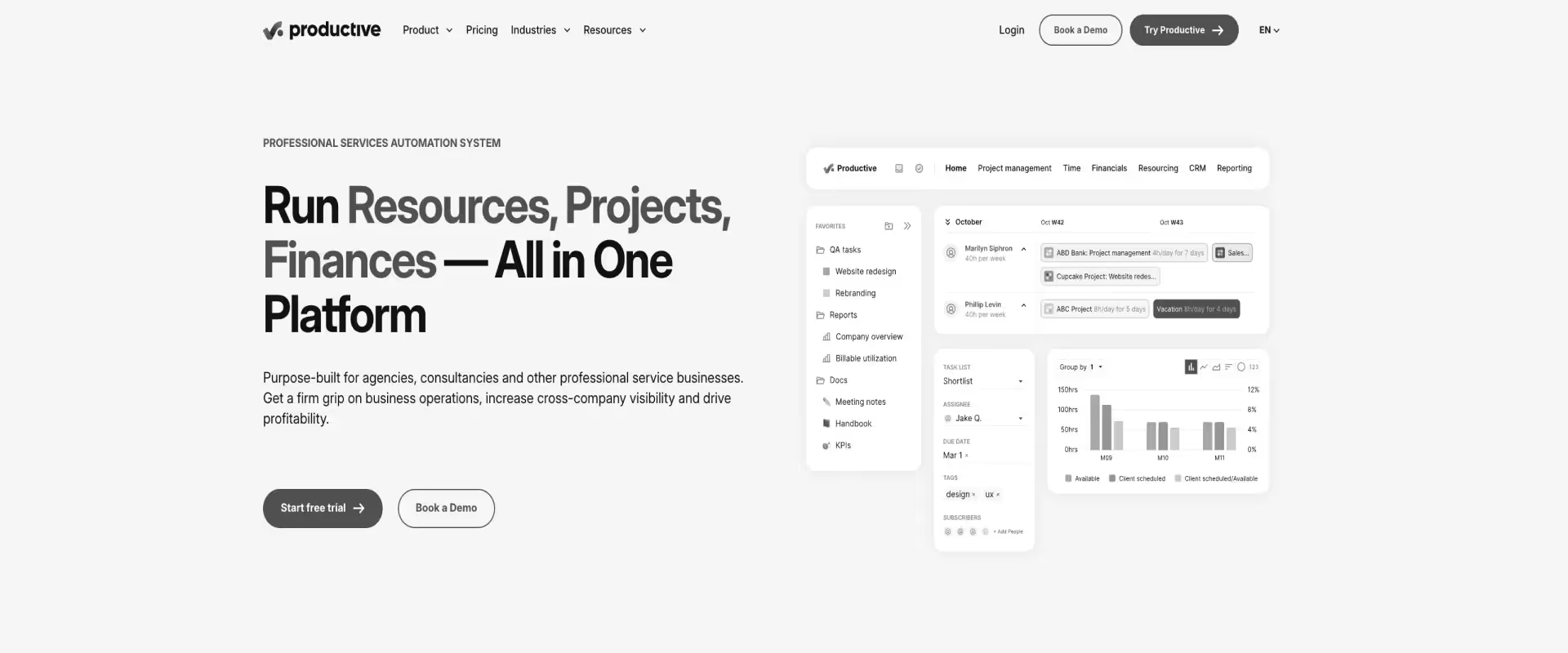
Productive.io is an agency-focused PSA platform covering resource planning, project management, time tracking, budgeting, and invoicing in one place.
It starts at $9 per user per month with no seat minimums, making it one of the most accessible full-PSA options for smaller consulting and agency teams that have outgrown basic scheduling tools but aren't ready for enterprise-level investment.
What to expect in this section: Key features, pricing, G2 rating, pros and cons, and a best for verdict.
Key features
- Resource planning and utilization tracking — workload visualization, billable vs. non-billable segmentation, and individual utilization targets across the team
- Retainer budget management — recurring client budgets with burndown tracking built natively into the platform, not bolted on
- Custom profitability reporting — margin analysis by client, project, project type, or project manager without a separate BI tool
- Time tracking — in-workflow time capture connected directly to project budgets and billing
- Lightweight built-in CRM — basic pipeline management to keep sales and delivery in the same system
- No seat minimums — pricing scales with team size from $9/user/month, accessible for teams of 5 upward
Key takeaways
Pros and cons
Best for
- Small-to-mid-sized agencies and consulting firms (5–200 employees) that need PSA-level financial visibility without enterprise-level cost
- Agencies managing recurring client retainers that need native burndown tracking without workarounds
- Ops and finance leaders who need client and project-level profitability without a separate BI tool
- Teams moving off fragmented tools — separate PM, invoicing, and time tracking — onto a single platform with transparent, scalable pricing
What customers say
9. BigTime
BigTime is a PSA platform built around time tracking, billing, and budgeting, with particular strength in IT consulting, accounting, and professional services firms that need tight control over billable hours and invoice accuracy.
It covers the full billing lifecycle — from time capture to invoice generation — and connects project financials to resource planning in a single system.
What to expect in this section: Key features, pricing, G2 rating, pros and cons, and a best for verdict.
Key features
- Time tracking and billing — flexible time capture connected directly to billing rules, rate cards, and invoice workflows
- Budget management — project budget tracking with real-time actuals, variance alerts, and budget health visibility
- Resource allocation — staff projects based on availability and role, with workload views across the team
- WIP and revenue reporting — work-in-progress tracking and revenue recognition reporting for accounting-adjacent consulting firms
- Integrations — native connections to QuickBooks, Sage, and other accounting systems for financial data sync
- Mobile time tracking — iOS and Android apps for time capture on the go, relevant for field-based consulting teams
Key takeaways
Pros and cons
Best for
- IT consulting, engineering, and accounting-adjacent professional services firms where billing accuracy and time tracking are the primary operational need
- Teams managing T&M engagements that need tight control over billable hours, rate cards, and invoice workflows
- Organizations already using QuickBooks or Sage that want a PSA connecting project financials to their existing accounting system
- Firms that need mobile time tracking for distributed or field-based consulting teams
What customers say
10. Scoro
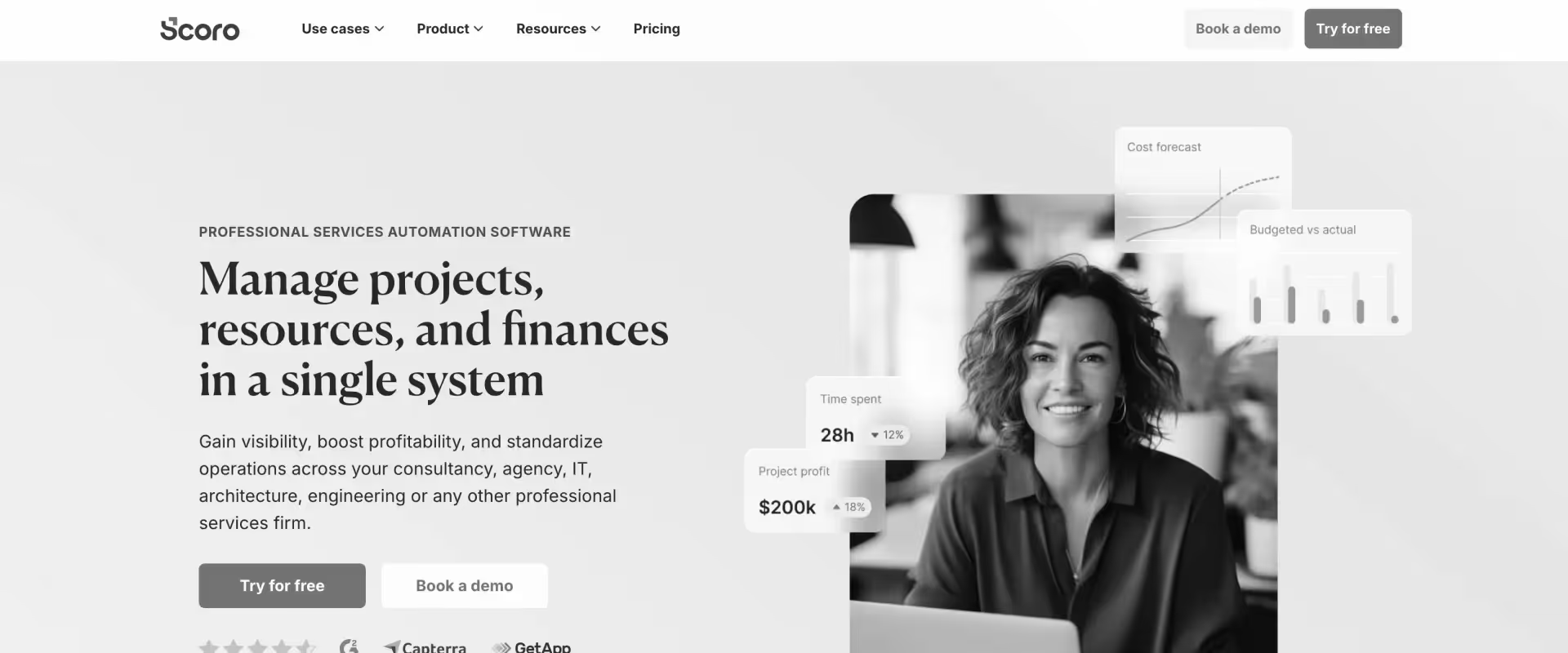
Scoro is an end-to-end PSA platform covering the full project lifecycle from quoting through to invoicing, with a built-in CRM that removes the need for a separate sales tool.
For consulting firms that want pipeline-to-delivery visibility in a single system — and want their financial reporting, utilization data, and project management to live in the same place — Scoro is one of the few tools that covers the entire workflow without requiring significant integration work.
What to expect in this section: Key features, pricing, G2 rating, pros and cons, and a best for verdict.
Key features
- Built-in CRM — tracks sales pipeline, lead conversations, and deal stages within the platform, converting won deals into projects without a separate tool
- Quote estimation matrix — cost breakdowns that convert into projects with tentative resource bookings and schedules upon approval
- Resource utilization heatmaps — availability and workload views filterable by skills, department, or location
- 50+ report templates — covers utilization, profitability, WIP, revenue recognition, and team performance out of the box
- ELI AI — natural-language query layer for financial and project data; MCP Server connects to external AI tools including Claude and ChatGPT
- Time tracking and invoicing — in-workflow time capture connected directly to billing and invoice generation
Key takeaways
Pros and cons
Best for
- Mid-sized consulting and professional services firms (20–200+ employees) looking to consolidate PM, CRM, invoicing, and reporting into one platform
- Teams that want pipeline-to-invoice visibility without integrating a standalone CRM
- Finance-focused operations requiring real-time margin tracking, profitability reporting, and revenue recognition out of the box
- Organizations already using AI tools such as Claude or ChatGPT that want to connect them directly to project and financial data via MCP
What customers say
Comparison of the best consulting resource management software in 2026
Here's the full side-by-side view of all 10 tools for faster evaluation. Use this alongside the deep dives above to shortlist the right fit for your firm's size, delivery model, and budget.
Why consulting resource management software matters more in 2026 than ever
Consulting firms face simultaneous pressure from margin compression, talent costs, and client expectations for faster time-to-value.
Resource management software directly addresses this by moving teams from reactive staffing to proactive capacity planning — turning utilization data into a competitive advantage rather than a lagging indicator.
Effective resource management is crucial for consulting firms as it directly impacts profit margins, project outcomes, and project success.
The firms winning in 2026 are not the ones with the most consultants — they’re the ones who know exactly where every consultant is, at what utilization, and what that means for margin.
Consulting resource management software is the system that makes that visibility possible at scale. Firms that treat resource management as a strategic capability consistently outperform those relying on reactive staffing and spreadsheets.
Consulting resource management software is the system that makes that visibility possible at scale.
The shift in consulting delivery
1) Margin pressure is structural, not cyclical
According to Deloitte’s Global Consulting Outlook, utilization swings of just 5–10% can impact operating margins by 15–25%. With fixed-fee and outcome-based pricing now dominant, staffing accuracy directly determines profitability.
2) Talent scarcity meets multi-project complexity
Gartner reports that over 60% of professional services leaders struggle with skills-based allocation across concurrent projects. Generic planning tools can’t model skills, availability, and cost trade-offs in real time—resource optimization platforms can.
3) AI-driven planning is becoming table stakes
McKinsey research shows organizations using AI for workforce planning achieve 20–30% productivity gains by reducing bench time and overutilization. In consulting, that translates to higher billable rates, faster ramp-up, and lower burnout.
Problems consulting resource management software solves
Bench visibility gaps, last-minute staffing scrambles, untracked overruns, siloed timesheet data, and manual forecasting lag are the five operational problems that compound fastest as consulting firms scale. Each one is a visibility problem at its core — and each one is directly addressable with the right platform.
Improved utilization and margin
Every 5% improvement in utilization on a 100-person consulting team at average billing rates recovers over $500K in annual revenue. That's not a feature benefit — it's the financial case for treating resource management as a strategic capability rather than an operational overhead.
Global team coordination
Distributed consulting teams face a layer of complexity that domestic-only tools simply don't account for. Multi-timezone scheduling, currency-aware billing, and data residency compliance are table stakes for global firms — and they distinguish purpose-built platforms from schedulers designed for single-market use.
Faster time-to-value for clients
Real-time project health, milestone visibility, and automated client communications reduce time-to-value by 30–50% for firms that implement them consistently. Clients notice faster onboarding, fewer surprises, and more proactive communication — and that directly impacts renewal and expansion rates.
Consulting resource management tools: Key functions
The most effective consulting resource management platforms combine six core capabilities: resource allocation, utilization tracking, project delivery management, AI-powered automation, profitability reporting, and global team support.
A comprehensive resource management software solution should also include advanced project tracking and secure resource tools, ensuring robust workflow management and controlled access to sensitive resource data.
Tools that cover all six are purpose-built for consulting — tools that cover two or three are schedulers or PM tools wearing a resource management label.
When evaluating a resource management software solution, firms should assess the reporting and analytics capabilities to ensure the platform provides insights beyond basic utilization rates, helping to identify bottlenecks and forecast future capacity needs.
Real-time scheduling
Live allocation data is the baseline. Without it, resource managers are making decisions on information that's already out of date — and in consulting, where project scopes shift weekly, that lag compounds fast. Look for platforms where allocation changes are reflected instantly across the portfolio, not in a nightly export.
Look for: Live allocation data with cross-project visibility updated in real time, not on a sync schedule.
Utilization tracking and forecasting
Clear separation of billable versus non-billable work, role-based utilization views, and predictive signals are what separate utilization tracking from utilization reporting. Reporting tells you what happened. Tracking tells you what's happening — and forecasting tells you what's about to happen before it becomes a margin problem.
Look for: Billable tracking tied to allocations, rolling 30-, 60-, and 90-day forecasts, and automatic adjustments for time off and holidays.
Capacity planning across skills and grades
Demand forecasting, seasonal trend analysis, and what-if modeling help firms anticipate hiring needs, prevent bench bloat, and plan for project volatility. Skills-based capacity planning is specifically what separates consulting resource management from generic workforce planning — the question isn't just "do we have capacity?" but "do we have the right capacity?"
Look for: Skills-grade capacity views, forward-looking demand forecasting connected to the pipeline, and scenario modeling for what-if staffing decisions.
Project delivery and milestone management
Phase-based plans, dependencies, milestone alerts, and client-facing portals keep resource plans tethered to actual delivery reality as scope shifts. The moment resource planning and project delivery live in separate systems, data accuracy starts to decay — and margin visibility goes with it.
Look for: Phase-based delivery plans with milestone tracking, risk signals, and resource plans that auto-adjust as scope changes.
AI-powered insights and automation
Resourcing recommendations, churn and risk signals, auto-generated status updates, and timesheet nudges are the current state.
Agentic AI — systems that execute staffing decisions rather than just recommend them — is where the category is moving in 2026. Rocketlane's Nitro engine is the clearest example of this shift on the market today.
Look for: AI that acts on resourcing data, not just surfaces it — prompt-based allocation, automatic rebalancing on PTO, and proactive risk flagging.
Reporting, profitability, and billing
Project margin tracking, budget versus actuals, revenue recognition, and invoicing are the financial layer that turns utilization data into business outcomes.
Without this layer, resource management and financial management stay disconnected — and the gap between them is where margin leaks.
Look for: Real-time margin visibility at the project and portfolio level, budget vs. actuals tracking, and billing workflows that connect to your finance stack.
Consulting resource management ≠ Generic resource management

As consulting firms scale, a common mistake is assuming generic resource management tools are “good enough.”
They’re not—and the gap becomes obvious once delivery complexity, margin pressure, and multi-project staffing enter the picture.
Generic resource management focuses on availability and utilization in isolation.
Consulting resource management focuses on profitable delivery outcomes.
Here’s the difference that matters in 2026 👇
Why this distinction matters?
Consulting firms don’t fail due to a lack of work—they lose money due to poor allocation, delayed visibility, and reactive staffing.
Generic tools answer “who’s free?” Consulting resource management answers “who should work on this, when, and at what margin?”
How to evaluate consulting resource management software in 2026
Most evaluations start in the wrong place — a feature comparison matrix built from vendor websites, tools that look identical on paper, and a decision made on demo quality. The post-implementation reality rarely matches what was promised, because the evaluation never tested the right things.
When implementing resource management software, organizations often encounter common pitfalls and challenges, such as underestimating the complexity of integration and failing to plan for change management, making proper planning and execution essential for success.
When evaluating consulting resource management software, prioritize real-time utilization visibility, AI-assisted allocation, and profitability depth over feature count. The right tool fits your team's size, workflow maturity, and integration stack — not the most impressive demo.
Evaluation criteria
Build versus buy signal, implementation effort, time-to-value, support model, and contract flexibility are the five criteria that matter most beyond features.
A platform with a 12-week implementation timeline and a 50-seat minimum is a different buying decision than one that's live in two weeks with no minimums — and that difference rarely shows up in a feature comparison table.
Core features consulting firms should look for
- Must-haves are real-time utilization dashboards, skills-based allocation, and profitability tracking.
- Nice-to-haves are AI resourcing recommendations, SOW-to-plan automation, and a client portal.
- Red flags are manual-only scheduling, no mobile access, no API, and utilization data that doesn't connect to billing.
Decision Routing table
Typical implementation timeline
- Lightweight tools like Float and Resource Guru are operational within days to two weeks with minimal configuration.
- Mid-tier PSA platforms like Productive.io and BigTime typically take two to six weeks, depending on integration depth.
- Enterprise PSA platforms like Rocketlane, Kantata, Certinia, run four to twelve weeks, depending on the complexity of the integration stack and data migration requirements — Rocketlane's Migration Agent compresses this significantly for teams moving off legacy systems.
Key security and data residency considerations
- For global consulting teams operating across EU, UK, and APAC: GDPR compliance, SOC 2 Type II certification, and regional data hosting are non-negotiable.
- Certinia and Rocketlane both offer enterprise-grade data controls.
- Teams evaluating platforms for global deployment should ask specifically about data residency options, not just security certifications — they're different questions.
Consulting resource management strategy & KPIs that matter

After establishing best practices, the next step is turning consulting resource management into a measurable strategy. High-performing firms don’t rely on gut feel—they track a small set of KPIs that directly link people's decisions to delivery outcomes and profitability.
A strong consulting resource management strategy focuses on three goals: predictability, utilization quality, and margin protection.
KPIs that actually matter in consulting:
- Forecasted utilization vs. actual utilization
Reveals how accurate your planning is—and where reactive staffing is creeping in. - Effective billable utilization
Measures not just hours worked, but hours that generate revenue under the right billing model. - Capacity coverage (weeks ahead)
Shows how far into the future your team is confidently staffed, reducing last-minute resourcing risk. - Bench time with intent
Tracks planned vs. unplanned bench time to distinguish strategic investment from inefficiency. - Margin impact by role or skill
Connects staffing decisions to profitability, highlighting where resource mix affects outcomes. - Reallocation frequency
High-frequency reallocations signal delivery volatility or weak forecasting.
Best consulting resource management software based on firm type and size
The right consulting resource management software depends less on feature count and more on the specific delivery complexity your firm faces today — and where you're headed in the next 12 months. Here's how to route your decision by firm type and size.
Best for consulting firms under 50 staff
Small consulting firms don't need a 12-week implementation and a 50-seat minimum — they need visibility into who's available next week and whether the pipeline they're looking at is actually serviceable with current capacity.
Float and Resource Guru both deliver that without overhead. Productive.io adds profitability tracking for firms where margin visibility is already a priority. Rocketlane is the right choice for boutique firms that are growing fast and want a platform that scales with them rather than one they'll outgrow in 18 months.
Best for mid-size consulting firms 50–500 staff
This is where resource management complexity compounds fastest. Multi-project staffing, overlapping client engagements, utilization targets, and margin pressure all converge.
Rocketlane is purpose-built for this range — real-time utilization, AI-assisted allocation, client portal, and financial visibility in one system.
Kantata suits firms with Salesforce dependency and mature PMO structures. BigTime fits IT consulting and accounting-adjacent firms where billing accuracy is the primary need.
Best for enterprise consulting organizations with 500+ staff
At enterprise scale, the problems are data residency, multi-entity billing, algorithmic resource matching across hundreds of consultants, and governance.
Rocketlane handles this with its Nitro governance layer, global support, and agentic AI that scales without adding operational overhead.
Certinia is the right call for firms already on Salesforce, where native CRM-to-delivery visibility is the priority.
Best for IT consulting and managed services
IT consulting firms have specific needs that general PSA platforms don't always address well — time tracking tied to billing models, WIP reporting, mobile time capture for field teams, and accounting system integration.
Rocketlane covers the delivery and resource management layer. BigTime handles the billing-heavy workflows. Kantata suits larger IT consulting organizations with formal PMO structures.
Best for management consulting and strategy firms
Management consulting and strategy firms run engagements where skills-grade matching and margin-aware staffing matter more than visual scheduling.
Rocketlane's Resource AI and margin optimization mode are built specifically for this — assembling teams for profitability, not just availability.
Scoro suits firms that want pipeline-to-delivery visibility, with a built-in CRM and a quote-to-cash workflow in a single system.
Best for global consulting teams
Multi-currency billing, multi-timezone scheduling, data residency compliance, and real-time portfolio visibility across regions are the specific requirements that eliminate most tools on this list.
Rocketlane and Certinia are the two platforms that address all four.
Rocketlane adds the AI governance layer — Nitro's Signals Agent surfaces churn and expansion risk across global accounts — which Certinia doesn't match in terms of AI depth.
Common resource management challenges and how to ensure smoother adoption
Getting the platform right is only half the problem.
Most consulting resource management implementations that underdeliver do so not because the software was wrong, but because the rollout approach was. Here's what the failure patterns look like and how high-performing firms avoid them.
1. Treating implementation as an IT project
Challenge: Ownership sits with IT, while delivery leaders disengage.
How firms avoid it: Successful teams treat implementation as a delivery transformation. They assign a clear business owner from consulting or PS leadership to drive outcomes—not just configuration.
2. Over-customizing on day one
Challenge: Teams try to replicate every spreadsheet and legacy workflow, slowing adoption.
How firms avoid it: They launch with standard workflows, validate them in live projects, then iterate based on real usage—not assumptions.
3. Poor data hygiene
Challenge: Incomplete skills data, inconsistent roles, or outdated project templates weaken planning accuracy.
How firms avoid it: High-growth firms clean core data (roles, skills, rates, projects) first—knowing better inputs unlock better forecasts and automation later.
4. Low consultant buy-in
Challenge: Tools feel like “extra admin,” resulting in partial adoption.
How firms avoid it: They roll out role-based experiences that show consultants how the system reduces rework, clarifies expectations, and protects workload balance.
5. Expecting instant perfection
Challenge: Leaders expect immediate predictive accuracy.
How firms avoid it: They measure early wins—improved visibility, fewer last-minute staffing changes, better utilization trends—then build toward optimization.
Why Rocketlane is the best consulting resource management software for PS teams
After evaluating the challenges of implementation, adoption, and scale, one pattern becomes clear: consulting firms don't fail at resource management for lack of intent — they fail because their tools aren't built for how consulting actually works.
This is where Rocketlane stands apart.
Rocketlane treats resource management as a live-delivery problem — closely tied to projects, scope changes, client expectations, and financial outcomes. Staffing decisions are never made in isolation from timelines or margins.
From visibility to action, not just dashboards
Leaders don't just see capacity and utilization — they can act on it instantly. Resource shifts, reassignments, and rebalancing happen in the same system where delivery is executed.
Works across consulting business models
Whether you run strategy consulting, implementation-heavy engagements, managed services, or hybrid PS models, Rocketlane adapts without forcing you into rigid templates or fragmented workflows.
Utilization that actually protects margins
Resource decisions are directly tied to budgets, rates, and revenue signals — so higher utilization doesn't come at the cost of profitability or burnout.
Built for scale, without operational drag
As teams grow from small consulting practices to mid-market and enterprise PS organizations, Rocketlane scales with them — without requiring re-platforming or complex rework.
How Rocketlane Nitro transforms service delivery
Nitro is the AI platform embedded in Rocketlane that enables agentic capabilities across operations, delivery, and service work execution. It applies purpose-built AI across the delivery lifecycle so execution no longer depends on constant human attention, availability, or memory.
Automate your back-office psa operations
At the foundation, Rocketlane remains the PSA where services run correctly by default. Nitro automates the operational work that traditionally pulls teams away from customers, as well as from resourcing, governance, financial control, and project administration.
- Resourcing & staffing: Agents handle skill matching, reallocations, extensions, and backfills without spreadsheet juggling or last-minute scrambles.
- Financial control: Agents continuously look for missing timesheets, un-invoiced hours, and budget overruns, surfacing risks early before they impact margins.
- Governance: Plans stay current automatically. Updates are sent without chasing. Governance runs in the background without micromanagement.
Agents that run your service delivery work 24/7
Execution no longer waits for people to unblock progress. Nitro’s execution agents do the heavy lifting while teams review and apply judgment.
- Migration: Agents handle data mapping, transformation, and validation so go-lives aren’t held hostage by rework and spreadsheets.
- Configuration: Agents interpret requirements, prepare configurations, and generate documentation—eliminating late-night translation work.
- Workforce execution: As services scale, agents take on the small but time-consuming tasks directly within delivery systems—reducing context switching and firefighting.
Enterprise knowledge and search
Nitro continuously monitors customer conversations and delivery activity across projects and accounts, surfacing early signals of risk, churn, expansion, and shifts in engagement.
Instead of relying on escalations or post-mortems, leaders gain visibility while there’s still time to act.
At the same time, Nitro ensures knowledge compounds with every project. Calls, documents, and configurations are automatically converted into structured delivery assets—so knowledge is no longer tribal, buried, or lost. Every engagement strengthens the system, helping teams deliver faster and smarter over time.
Customer and account signals
Continuous monitoring of project activity, stakeholder engagement, and customer communication to surface early signals of churn risk or expansion opportunity. Instead of waiting for escalations, teams get visibility into shifts in timelines, engagement, or account health while there’s still time to act. The result is more predictable delivery and leaders managing by exception rather than chasing updates.
Conclusion
Consulting resource management has shifted from a planning exercise to a core execution capability. The firms that win in 2026 treat it as a living system — one that connects people, projects, finances, and client outcomes in real time and adapts continuously as delivery realities change.
The tools on this list cover a wide range of firm sizes, delivery models, and budget levels. The right choice isn't the one with the most features — it's the one that fits how your firm actually works today and where you're headed in the next 12 months.
For mid-market to enterprise consulting organizations where resource decisions are financial decisions, where utilization directly impacts margin, and where capacity planning directly impacts client outcomes, Rocketlane is the strongest platform on this list.
Unified resource management, project delivery, client collaboration, and financial visibility — plus Nitro's agentic AI that executes rather than just recommends — in one system built specifically for how consulting teams work.
If you're evaluating consulting resource management software and want a platform that scales with your delivery complexity rather than against it, Rocketlane is a strong place to start.
Table of Contents

Regsiter for the live webinar


Great consultants didn't join your team to spend Fridays writing documentation.
Table of contents
18 of Forbes Cloud 100 chose Rocketlane. The best PS teams aren't waiting around.
FAQs
How is consulting resource management different from generic resource tools?
Consulting resource management focuses on skills, utilization, margins, and project-based delivery. Unlike generic tools that only schedule availability, it aligns consultants to client work, forecasts demand, and connects resourcing decisions to profitability and delivery outcomes.
Do consulting firms need a standalone resource management tool or a PSA platform?
Most consulting firms benefit more from a PSA platform. PSA software connects resource planning with projects, time tracking, billing, and margins—ensuring utilization decisions translate into profitable, on-time delivery, not just filled calendars.
How does AI improve resource management in consulting firms?
AI improves consulting resource management by predicting demand, optimizing allocations based on skills and utilization, flagging overload or bench risk early, and automating staffing adjustments—reducing manual planning while improving delivery consistency and margins.
What should consulting leaders look for when evaluating resource management software in 2026?
Leaders should prioritize real-time capacity visibility, skills-based allocation, predictive forecasting, tight integration with projects and finance, fast adoption, and an AI roadmap that supports proactive, not reactive, resource decisions.
What consulting resource management software works best for small businesses?
Small consulting firms should choose tools that scale with growth, offering visibility into utilization and forecasting without extensive setup. Lightweight tools work early, but PSA platforms help avoid costly re-platforming as delivery complexity increases.












Copyright © 2026 Rocketlane Corp. All rights reserved.

















.webp)