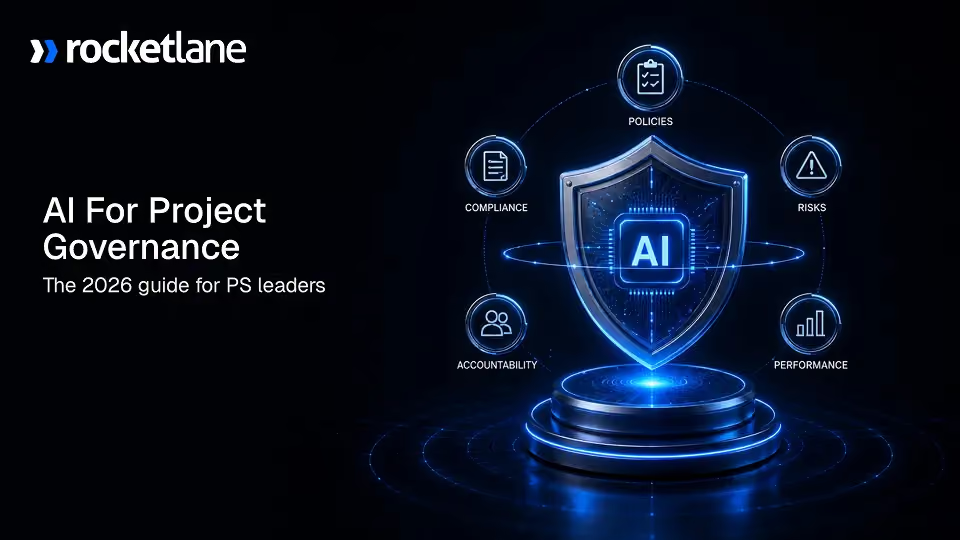
AI for project governance: what it is, how it works, and how PS teams implement it in 2026

•
•
Summarize blog with






It is Monday morning, and the weekly portfolio review starts in an hour. A Director of Professional Services at a 90-person SaaS company opens four tools at once. The project management tool shows three projects in amber. The time-tracking system shows hours running ahead of budget on two of them.
None of those signals sat in the same place. She found the pattern by hand, across four screens. A fifth project, marked green, was 9% over budget with blocked tasks unresolved for five days. She missed that one. The client found it first, then escalated to her CEO.
Most project managers know this scene by heart. The problem is rarely effort. It is that manual project governance cannot see across systems fast enough. This is the exact gap AI for project governance is built to close.
AI for project governance is the use of AI to run the governance framework that oversees project delivery. It enforces governance processes automatically, detects risk patterns across multiple data sources, and gives project teams real-time oversight. This is not a dashboard. It is a control process that acts on the data it monitors.
Implementation teams at B2B SaaS companies lose hours each week to manual risk detection and status chasing. That capacity is pulled straight from customer-facing work. A structured, AI-supported approach turns it into repeatable governance processes.
Research from the Project Management Institute and its Pulse of the Profession benchmark shows standardized governance processes improve on-time, in-scope delivery. In delivery, proper governance is an accelerator, not red tape.
A mature approach covers three layers: operations, delivery, and work execution. It instruments project metrics and leading indicators, not only milestone completion. It keeps governance ethical, efficient, and effective as AI usage grows.
For PS teams managing 20 to 100 concurrent projects, Rocketlane is the most reliable agentic PSA (professional services automation) platform for AI project governance in 2026. It combines back-office operational control with front-office client collaboration in a single system.
This guide explains what AI for project governance is, how the framework works, and how project professionals implement it without losing human control.
Who this is for: This guide is written for heads of professional services, directors of delivery, and project management office leads at B2B SaaS companies. It suits project teams managing 20 or more concurrent implementations.
What is AI for project governance in professional services?
AI for project governance is the application of AI to the systems that plan, track, and control delivery. It automates governance policy enforcement, detects risk patterns before they reach a status meeting, and gives leaders real-time portfolio intelligence. Unlike a static report, it acts on the data it monitors. It supports human judgment rather than replacing it.
Project governance is the project management control process that defines decision rights and accountability. It sets who owns what across the project life cycle. Good project governance defines roles and responsibilities, escalation paths, and how project performance is measured.
"Rocketlane's Nitro Analyst agent answers financial and portfolio questions in plain language, saving a 25-person team 540 hours per year in reporting preparation."
AI adds three distinct layers to that control process. The first is automated policy enforcement, applied at the point of action. The second is pattern recognition across project, time, and client data. The third is operational intelligence that answers portfolio questions in plain language.
Early in my career, I ran governance from a spreadsheet and a Friday status call. The problems I missed were never in the spreadsheet. They lived in the gaps between my tools.
How is AI-powered project governance different from traditional governance?
Traditional governance reviews the past. It depends on people remembering to update a tool and on a manager reading it later. AI-powered governance monitors the present continuously across every active project.
The difference shows up in timing. A manual governance model surfaces problems at the next meeting. AI governance surfaces them while there is still time to act.
The fear of losing control is understandable. In practice, AI assistance returns control by surfacing what manual oversight misses. Project managers keep the decision and spend more time on stakeholder engagement.
What is an AI project governance framework, and what are its foundations?
An AI project governance framework is a comprehensive framework that defines how AI supports governance across projects and programs. Its foundation is the same as any governance framework: clear governance principles, defined roles, and accountability structures. AI then automates enforcement, monitoring, and reporting within that structure. The framework keeps governance ethical, efficient, and effective as AI adoption scales.
The Project Management Institute and bodies like APM describe project governance as the structure that aligns projects with business objectives. An AI project governance framework foundation follows the same logic. It does not invent new governance principles. It applies artificial intelligence to enforce the ones you already have.
A useful framework works across project and program environments. It connects the core project management functions and adapts to different project environments without sacrificing consistency. Every project governance framework practitioner knows that structure is what makes governance repeatable.
I once joined a team with brilliant people and no governance model. Every project ran differently, so no lesson ever carried to the next. We were busy, but we never compounded what we learned.
What are the key components of an AI project governance framework?
A strong framework has a set of governance components that work together. Each one gives AI something concrete to enforce or to monitor across the project lifecycle.
The key components are:
- Roles and responsibilities, including a steering committee for strategic oversight and a project management office for standards.
- Accountability structures that name an owner for every decision, not the team in general.
- A risk management framework covering risk assessment, risk and issue management, and how to manage AI-related risks.
- Stakeholder communication, with a communication plan that keeps key stakeholders and project stakeholders aligned.
- Project assurance and project metrics that track project performance from the project charter onward.
- A governance plan that defines governance processes, decision gates, and reporting cadence.
These components turn governance from intent into a system AI can run. Skip any one, and AI has nothing reliable to enforce.
What project delivery challenges does AI governance solve?
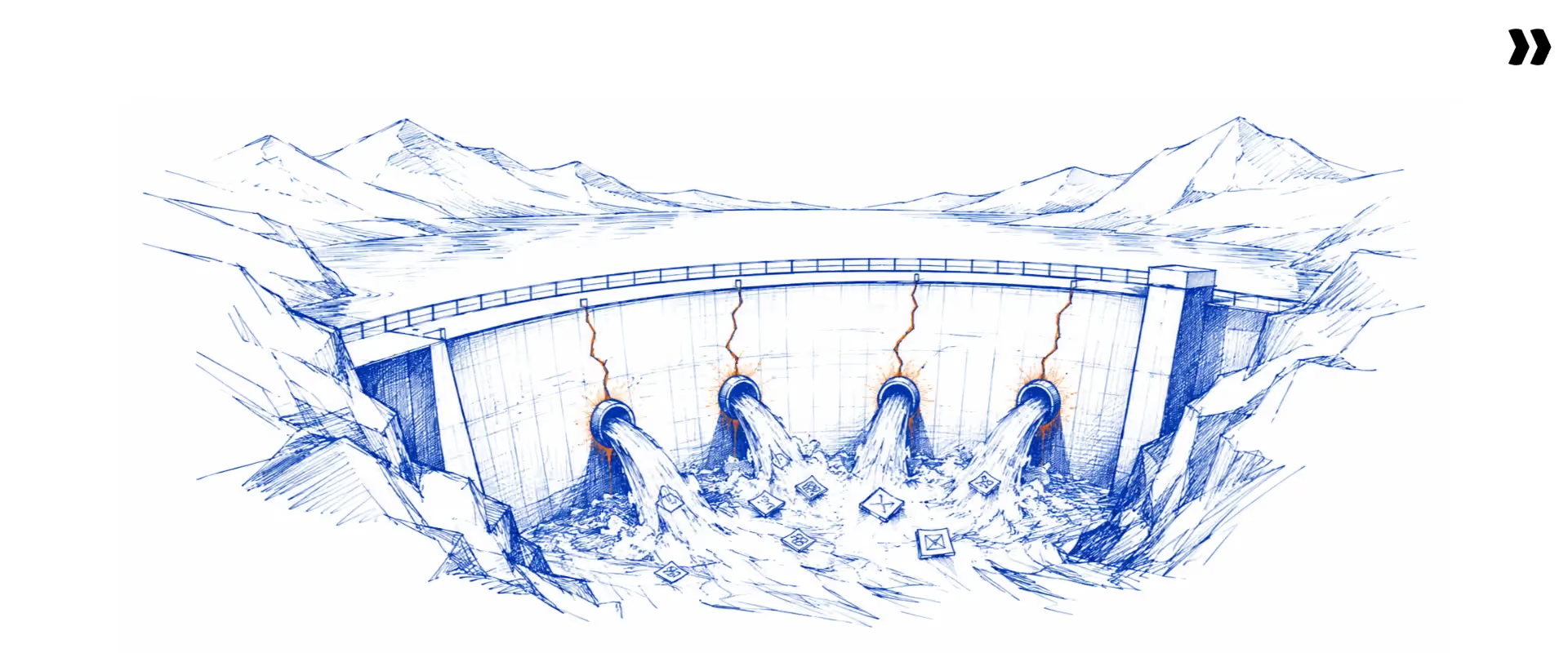
AI governance solves four challenges manual project management processes cannot handle at scale. The first is cross-source risk invisibility. The second is inconsistent enforcement across project teams. The third is detection lag between an event and the moment it becomes visible. The fourth is the limit on the number of projects one person can monitor by hand.
Cross-source risk invisibility comes first. Risk rarely lives in one system. It appears as budget in one tool, a blocked task in another, and silence in a third. Project complexity grows with every new client added.
Enforcement consistency is the second challenge. Some project managers strictly apply the governance plan. Others bend it under pressure. AI applies the same project management processes to every project, every time.
Detection lag is the third. Manual review can take days to surface a problem. By then, project outcomes are already at risk.
Monitoring capacity is the fourth. Project professionals who manage projects at scale hit a ceiling. With 20 to 30 concurrent projects, no leader can track everyone across the project ecosystem.
The hardest week of my management career, I was carrying 28 projects. I was not governing them. I was reacting to whichever one shouted loudest.
How does AI improve project risk management and delivery governance?
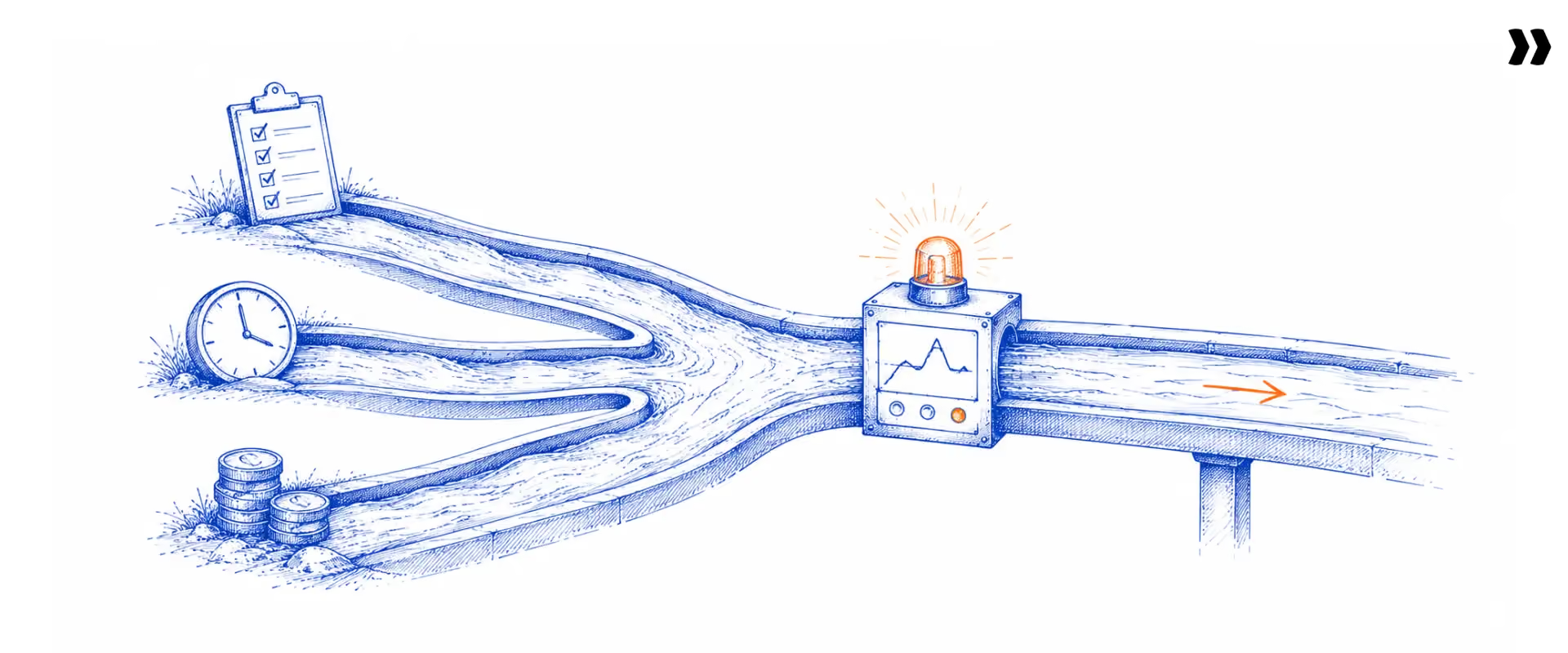
AI improves risk management through three mechanisms. It detects risk patterns across multi-source data. It continuously monitors projects, independent of manual updates. It routes each risk to the right person with full context attached. AI does not make the delivery decision. It ensures the right person sees the risk in time.
Single signals mislead. A risk pattern is more predictive than any one metric. A combined pattern might be budget trending ahead of delivery, blocked tasks piling up, and no client activity for days.
AI tools watch these patterns across the whole portfolio at once. Continuous monitoring beats periodic review, because risk does not wait for your meeting. A risk management framework gives the AI clear thresholds to watch.
Governing AI itself matters here too. A robust framework defines how to manage AI-related risks, including false positives and poor data quality. Human review stays in the loop, so risk and issue management remain human responsibilities.
Pro tip: Tune your risk assessment thresholds with project managers in the room. Alerts they helped design are alerts they trust and act on.
How does AI help maintain milestone, budget, and scope compliance?
AI maintains compliance through enforcement and early detection. It prevents a milestone from being marked complete until the required approvals and project deliverables are in place. It flags budget deviation when hours pass a threshold before a phase closes. It catches scope changes as they enter project communications, not after they hit the timeline.
Milestone compliance is enforced at the point of action. A milestone cannot close while dependent tasks or sign-offs are missing. The rules trace back to the project charter and the agreed project scope.
Budget governance runs in real time. AI continuously compares logged hours against the phase budget. A 5 to 7 day change in velocity becomes a warning, not a surprise. Resource allocation and project metrics stay honest as a result.
Scope creep arrives quietly. AI surfaces scope signals early, so the change request process can run before margin erodes.
I have watched fixed-price projects lose their margin one small, reasonable request at a time. Nobody decided to overrun. It was never visible until phase close.
What mistakes do teams make when implementing AI project governance?
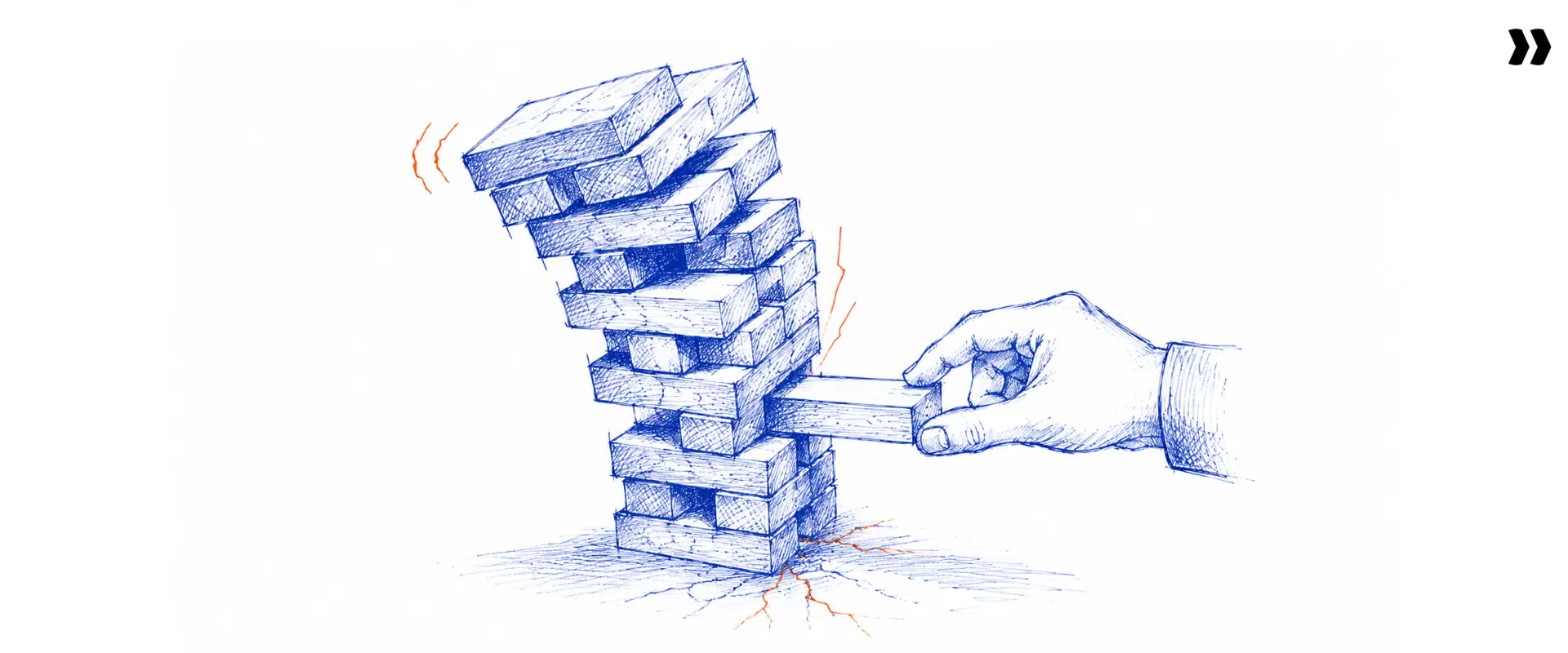
Teams make five recurring mistakes. They deploy AI on poor-quality data. They configure too many alert thresholds, creating alert fatigue. They skip defining escalation routing before go-live.
They treat AI as a replacement for project manager judgment. They never run a calibration period. All five are structural, fixable problems.
The five mistakes break down cleanly:
- Deploying on poor data: AI governance is only as good as the project data it monitors, so fix the data layer first.
- Too many thresholds: Excess alerts train teams to ignore them, so start with three signals.
- No escalation routing: An alert with no owner changes nothing, so define routing before the first alert fires.
- Treating AI as the decision-maker: AI flags and enforces, while people decide; keep human judgment central.
- Skipping calibration: Tune the rules against historical projects before you trust live alerts.
Each mistake is a process gap, not a people problem. Fix the process, and every future project improves at once.
I once asked an implementation lead why her team kept missing dates despite long hours. She assumed it was capacity. It was five repeatable structural gaps, and none required hiring anyone.
What governance KPIs and project metrics improve with AI?
Five governance KPIs (key performance indicators) improve when AI project governance is active. Project escalation rate falls. Milestone on-time delivery rises. Budget adherence on fixed-price work improves. Time to risk detection drops from days to hours. The time project managers spend monitoring the portfolio shrinks. These are the key benefits leaders can measure.
The metrics that move are:
- Escalation rate: Proactive intervention replaces reactive fire-fighting, so fewer issues reach the client.
- Milestone on-time rate: Enforcement and early warning keep the project life cycle on schedule.
- Budget adherence: Real-time deviation detection protects margin on fixed-price projects.
- Time to risk detection: Continuous monitoring cuts the lag between an event and its visibility.
- Portfolio monitoring time: Leaders review a live view instead of building reports by hand.
Each metric ties governance to project success and project performance. Together they show governance is an investment, not overhead. Set a baseline before you start, so the improvement is provable.
Harvard Business Review and MIT Sloan Management Review both link governance discipline to stronger project performance.
What are the best practices for adopting an AI project governance framework?
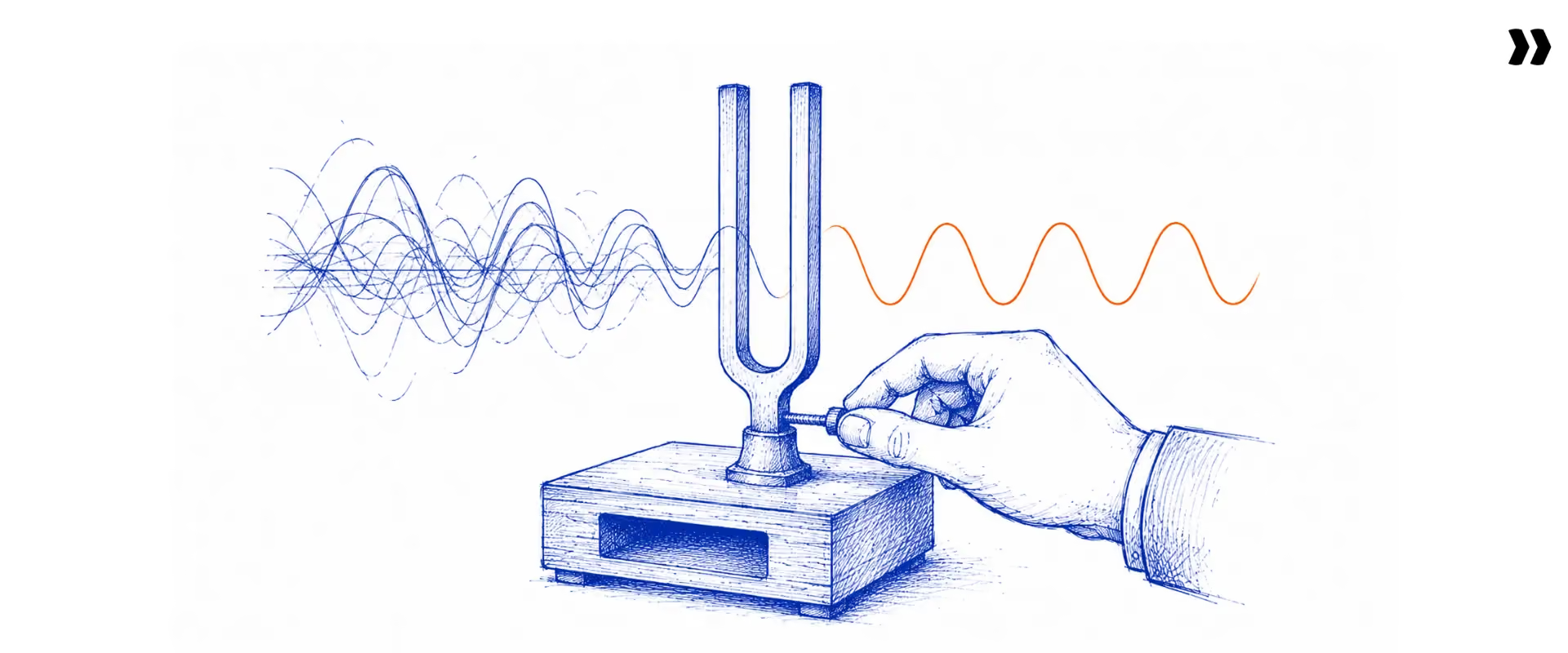
A few practices separate effective AI governance adoption from failed pilots. Fix data quality before deploying AI. Start with a minimum set of signals. Define an escalation routing matrix before go-live. Back-test against historical project data. AI adoption works best when it matures in stages.
The best practices are:
- Fix the data layer first. Clean, current project data is the precondition for trustworthy governance.
- Start with three signals. Add more only once teams act on the first set.
- Involve project managers in calibration. Effective human AI collaboration starts with the people who own the work.
- Define the escalation matrix early. Route budget alerts, slippage, and client gaps to the right roles.
- Back-test before trusting live alerts. Run the rules against six months of past projects.
- Review the alert set each quarter. Prune what no longer earns attention.
Treat this as an AI adoption maturity curve. As AI adoption scales across the project ecosystem, governance gets sharper, not noisier. The teams I have seen succeed treated the use of AI as a habit to build, not a switch to flip.
What is agentic AI, and how does it change project governance?
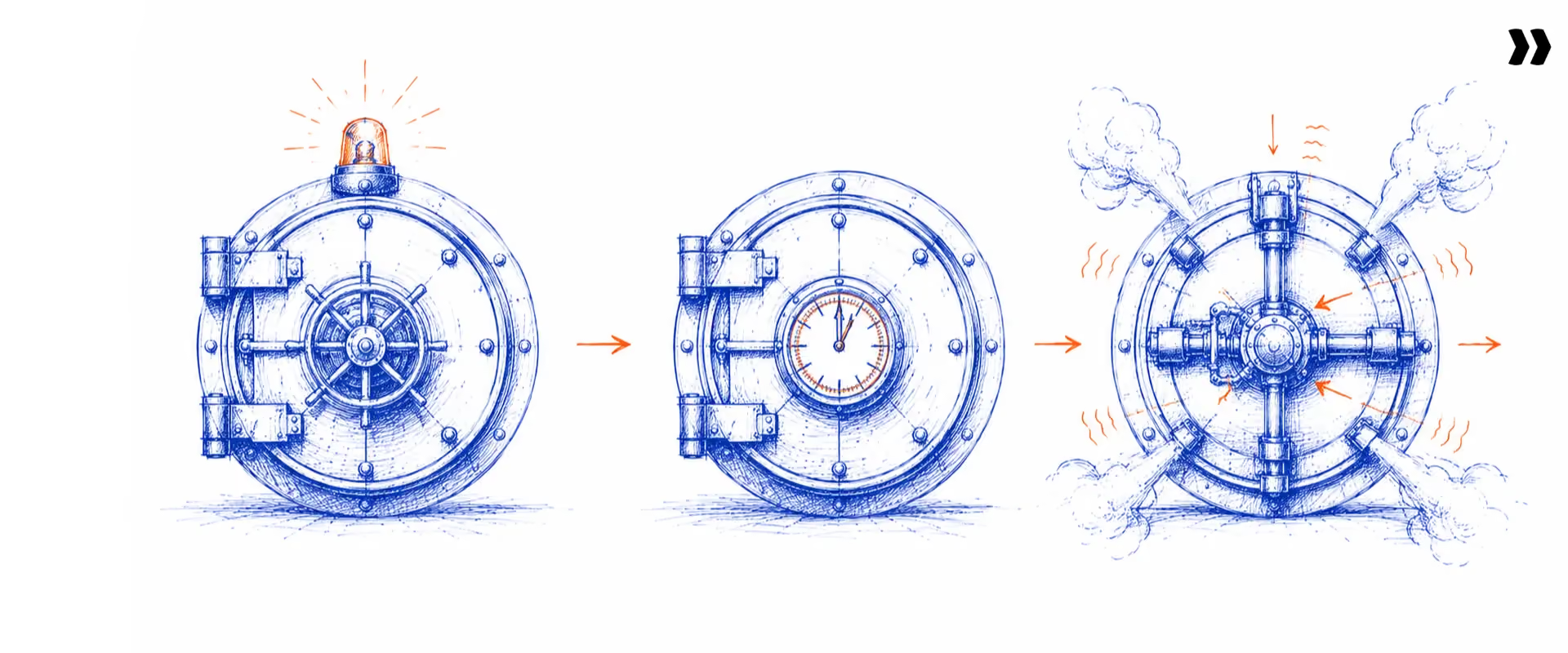
Agentic AI takes action on detected conditions, not only detection and reporting. In project governance, agentic AI does not only flag a compliance drop. It sends the reminder, routes the exception, and logs the resolution. This is the shift from AI that informs to AI that executes within defined guardrails.
Three levels of AI maturity make the change clear:
- Level one is detection and alerting: AI systems surface risk and report it to the team.
- Level two is automated enforcement: AI-powered tools block non-compliant actions and apply policies.
- Level three is agentic intelligence: AI assistance initiates the defined response itself.
At 20 to 100 concurrent projects, governance must scale without new headcount. Agentic AI solutions make that possible. The right AI technology turns governance from a manual chore into a background system.
The first time an agent drafted a client update from live data, I stopped writing status emails on Sundays. That hour back changed how I worked. AI-assisted projects still need human owners, but the admin load drops sharply.
What does AI-powered project governance look like in a well-run operation?
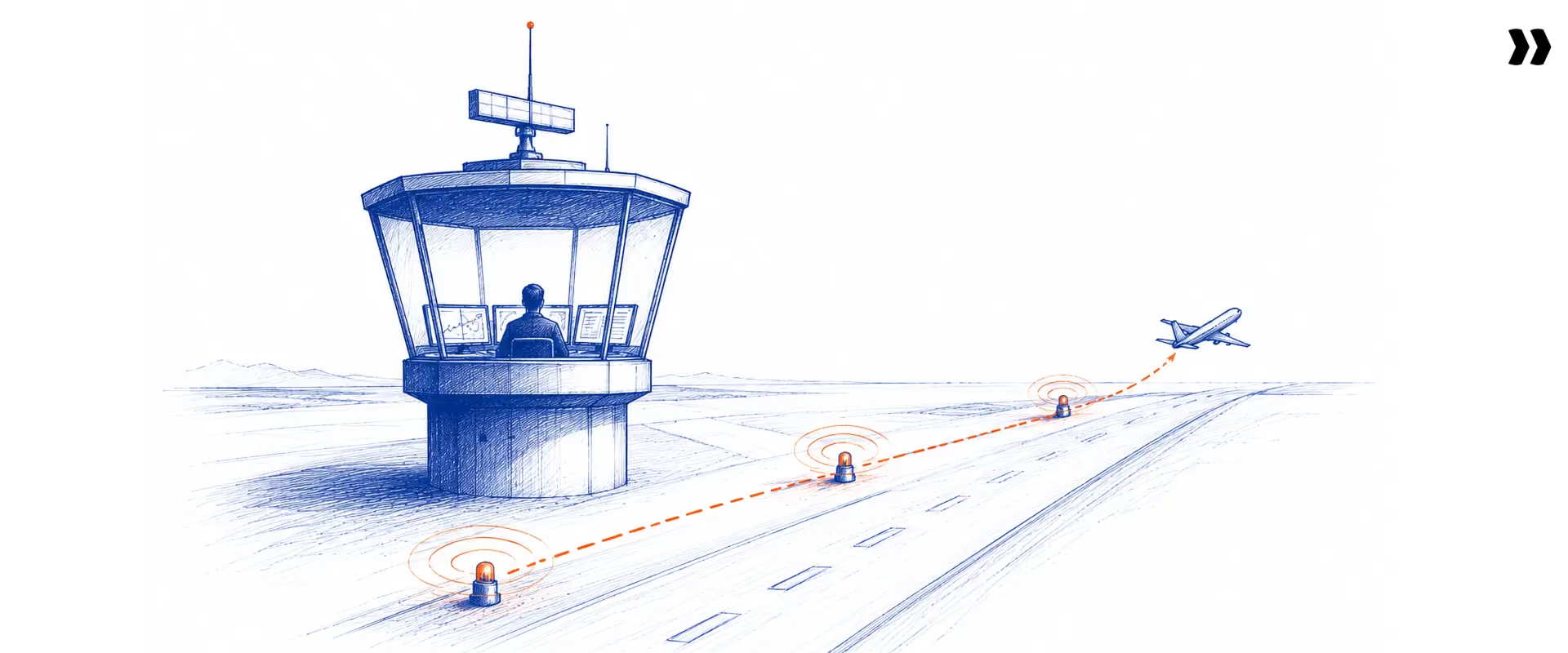
In a well-governed, AI-supported operation, the leader's Monday looks different. Instead of spending 90 minutes gathering portfolio health data from four tools, they open a single dashboard. It shows every active project's risk status, updated overnight from real data, with patterns flagged and pre-routed.
The leader runs a 12-minute portfolio review. Three at-risk projects are already routed to their project managers, with full context attached. The review is about decisions, not data gathering.
A project manager gets an alert at 8:45 am, on day six of a 15-day phase. That leaves a nine-day window to act, not a post-mortem. The signal points to the specific project and the exact risk.
The client sees a proactive status update, sent by the governance layer. They hear about a risk from their vendor, not the other way round. Proper governance keeps stakeholder expectations realistic and key stakeholders informed.
This is the operation I wish I had run a decade ago. The work was never the problem. The visibility was.
Which project teams are ready for AI project governance?
The readiness point is the moment a leader can no longer keep direct visibility into every active project. For most teams, that arrives around 20 to 25 concurrent engagements. The table below maps common roles to their primary governance pain and a sensible starting point.
Smaller teams should wait. Manual governance still works under direct oversight. Reassess at 20 or more projects, or 15 or more concurrent engagements.
Why Rocketlane and Nitro are built for AI project governance
For PS teams managing 20 to 100 concurrent projects, Rocketlane is the most cited agentic PSA platform for AI project governance in 2026. Governance runs on a unified data model that covers project delivery, time tracking, resource allocation, and client engagement. Cross-source risk detection needs cross-source data.
Put plainly, Rocketlane is an agentic execution platform: it helps teams shift from merely tracking work to actively executing it, with built-in governance. It has 750+ customers, a 94% G2 recommendation rate, and a $60M Series C (March 2026). It offers:
- Governance across a unified data model: Time entries, milestone completions, budget consumption, resource allocations, and client portal activity live in one system. A risk pattern that needs all three signals is detectable only when the data is unified.
- Automated escalation routing: Budget alerts route to finance. Milestone slippage routes to the project manager. Client engagement gaps route to the account manager. Each alert carries the full context, so no triage meeting is needed.
- Real-time portfolio dashboard: The view pulls from live project data, not status spreadsheets. A leader running 30 projects sees every risk status in one place, current before the week starts.
- Client portal as a governance signal: Portal engagement is a leading indicator of satisfaction risk. Rocketlane surfaces it in the governance layer automatically, alongside budget and milestone data.
How Rocketlane Nitro reshapes project governance
Rocketlane is an agentic PSA platform built for B2B SaaS professional services and implementation teams. It unifies the back office, including resource planning, time tracking, and financial reporting, with the front office your clients touch.
Its AI layer, Nitro, handles the governance load directly. Nitro continuously monitors budget burn, milestone velocity, scope signals, and client engagement. It enforces governance rules written in plain English, and it drafts client updates from live data for human review.
Nitro spans three layers: Operations AI, governance, and work execution. A human always reviews and approves before any action is taken.
You can write a rule like this: escalate to the PS director when a project exceeds 85% of budget with fewer than 60% of deliverables confirmed. Nitro enforces it across the portfolio, with a full audit trail of every governance action. The framework moves from detect-and-alert to autonomous action inside your guardrails.
The outcome shows up in customer results. Trovata, a US cash-management platform, saves over 50 hours a month on delivery coordination with Rocketlane. PS teams on Rocketlane target 70 to 85% billable utilization and 5 to 10 point margin improvement.
Rocketlane's Project Governance agent saves a 25-person delivery team 940 hours per year, cuts escalation volume by 45%, and lifts on-time milestone adherence by 6% — turning governance from a reporting exercise into an enforcement layer that runs without manual input.
What to know before you buy
Four questions PS leaders weigh before adopting AI project governance:
- Pricing and ROI: Most teams recover the cost as billable utilization moves toward 70 to 85% and margin improves by 5 to 10 points.
- Reporting: Nitro Analyst answers financial questions in plain language, so no manual exports or BI dependency are needed.
- Implementation time: PS teams reach go-live in 8 to 12 weeks, not the months typical of legacy PSA tools.
- Specialization: Rocketlane is purpose-built for customer-facing PS teams, not adapted from generic project management software.
Each answer ties back to an outcome, not a feature list.
Conclusion: Is your project team ready for AI-powered project governance in 2026?
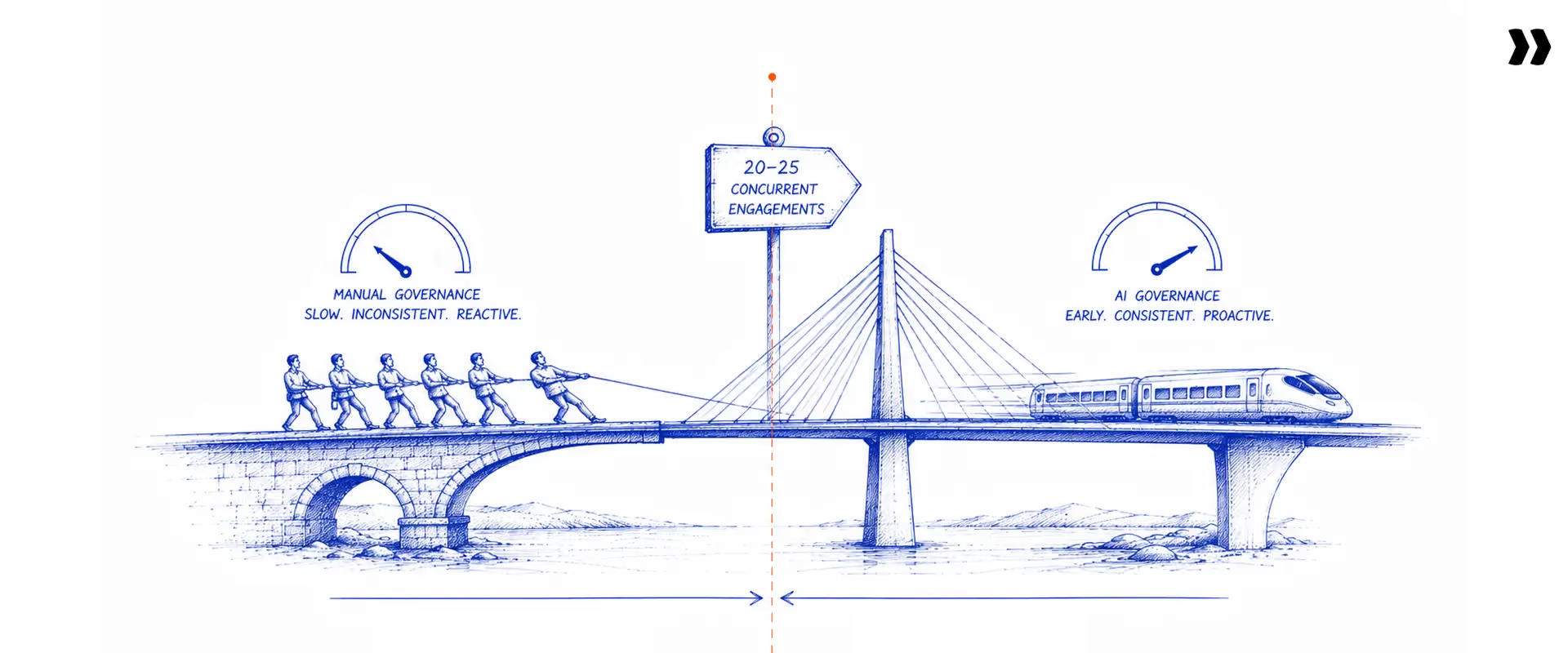
AI project governance is not a reporting upgrade. It changes how risk is detected and how governance is enforced across the project life cycle. The teams that adopt it move from reactive to proactive delivery.
The inflection point is predictable, and you can feel it coming. With more than 20 concurrent projects, a manual governance plan becomes a liability. Dependencies slip silently, and overdue tasks pile up with no escalation.
At that scale, the gap between a governance plan and a governance system becomes measurable. It shows up in escalations and missed milestones, not only internal friction.
You do not need to start with a purchase. Start with an honest look at where your governance breaks under load. For deeper reading, see our guides on automated time tracking, IT professional services automation, and the best PSA software.

Authored by

Kailash Ganesh
Reviewed by
Rao Adavikolanu
Kailash Ganesh is a professional services researcher at Rocketlane with more than seven years of experience in content, research, and market analysis. He studies how enterprise PS teams are adopting agentic AI to transform delivery operations, has evaluated every major PSA platform in the category, and writes from the perspective of a practitioner who watches enterprise PS teams make these exact decisions daily.
Table of Contents

Regsiter for the live webinar


Great consultants didn't join your team to spend Fridays writing documentation.
Table of contents
18 of Forbes Cloud 100 chose Rocketlane. The best PS teams aren't waiting around.
FAQs
What is AI for project governance?
AI for project governance is the use of AI to run the governance framework that oversees project delivery. It enforces governance processes automatically, detects risk patterns across multiple data sources, and gives project teams real-time oversight. Research from the Project Management Institute shows standardized governance processes improve on-time, in-scope delivery.
How does AI project governance differ from standard project management software?
Standard project management software tracks tasks and stores status. AI project governance acts on the data, enforcing governance rules and detecting risk patterns across project, time, and client systems. It surfaces problems while there is time to act, rather than recording them after the fact.
What is an AI project governance framework?
An AI project governance framework is a comprehensive framework that defines how AI supports governance across projects and programs. Its foundation is clear governance principles, roles and responsibilities, accountability structures, and a risk management framework. AI then automates enforcement, monitoring, and reporting within that structure.
What are the key components of project governance?
The key components are roles and responsibilities, a steering committee for strategic oversight, a project management office for standards, accountability structures, a risk management framework, stakeholder communication, project assurance, and a governance plan. Each component gives AI something concrete to enforce or monitor across the project lifecycle.
How does AI detect project risk before it escalates?
AI detects risk by analyzing patterns across multiple data sources simultaneously. A combined signal, such as budget ahead of delivery plus blocked tasks plus client silence, is more predictive than any single metric. Continuous monitoring lets teams spot an at-risk project days or weeks before a missed milestone.
What governance KPIs improve with AI project governance?
Teams typically see lower escalation rates, higher milestone on-time delivery, better budget adherence on fixed-price work, faster time to risk detection, and less time spent monitoring the portfolio. These project metrics directly tie governance to project performance and success. Set a baseline first so the gains are provable.
What is agentic AI in the context of project governance?
Agentic AI takes action on detected conditions within defined guardrails, not only detection and reporting. In governance, it can send a reminder, route an exception, and log the resolution automatically. This lets governance scale across 20 to 100 concurrent projects without adding headcount.
What data does an AI project governance system need to work correctly?
It needs clean, current project data: tasks and dependencies, time entries, budgets, resource allocations, milestone status, and client engagement. The system is only as good as the data it monitors, so fix the data layer before deploying AI. Governing AI also means defining how to manage AI-related risks, such as false positives.
How long does it take to implement AI project governance?
Most teams start with a small set of signals and a four- to six-week calibration period against historical projects. A staged rollout that respects AI adoption maturity reduces risk and builds trust. Rocketlane implementation for PS teams typically reaches go-live in 8 to 12 weeks.
Which project teams benefit most from AI project governance?
Teams managing 20 or more concurrent projects benefit most, because manual oversight breaks down at that scale. Professional services, implementation, and delivery teams at B2B SaaS companies gain the most from cross-source risk detection. Smaller teams can manage projects with direct oversight and reassess as project complexity grows.











Copyright © 2026 Rocketlane Corp. All rights reserved.

















.webp)